
Archive

June 6, 2025

Browsing
NEWYou can now listen to Fox News articles!

There are two truths about presidential candidates.  

One: There is no such thing as a perfect candidate. 

Two: It is very difficult to convince party elites that there are no perfect candidates. 

President Donald Trump’s second first 100 days are now behind him, and the Democrats are still struggling to recover after the trauma of the 2024 election. As former President Joe Biden focuses on treatment for his cancer diagnosis, fresh questions about the chronology of Biden’s decline in mental and physical health have further wafted Kamala Harris’ hopes of a second presidential or California gubernatorial bid off the political radar and out to sea. 

The Democrats have made it no secret they are in a desperate quest for the proper frontrunner/savior who can patch the torn fabric of their political and policy agenda, show enough leadership chops to unite both the Democratic Party and the country, and then go on to win back the White House in 2028.  

Former President Bill Clinton used to say of his own complicated story, ‘If you want a perfect candidate, vote for somebody else.’ Yet back in 1992, despite myriad personal dramas, Clinton possessed many elements of the classic successful contender of that era: young but seasoned, a governor from a Southern state, folksy in style but gilded academically (Georgetown and Yale), respected for his brilliance within the party but able to relate to a broad swath of the voting public.  

As always, at this stage of the cycle, the names of dozens of potential contenders from the out-party are being tossed about with the typical fervid combo of optimism, conviction, delusion and brio. But no potential candidate has yet broken out as an obvious frontrunner, let alone a great political athlete or generational talent such as Clinton or President Barack Obama. 

That is not to say that the Democratic field does not include highly intelligent, highly accomplished and highly skilled women and men. The potential contenders are an extraordinary bunch of American leaders. But none has all the necessary elements to take on the current White House or make a clear bid to win it all. 

Clinton, always good for a pithy remark, also has noted, ‘you can put wings on a pig, but you don’t make it an eagle.’ 

In 2028, if one could take a page from Dr. Frankenstein and turn that pig into an eagle, which attributes would the Democrats choose for their perfect model?  

Let’s start with Pete Buttigieg, the former Transportation Secretary under Biden and before that, the wunderkind ‘Mayor Pete’ of South Bend, Indiana. Buttigieg, like Trump, has what one might call a ‘go-on-anything confidence.’ Pete can appear on any television network, any podcast, any stage (from vast stadiums to slatted apple crates), in any state in America, and feel comfortable and poised with his audience. That trait is an essential component for 2028.  

Gavin Newsom, the governor of California, whose good looks and stylish mien often are cited more as a disadvantage than an attribute, has a profound understanding of what is modern and urgent for today’s electorate. Newsom thinks tirelessly about America’s future, and what is important to the young and the old, growing families and hard-working tradespeople, and everyone in between. 

Gretchen Whitmer of Michigan, the popular governor of a swing state, understands how to connect with voters in a battleground arena by focusing on economic concerns and remaining on the right side of cultural issues despite party pressure. 

Rahm Emanuel, former congressman, White House chief of staff, mayor of Chicago, and former ambassador to Japan, brings not just his famous rough-and-tumble uncompromising bravado, but an ability to raise massive amounts of cash. His fundraising power comes from the business community, where he made millions; from Hollywood, where his brother, Ari Emanuel remains an uber mover and shaker; and from decades of fundraising amidst America’s wealthiest Democratic communities. 

Amy Klobuchar, senator from Minnesota, has a fierce determination and inner energy that will allow her to set goals and follow through with conviction. This is an essential combo required to win a modern political contest. 

Josh Shapiro, the governor of Pennsylvania, has shown he can twist the old adage of former New York pol Mario Cuomo, who spoke of campaigning in poetry and governing in prose. Shapiro, on the other hand, is able to merge poetry and prose in his governance, achieving solid substantive goals while creating an atmosphere of aspiration and inspiration for his constituents. 

Alexandria Ocasio-Cortez, the congresswoman from New York, has the ‘It Factor.’ Bright, charismatic, and always interesting, she commands attention whenever she speaks. (Or tweets, or comments, or posts, or poses). 

Gina Raimondo, Biden’s Commerce secretary and former governor of Rhode Island, is well-known, well-liked, and well-respected in the business community, which offsets a huge imbalance on the Republican side. A pro-business Democrat, Raimondo can speak the language of the business world, get its political support and earn its trust. 

Ro Khanna, congressman from California, understands policy and how to connect it to the real lives of real people. Khanna is a stand-out in the Democratic Party who can envision viable policy ideas and can explain his plans plainly to the American people. 

Wes Moore, the governor of Maryland, has a powerful origin story and biography. After overcoming some early challenges, Moore thrived academically, served in the military, worked on Wall Street, authored several books, ran a leading nonprofit, and dedicated his life to service. He has shown a capacity to link lessons learned from his life experience to his policy goals.  

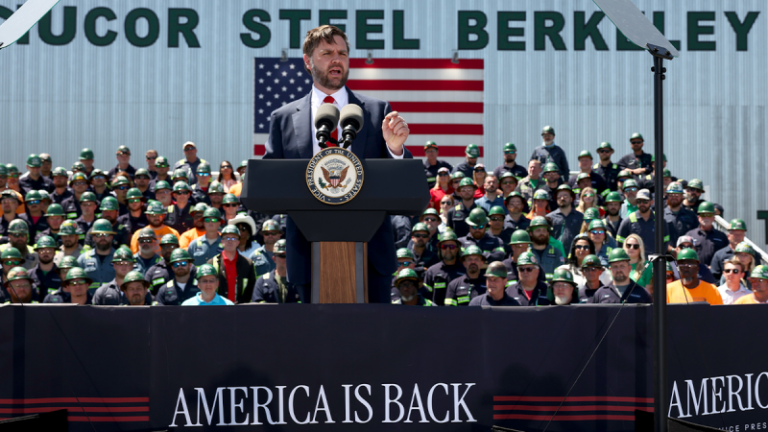
Meanwhile, over on the Republican side, the GOP already has their frontrunner. And with JD Vance, there currently is no assembly required.  

With just a few months as vice president under his (Rust) belt, Vance already has proven to be perhaps the most powerful and effectual vice president in history — yes, even including Dick Cheney, Al Gore and LBJ. Not only has Vance brilliantly managed to remain this close to the mercurial Trump without once stepping on his presidential toes, but he has forged solid bonds with fellow politicos (even those who initially looked askance when Vance was tapped for the ticket). 

He has built up an impressive, appropriate and exceedingly visible administrative portfolio and networked productively with the most powerful GOP grassroots activists and fundraising leaders around the country. 

Simultaneously, he trotted out and shielded his attractive young family; and offered a friendly hand and flash of coattails to those peers with presidential aspirations of their own, such as Secretary of State Marco Rubio and Virginia Gov. Glenn Youngkin.   

Clinton, always good for a pithy remark, also has noted, ‘you can put wings on a pig, but you don’t make it an eagle.’ 

Vance has an additional, and unique, advantage. Most vice presidents who are champing to step into the top spot only get the chance after slogging through eight long years as a second banana, and must fight for the job just as the country has grown weary of the current administration and are longing for a new dynamic. Some, such as George H. W. Bush, can slide into office riding the departing fumes of their popular boss, while others, such as Al Gore, fumble to seal the deal. 

Vance will be able to run as a sitting vice president after serving just one term, still relevant, still modern, but with a souped-up resume and sleek gravitas. 

That is a feature Doctor Victor Frankenstein couldn’t envision in his wildest dreams. 

And of all the current asymmetrical advantages on the Republican side, this is, by far, the most imposing. 

As a famous scientist once said, ‘It’s alive!’ 
This post appeared first on FOX NEWS

NEWYou can now listen to Fox News articles!

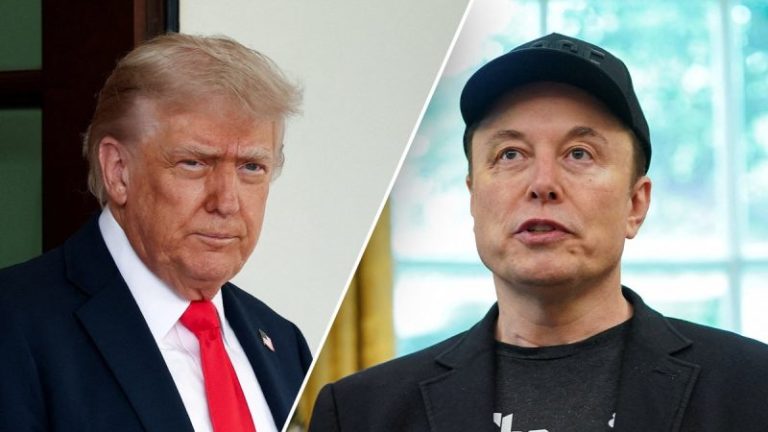
Tesla and SpaceX CEO Elon Musk may speak to White House aides Friday in an effort to calm his ongoing feud with President Donald Trump, Fox News has learned.

Musk and Trump have been arguing over social media in recent days. The blowup came after Musk started ‘wearing thin’ on Trump for about a month, Fox News senior White House correspondent Peter Doocy reported Friday.

White House aides told Doocy they are not expecting Trump and Musk to speak to each other today, but that Trump administration staffers might try to talk to Musk. 

‘No call scheduled or had. Musk wants a call. POTUS hasn’t made a decision,’ a source familiar with the matter also told Fox News regarding a possible conversation between Trump and Musk.

Doocy also reported that a red Tesla vehicle that Trump bought during a Tesla demonstration on the South Lawn of the White House grounds earlier this year is now expected to be given away or sold off. 

The vehicle with Florida tags, as of Friday, remains parked near the White House on West Executive Drive.

Musk made allegations Thursday that Trump was in the Jeffrey Epstein file.

‘@RealDonaldTrump is in the Epstein files,’ Musk wrote on X. ‘That is the real reason they have not been made public. Have a nice day, DJT!’

Musk followed the post with another, saying, ‘Mark this post for the future. The truth will come out.’

‘This is an unfortunate episode from Elon, who is unhappy with the One Big Beautiful BIll because it does not include the policies he wanted,’ White House Press Secretary Karoline Leavitt said. ‘The President is focused on passing this historic piece of legislation and making our country great again.’

On Truth Social, Trump wrote Thursday that ‘Elon was ‘wearing thin,’ I asked him to leave, I took away his EV Mandate that forced everyone to buy Electric Cars that nobody else wanted (that he knew for months I was going to do!), and he just went CRAZY!’

‘The easiest way to save money in our Budget, Billions and Billions of Dollars, is to terminate Elon’s Governmental Subsidies and Contracts. I was always surprised that Biden didn’t do it!’ Trump also said.

The feud between Musk and Trump rapidly escalated this week when Musk called the Trump-endorsed ‘big, beautiful bill’ a ‘disgusting abomination.’

Musk, who has been openly critical of the proposed reconciliation bill, said Tuesday afternoon that he ‘just can’t stand it anymore.’

‘This massive, outrageous, pork-filled Congressional spending bill is a disgusting abomination,’ Musk added in a Tuesday afternoon post on X. ‘Shame on those who voted for it: you know you did wrong. You know it.’

Fox News’ Peter Doocy, Lucas Tomlinson, Greg Wehner and Alec Schemmel contributed to this report.

This post appeared first on FOX NEWS

As more parts of the world face intense drought, new technologies are emerging to clean and reuse existing water. Investors are seeing potential for big profits.

Water treatment is expensive. It uses a lot of energy and produces its own waste that gets disposed of at a hefty price. Capture6, a startup in Berkeley, California, says it’s developing a solution, and one with an added benefit to the environment.

Capture6′s technology repurposes industrial and water treatment waste, generating clean water and capturing carbon dioxide from the atmosphere.

“That combination of water treatment, brine management, and carbon capture all at once is part of what makes us unique, what makes our process innovative,” said Capture6 CEO Ethan Cohen-Cole, who co-founded the company in 2021. “We are able to do so at reduced energy costs.”

The process is complex. It starts with the waste from any sort of water treatment process. Once the solids are removed, that waste is called brine, which is leftover water plus concentrated salt — sodium chloride. Treatment facilities usually have to pay to get rid of it.

But Capture6 takes that brine, strips out the fresh water and separates the salt into sodium and chlorine. It then turns the sodium into lye.

“That lye has the really neat property that if you expose it to the air, it will bond with CO2 and strip it from the air, and that’s the punch line to the process,” said Cohen-Cole. “We have processed the waste salt, we’ve returned fresh water to our partner, and we’ve captured CO2 from the air.”

It’s a particularly attractive proposition in areas most in need of clean water. Capture6 is working in Western Australia, South Korea, and in drought-stricken California, at the Palmdale Water District north of Los Angeles. The district is still testing the technology, but is already projecting huge cost savings in its brine management.

“It will save us 10% on that capital cost, as well as saving us 20 to 40% in operational costs,” said Scott Rogers, assistant general manager at Palmdale Water District. “We’re recovering anywhere from 94% to 98% water out of water that would just normally be wasted.”

Rogers says it’s early but when more facilities start using the technology, it will create a circular economy that can benefit the environment.

Capture6 has raised $27.5 million from Tetrad Corporation, Hyundai Motors, Energy Capital Ventures, Elemental Impact and Triple Impact Capital.

Cohen-Cole says the company’s entire process could run on renewable energy, so all of the CO2 that it captures will be net negative, improving the environment. That allows the company to generate added revenue by selling carbon credits.

It’s just one technology in a growing field of carbon capture, removal and sequestration. Others include direct air capture, burying carbon underground or injecting it into the ocean.

The Trump Administration recently canceled $3.7 billion worth of awards for new technology, including carbon capture, to fight climate change. Capture6 has received funding from the U.S. Department of Energy and from state-level sources including California, according to the company. So far, none of that has been canceled.

— CNBC producer Lisa Rizzolo contributed to this piece.

This post appeared first on NBC NEWS

Use of low-cost e-commerce giants Temu and Shein has slowed significantly in the key U.S. market amid President Donald Trump’s tariffs on Chinese imports and the closure of the de minimis loophole, new data shows.

Temu’s U.S. daily active users (DAUs) dropped 52% in May versus March, before Trump’s tariffs were announced, while those at rival Shein were down 25%, according to data shared with CNBC by market intelligence firm Sensor Tower.

DAUs is a measure of the number of people who visit or interact with a platform every 24 hours. Monthly active users (MAUs), a measure of user engagement over a 30-day period, was also down at Temu (30%) and Shein (12%) in May versus March.

The declines were also reflected in both platforms’ Apple App Store rankings. Temu averaged a rank of 132 in May 2025, down from an average top 3 ranking a year ago, while Shein averaged a rank of 60 last month versus a top 10 ranking the year prior, the data showed.

Neither Temu nor Shein immediately responded to CNBC’s request for comment.

The user drop off comes as both Temu and Shein have pulled back on U.S. advertising spend over recent months since the Trump administration’s tariff announcements.

Trump in April announced sweeping tariffs on Chinese imports, including the end of the “de minimis” tariff exemption on May 2, which allowed companies to ship low-cost goods worth less than $800 to the U.S. tariff-free.

In May, Temu’s U.S. ad spend fell 95% year-on-year while Shein’s was down 70%.

“Temu and Shein’s decline in US ad spend was also noticeable in April, as spend decreased by 40% and 65% YoY, respectively,” Seema Shah, vice president of research and insights at Sensor Tower, said in emailed comments to CNBC.

Both Temu and Shein also altered their logistics models in the wake of tariffs, shifting away from a drop shipping model, which allowed them to send items directly from Chinese suppliers to U.S. consumers, and instead, particularly in Temu’s case, building up a network of U.S. warehouses.

Rui Ma, founder and analyst at Tech Buzz China, said such moves were also likely to have impacted the companies’ ad spend strategy and customer acquisition patterns.

“All these additional costs and regulatory hurdles are clearly hurting Chinese platforms’ U.S. growth prospects,” she wrote in emailed comments.

Tech Buzz China research from March showed that a 50% tariff would be the point at which Temu would lose most of its price advantages and find it difficult to operate. The tariff on former de minimis imports currently stands at 54%, having been lowered from 120% amid a 90-day tariff truce between the U.S. and China.

Last week, Temu’s parent company PDD Holdings reported first-quarter earnings below estimates and pointed to tariffs as a significant pressure on sellers.

Temu’s popularity has nevertheless picked up outside the U.S., with non-U.S. users rising to account for 90% of the platform’s 405 million global MAUs in the second quarter, according to HSBC.

Writing in a note last week, HSBC analysts said that was “supported by growth in Europe, Latin America, and South America.” They added that the swiftest of that growth occurred in “less affluent markets.”

“Many (Chinese platforms) are now actively redirecting their efforts toward other markets such as Europe,” Ma said.

This post appeared first on NBC NEWS