
Archive

October 2025

Browsing

Saskatchewan has introduced a new royalty framework for lithium production, marking a major step toward supporting the province’s growing role in Canada’s critical minerals sector.

The amendments to 2017 subsurface mineral royalty regulations formally establish a 3 percent Crown royalty on the value of brine mineral sales, coupled with a two year holiday for new productive capacity.

Provincial officials said the change aligns Saskatchewan’s royalties for lithium with those already applied to potash, salt and sodium sulfate, and keeps the province competitive with leading jurisdictions worldwide.

“Lithium is a critical mineral that is expected to see strong demand and growth in the decades ahead, and Saskatchewan is well-positioned to take advantage of this opportunity,” Energy and Resources Minister Colleen Young said.

“By putting this royalty framework in place now, we are providing certainty for industry, while ensuring the people of Saskatchewan benefit as this sector develops,” Young added.

Industry participants have welcomed the move, calling it a clear signal that the province intends to be a serious player in the global lithium supply chain. Canada-based explorer EMP Metals (CSE:EMPS,OTCQB:EMPPF) described the royalty rate as internationally competitive and a meaningful boost for project economics.

“This is very welcome news. The government of the province of Saskatchewan has once again proven itself to be supportive of lithium production in the province,” EMP Metals CEO Karl Kottmeier said. “This is a highly competitive royalty rate internationally, and a two-year royalty holiday on new production immediately makes a positive impact on financial modelling of what is already a compelling business case for our Project Aurora lithium production project.”

Grounded Lithium (TSXV:GRD) President and CEO Gregg Smith noted that the policy encourages further investment, while recognizing the high upfront costs of developing processing capacity.

“This new regulatory framework provides a reasonable royalty rate while also recognizing the significant risk and initial investment companies make in processing facilities to ultimately achieve commercial production,” he said.

Saskatchewan has emerged as one of Canada’s top destinations for mining investment. The Fraser Institute’s annual mining company survey ranked it the country’s leading jurisdiction, with the province projected to attract over US$7 billion in mining investment this year — more than a quarter of Canada’s total.

The lithium framework also aligns with the province’s broader Critical Minerals Strategy, launched in 2023 to position Saskatchewan as a key contributor to Canada’s resource independence and energy transition.

The plan targets a 15 percent share of national mineral exploration by 2030, the doubling of critical mineral production, and the expansion of existing potash, uranium, and helium output.

Securities Disclosure: I, Giann Liguid, hold no direct investment interest in any company mentioned in this article.

This post appeared first on investingnews.com

Here’s a quick recap of the crypto landscape for Wednesday (October 8) as of 9:00 p.m. UTC.

Get the latest insights on Bitcoin, Ether and altcoins, along with a round-up of key cryptocurrency market news.

Bitcoin and Ether price update

Bitcoin (BTC) was priced at US$123,495, up by 1.5 percent in 24 hours. The cryptocurrency’s lowest valuation of the day was US$121,829, and its highest was US$124,072.

Bitcoin price performance, October 8, 2025.

Chart via TradingView.

Despite retreating to around US$121,000 on Tuesday (October 7), Bitcoin on-chain data and a rising relative strength index still indicate strong momentum and accumulation, with resistance near US$135,000 and support around US$113,300. Analysts believe the crypto market is transitioning from a speculative phase to a “maturity phase,” where institutional strategies and asset allocation will drive price discovery rather than retail hype.

A new report from CF Benchmarks forecasts that Bitcoin could climb another 20 percent to reach US$148,500 by the end of 2025, while the number of crypto exchange-traded funds (ETFs) is expected to double to 80.

The report also projects that stablecoins could hit US$500 billion in circulation.

Various macro factors are shaping this bullish narrative for the sector. Market uncertainty tied to US President Donald Trump’s economic and fiscal policies, his ongoing tension with the Federal Reserve and uncertainty surrounding the ongoing government shutdown have spurred what analysts describe as a “debasement trade.” Investors seeking protection from currency risk are turning to traditional hedges like gold, and increasingly to Bitcoin.

The Fed’s recent interest rate cut has provided additional support for risk assets. CF Benchmarks expects two more reductions by the end of the year, bringing rates closer to the 3.25 percent level.

Despite inflation concerns, analysts argue that Bitcoin remains undervalued, sitting at the lower end of its estimated fair-value range between US$85,000 and US$212,000. According to trader Ted Pillows, if Bitcoin manages to hold the US$120,000 area, it could mark the beginning of a reversal phase and signal renewed bullish momentum.

By Wednesday afternoon, Bitcoin had steadied near US$123,400, recovering some losses, with ETF inflows continuing to boost institutional confidence. The total market cap of cryptocurrencies currently stands at around US$4.3 trillion, per CoinGecko, while the circulating value of stablecoins has already surpassed $300 billion.

Ether (ETH) also slid after last week’s rally, but has since recovered some of its losses. It was up by 0.7 percent over 24 hours to US$4,518.05. Ether’s lowest valuation on Wednesday was US$4,441.20, and its highest was US$4,544.36.

Altcoin price update

  • Solana (SOL) was priced at US$229.20, an increase of 1.6 percent over the last 24 hours and its highest valuation of the day. Its lowest valuation on Wednesday was US$220.04.
  • XRP was trading for US$2.91, up by 3.2 percent over the last 24 hours. Its lowest valuation of the day was US$2.86, and its highest was US$2.92.

Crypto derivatives and market indicators

Total Bitcoin futures open interest was at US$98.85 billion, an increase of roughly 0.84 percent in the last four hours.

Ether open interest stood at US$60.24 billion, down by 0.07 percent in four hours.

Bitcoin liquidations were at US$34.01 million over four hours, primarily forcing long positions to close, which could lead to selling pressure. Ether liquidations totaled US$25.18 million, with the majority being short positions.

Fear and Greed Index snapshot

CMC’s Crypto Fear & Greed Index climbed into high neutral territory after dipping to fear during the last week of September. The index currently stands around 55, inching closer to greed.

CMC Crypto Fear and Greed Index, Bitcoin price and Bitcoin volume.

Chart via CoinMarketCap.

Today’s crypto news to know

JPMorgan says stablecoins could add US$1.4 trillion in dollar demand by 2027

A new JPMorgan Chase (NYSE:JPM) research note estimates that global stablecoin adoption could generate up to US$1.4 trillion in additional demand for US dollars within the next two years, according to Reuters.

The bank’s analysts argue that as foreign investors and corporations increasingly hold dollar-pegged stablecoins, they will effectively strengthen the greenback’s global position. The report projects that the stablecoin market could reach US$2 trillion in a high-end scenario, up from roughly US$260 billion today.

With 99 percent of stablecoins pegged 1:1 to the US dollar, JPMorgan says expansion will translate directly into higher dollar-denominated reserves. The findings counter fears that digital currencies could accelerate “de-dollarization” by offering alternatives to the US financial system.

ICE to invest US$2 billion in Polymarket

Intercontinental Exchange (ICE), the owner of the New York Stock Exchange, is making a major bet on crypto-powered prediction markets. The company announced plans to invest up to US$2 billion in Polymarket, valuing the blockchain-based betting platform at about US$8 billion, a sharp rise from its US$1 billion valuation just two months ago.

Polymarket has gained prominence for its political, sports and entertainment wagers, including high-profile bets on the US presidential race. The deal will allow ICE to distribute Polymarket’s market data globally, signaling a push to integrate event-based contracts into mainstream finance. Founder Shayne Coplan said in a press release that the investment “marks a major step in bringing prediction markets into the financial mainstream.”

The firm is also working to re-enter the US market after acquiring a small derivatives exchange earlier this year.

BNY Mellon to explore tokenized deposits

BNY Mellon, the world’s largest custodian bank, is reportedly exploring tokenized deposits to enable instant, 24/7 fund transfers for clients, aiming to overcome limitations in legacy systems. Carl Slabicki, executive platform owner for Treasury Services, stated that this initiative is part of an effort to upgrade real-time and cross-border payments. The goal is to move a portion of BNY’s US$2.5 trillion daily payment flow onto the blockchain.

Slabicki highlighted that tokenized deposits help banks overcome technology constraints, facilitating the movement of deposits and payments within their own ecosystems and eventually across the broader market.

S&P Global to launch new crypto ecosystem index

The S&P Global, in partnership with Dinari, is creating a new investment index that will bring together both cryptocurrencies and publicly traded blockchain-related companies into a single benchmark called the S&P Digital Markets 50 Index. The index will include 15 cryptocurrencies and 35 public companies in the sector.

No single component will exceed 5 percent. Major companies like Strategy (NASDAQ:MSTR), Coinbase Global (NASDAQ:COIN) and Riot Platforms (NASDAQ:RIOT) are expected to be included.

Dinari plans to issue a tokenized version of the index, known as a “dShare,” which would allow investors to gain direct exposure. The investable version is expected to launch by the end of 2025.

Securities Disclosure: I, Meagen Seatter, hold no direct investment interest in any company mentioned in this article.

Securities Disclosure: I, Giann Liguid, hold no direct investment interest in any company mentioned in this article.
This post appeared first on investingnews.com

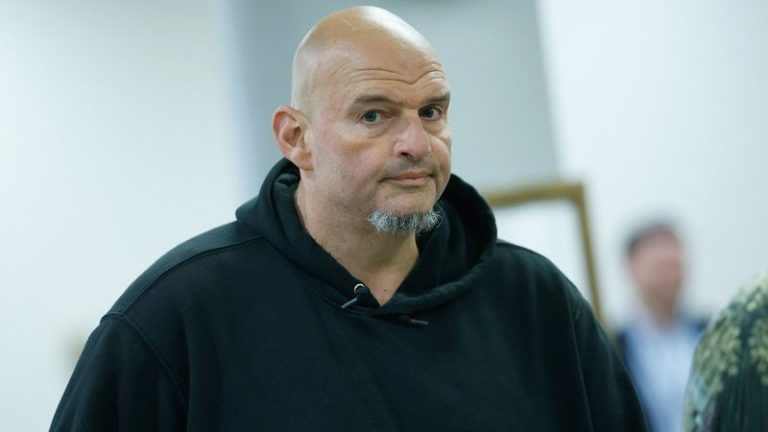
Democratic Sen. John Fetterman of Pennsylvania, a staunch supporter of Israel, congratulated President Donald Trump on Wednesday shortly after the commander in chief announced in a Truth Social post that Hamas and Israel agreed to phase one of a peace plan.

Fetterman said that he and the president are both unflinchingly committed to the U.S. ally.

‘I congratulate @POTUS on this historic peace plan that releases all the hostages. Now, enduring peace in the region is possible. Our parties are different but we have a shared ironclad commitment to Israel and its people,’ the senator noted on X while including a screenshot of Trump’s Truth Social post.

Israel launched a war effort in the wake of the heinous Oct. 7, 2023, Hamas attack in which terrorists committed atrocities including murder, rape and kidnapping. 

Trump, who has been brokering a peace deal, declared in a Truth Social post on Wednesday, ‘I am very proud to announce that Israel and Hamas have both signed off on the first Phase of our Peace Plan. This means that ALL of the Hostages will be released very soon, and Israel will withdraw their Troops to an agreed upon line as the first steps toward a Strong, Durable, and Everlasting Peace. 

‘All Parties will be treated fairly! This is a GREAT Day for the Arab and Muslim World, Israel, all surrounding Nations, and the United States of America, and we thank the mediators from Qatar, Egypt, and Turkey, who worked with us to make this Historic and Unprecedented Event happen. BLESSED ARE THE PEACEMAKERS!’ the president added.

Commerce Secretary Howard Lutnick and others have said Trump should receive the Nobel Peace Prize for the deal, but GOP Rep. Randy Fine argued that the award would be insufficient if lasting peace is obtained, instead suggesting that presidential term limits should be abolished.

‘The Nobel Peace Prize isn’t enough. If every living hostage is returned and lasting peace in the Middle East is secured, we should repeal the 22nd Amendment and thank the Lord for every day @realdonaldtrump can be our President. There will never be another one like him,’ he said in a post on X.

This post appeared first on FOX NEWS

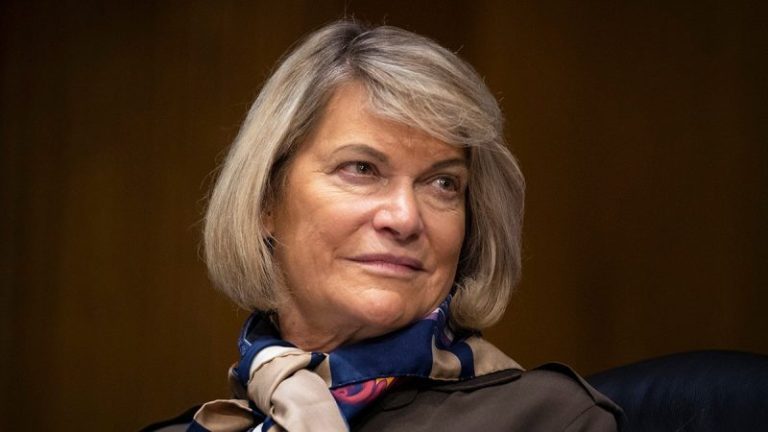
Sen. Cynthia Lummis, R-Wyo., is demanding information from the FBI on whether she has been subjected to additional surveillance, following revelations that former Special Counsel Jack Smith tracked her phone calls, calling the action ‘one of the most serious infringements on the separation of powers in American history.’ 

Fox News Digital first reported Monday that Smith and his’Arctic Frost’ team investigating Jan. 6 allegedly monitored the phone calls of Lummis and fellow GOP Sens. Lindsey Graham of South Carolina, Marsha Blackburn of Tennessee, Ron Johnson of Wisconsin, Josh Hawley of Missouri, Bill Hagerty of Tennessee, Dan Sullivan of Alaska, Tommy Tuberville of Alabama and GOP Rep. Mike Kelly of Pennsylvania.

Fox News Digital exclusively obtained an FBI document stating the names of the lawmakers and that an FBI special agent on Smith’s team ‘conducted preliminary toll analysis’ on the toll records associated with them.

An FBI official told Fox News Digital that Smith and his team were able to view which phone numbers the senators called, along with the location each call originated and where it was received.

Lummis is now seeking more information on the matter, writing a letter to FBI Director Kash Patel thanking him, President Donald Trump and Attorney General Pam Bondi for their ‘transparency regarding the blatantly unconstitutional surveillance activities conducted on the U.S. Senate and House of Representatives by the Biden Administration during Operation Arctic Frost.’

‘Your willingness to expose these abuses is crucial to getting the FBI and Department of Justice focused back on its core mission of delivering justice for all,’ she wrote in the letter to Patel, obtained by Fox News Digital.

Lummis is now demanding all FBI and DOJ records that identify which members of the Biden administration ‘authorized or approved the surveillance of my phone records and communications.’

Lummis is asking for the names of all DOJ officials, FBI officials, and any White House officials involved; the entire data file collected on her, including all phone records and any recordings or transcripts of her private communications; any legal statutes cited to justify the data collection; and any individuals with whom the information was shared.

She is also requesting documentation of ‘any other surveillance conducted by the FBI or DOJ from January 20, 2021, through January 20, 2025, on me related to my official duties as a United States senator.’

‘I believe that the surveillance of sitting United States Senators by the executive branch represents one of the most serious infringements on the separation of powers in American history,’ she wrote. ‘It seriously impinges on both my civil rights and my constitutional duties as a legislator, especially since this surveillance was directly connected to core legislative activities protected by the Speech or Debate Clause of the United States Constitution.’

Lummis added that ‘the American people deserve to know the truth about how the Biden administration weaponized federal law enforcement against their elected representatives.’

‘Those responsible will be held accountable,’ she wrote. ‘Thank you for your prompt attention to these requests, and for restoring integrity to the FBI.’

‘Arctic Frost’ was opened inside the bureau on April 13, 2022. Smith was appointed as special counsel to take over the probe in November 2022. 

An FBI official told Fox News Digital that ‘Arctic Frost’ is a ‘prohibited case,’ and that the review required officials to go ‘above and beyond in order to deliver on this promise of transparency.’ The discovery is part of a broader, ongoing review.

‘The American people deserve the truth, and under my leadership, they will have it,’ Patel told Fox News Digital. ‘We promised accountability for those who weaponized law enforcement, and we will deliver it.’

Patel added: ‘Under our watch, the FBI will never again be turned against the American people.’

‘It is a disgrace that I have to stand on Capitol Hill and reveal this — that the FBI was once weaponized to track the private communications of U.S. lawmakers for political purposes,’ FBI Deputy Director Dan Bongino, who briefed senators on the matter, told Fox News Digital. ‘That era is over.’

Bongino added: ‘Under our leadership, the FBI will never again be used as a political weapon against the American people.’

Meanwhile, the FBI has terminated employees and disbanded the CR-15 squad. Patel announced the actions were taken in response to the revelation of the ‘baseless monitoring’ of U.S. lawmakers.

‘We are cleaning up a diseased temple three decades in the making — identifying the rot, removing those who weaponized law enforcement for political purposes and those who do not meet the standards of this mission while restoring integrity to the FBI. I promised reform, and I intend to deliver it,’ Patel said in a statement to Fox News Digital.

Patel also posted about it on X, saying, ‘Transparency is important, and accountability is critical. We promised both, and this is what promises kept looks like… We terminated employees, we abolished the weaponized CR-15 squad, and we initiated an ongoing investigation with more accountability measures ahead.’

This post appeared first on FOX NEWS

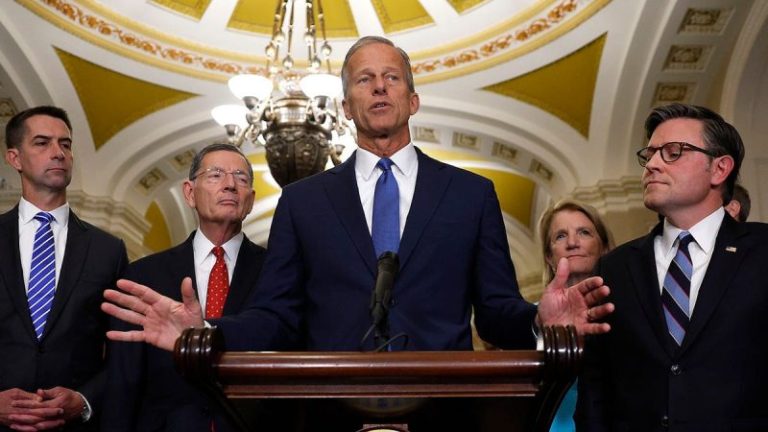
Senate Republicans aren’t ready to go ‘nuclear’ again to change the rules around the Senate filibuster as Senate Democrats dig deeper against the GOP’s push to reopen the government.

Senate Majority Leader John Thune, R-S.D., and Republicans need at least eight Democrats to cross the aisle and vote for their continuing resolution (CR) to pass through the Senate’s 60-vote filibuster threshold.

But only three Democratic caucus members have joined Republicans after six failed attempts to pass the short-term funding extension as the shutdown enters its second week.

Republicans have already turned to the ‘nuclear option’ to unilaterally change the rules this year to blast through Senate Minority Leader Chuck Schumer, D-N.Y., and Democrats’ blockade of President Donald Trump’s nominees. But for many, the notion of changing the rules and nuking the filibuster is a third rail.

‘Never, never, ever, never, none,’ Sen. Roger Marshall, R-Kan., told Fox News Digital when asked if he would consider changing the rules.

‘I’ve never heard that since the Democrats tried to do it, and I think we would all fight it pretty hard,’ he continued.

The last time the filibuster was put under the microscope was when Democrats controlled the Senate in 2022. Schumer, who was majority leader at the time, tried to change the rules for a ‘talking filibuster’ in order to pass voting rights legislation.

However, the effort was thwarted when then-Sens. Joe Manchin, D-W.Va., and Kyrsten Sinema, D-Ariz., joined Republicans to block the change. Both have since retired from the Senate and become Independents.

Republicans are not actively discussing changes to the filibuster.

‘I don’t think that’s a conversation we’ve had,’ Sen. Eric Schmitt, R-Mo., told Fox News Digital. ‘Right now, we think that the Democrats’ position has been untenable, and the more they hear from their constituents of their unreasonable activities, that will break this because we got a clean CR, so we got the better argument.’

Because of the filibuster, spending bills like a CR are generally bipartisan in nature. However, Senate Democrats have panned Republicans’ bill to reopen the government as partisan and argue that they had no input on it before it passed through the House late last month.

‘I’m generally aware of how important it is to try to keep things bipartisan, using the filibuster as the tool to do that, but I also get the fact that after a while, the frustration just boils over,’ Sen. Cynthia Lummis, R-Wyo., told Fox News Digital.

Frustrations reached a new level in Congress on Wednesday, with Sens. Ruben Gallego, D-Ariz., and Mark Kelly, D-Ariz., publicly arguing with House Speaker Mike Johnson, R-La., over the shutdown. Then there was another public back-and-forth between House Minority Leader Hakeem Jeffries, D-N.Y., and Rep. Mike Lawler, R-N.Y.

Still, neither side in the upper chamber is ready to budge from their positions.

Most Senate Democratic caucus members are rooted in their position that unless they get a deal on expiring Obamacare tax credits, they will not join Republicans to reopen the government.

Republicans have been adamant that negotiations on extending the subsidies — with reforms — can happen, but only after the government is reopened.

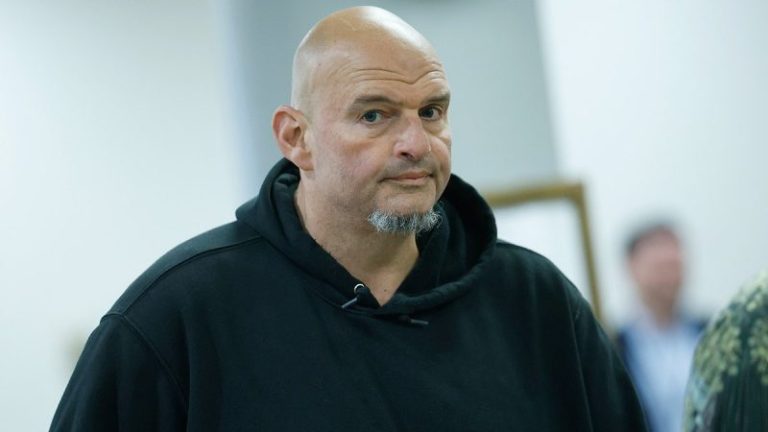
Sen. John Fetterman, D-Pa., is the lone Senate Democrat who has voted with Republicans each time to reopen the government. He pointed out that Republicans had just changed Senate rules last month to advance Trump’s nominees.

‘I think we probably should. If you’re able to get out of the filibuster to prevent either party to make it a lot harder to shut the government down, I’d absolutely support that,’ Fetterman said. 

This post appeared first on FOX NEWS

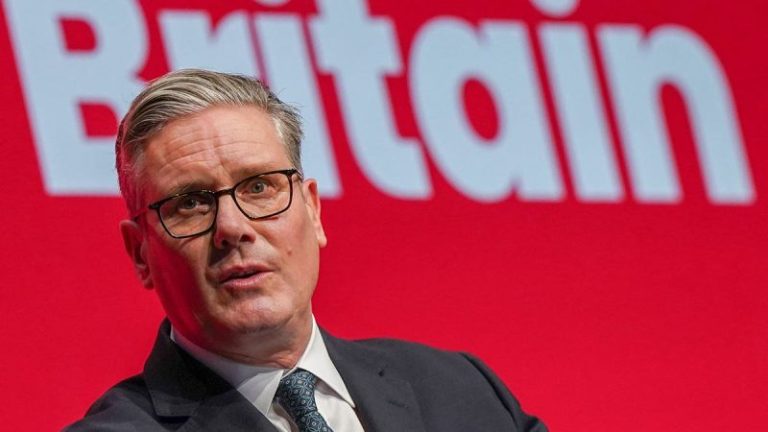
More than 2.8 million Brits have signed a petition as of Wednesday, calling on the U.K. government to reverse its mandatory Digital ID system over concerns it will lead to ‘mass surveillance and digital control.’

The ID program, dubbed ‘Brit Card’ and announced last week by U.K. Prime Minister Keir Starmer, is set to be rolled out by August 2029 in an attempt by the Labour government to crack down on illegal immigration as it would bar anyone who doesn’t have a digital ID from working in the U.K.

But critics of the plan argue its effects on illegal immigration will not be significant enough to make up for the privacy concerns it poses. 

The White House confirmed to Fox News Digital that this controversial step to curb immigration is not currently being considered by President Donald Trump, despite his commitment to curbing illegal immigration and his security crackdowns in cities across the U.S.

But according to one security expert, digital ID is actually not nearly as concerning as most opponents of the system believe it to be.

‘When the government issues a digital ID, they’re issuing it to the individual. That means, just like your paper ID sits in your physical wallet, your digital ID sits in your digital wallet, it’s not stored at a central location,’ Eric Starr, founder and CEO of Ultrapass Identity Corp, told Fox News Digital.

‘When you pass your digital ID to a relying party, they don’t ping a central database,’ he continued. ‘They look at the digital ID you’ve presented, and through cryptography, can determine the authenticity of the digital document.’

Starr, whose company works with governments around the world to provide decentralized digital ID options, said the controversy around digital ID comes down to poor conception and a lack of understanding.  

The tech guru said he believes the U.K. went about its rollout of a digital ID the wrong way by making it mandatory and releasing few details on the system itself. 

Starr argued that governments have the right to know who its citizens are and nations, including the U.S., already have systems in place that keep track of its people, including by issuing social security numbers – a system that the U.S. has relied on since 1936.

When pressed about concerns relating to a government’s ability to enforce mass surveillance through the ease that the technology could offer, even if that is not the original intent, Starr said it comes down to establishing those protections for personal privacy from the get-go. 

‘We care deeply about personal freedom in ways that other countries don’t think about it, and generally speaking, individuals don’t want the federal government in their business every day,’ Starr explained in reference to the American public. ‘The fear that people have about digital identity is that it’s a surveillance opportunity.’

Starr explained that some are concerned that any time a digital ID is used, it will then alert or ‘phone home’ a government tracking system – a concern that privacy advocates like the Electronic Frontier Foundation and the ACLU have flagged.

‘It’s not about the technology, but managing fear and managing what actually gets deployed,’ he added, noting that safeguards can be put in place to counter these concerns.

Even though there is no federal version of a digital ID, more than a dozen states have already begun issuing mobile driver’s licenses.

A federal version of a digital ID would, in theory, just include an individual’s information that the government already has access to, including details like passport information.

But there’s another major concern people flag when it comes to digital IDs – how to ensure personal information is protected from identity theft, which has become a major concern in recent years amid mass cyber breaches.

According to Starr, the ‘architecture of digital identity’ is different from centralized databases used by institutions like hospitals, which have found themselves vulnerable to cyber-attacks and data breaches.

Decentralized systems, as in the case of a digital ID, make hacking ‘nearly impossible’ because ‘the only way to hack a million IDs is to hack a million phones,’ he explained. 

 ‘There are solutions. It’s not a technology issue, it’s an education issue, it’s a fear issue,’ Starr said. ‘It’s also poorly conceived solutions that open the door for bad behavior.’

This post appeared first on FOX NEWS

Democratic Sen. John Fetterman of Pennsylvania, a staunch supporter of Israel, congratulated President Donald Trump on Wednesday shortly after the commander in chief announced in a Truth Social post that Hamas and Israel agreed to phase one of a peace plan.

Fetterman said that he and the president are both unflinchingly committed to the U.S. ally.

‘I congratulate @POTUS on this historic peace plan that releases all the hostages. Now, enduring peace in the region is possible. Our parties are different but we have a shared ironclad commitment to Israel and its people,’ the senator noted on X while including a screenshot of Trump’s Truth Social post.

Israel launched a war effort in the wake of the heinous Oct. 7, 2023, Hamas attack in which terrorists committed atrocities including murder, rape and kidnapping. 

Trump, who has been brokering a peace deal, declared in a Truth Social post on Wednesday, ‘I am very proud to announce that Israel and Hamas have both signed off on the first Phase of our Peace Plan. This means that ALL of the Hostages will be released very soon, and Israel will withdraw their Troops to an agreed upon line as the first steps toward a Strong, Durable, and Everlasting Peace. 

‘All Parties will be treated fairly! This is a GREAT Day for the Arab and Muslim World, Israel, all surrounding Nations, and the United States of America, and we thank the mediators from Qatar, Egypt, and Turkey, who worked with us to make this Historic and Unprecedented Event happen. BLESSED ARE THE PEACEMAKERS!’ the president added.

Commerce Secretary Howard Lutnick and others have said Trump should receive the Nobel Peace Prize for the deal, but GOP Rep. Randy Fine argued that the award would be insufficient if lasting peace is obtained, instead suggesting that presidential term limits should be abolished.

‘The Nobel Peace Prize isn’t enough. If every living hostage is returned and lasting peace in the Middle East is secured, we should repeal the 22nd Amendment and thank the Lord for every day @realdonaldtrump can be our President. There will never be another one like him,’ he said in a post on X.

This post appeared first on FOX NEWS

Canada One Mining (TSXV:CONE, OTC:COMCF, FSE:AU31) is an emerging explorer focused on the Quesnel porphyry belt, one of Canada’s most prolific critical mineral districts. Its flagship Copper Dome project, adjacent to the 45,000 t/day Copper Mountain mine (702 Mt at 0.24 percent copper, 0.09 grams per ton gold, 0.72 grams per ton silver), offers brownfield porphyry copper potential with strong discovery upside.

The flagship Copper Dome project is a 12,800-hectare, 100-percent-owned land package located just 1.5 km south of Hudbay Minerals’ Copper Mountain mine and 18 km from Princeton, British Columbia. With year-round road access, grid power, water supply, and nearby services, the project requires no camp or helicopter support and sits within a three-hour drive of Vancouver.

Positioned in the lower Quesnel porphyry belt—one of Canada’s most prolific porphyry copper districts—Copper Dome offers compelling exploration potential. Backed by a fully permitted, five-year drill program, the project is poised to deliver near-term results and game-changing catalysts.

Company Highlights

  • Flagship Copper Project in Tier-1 Jurisdiction: 12,800 ha Copper Dome land package, adjacent to Hudbay’s Copper Mountain mine, one of Canada’s most prominent copper operations.
  • Discovery Thesis: Porphyry cluster-style deposit potential; Copper Mountain deposit analogs average ~150 to 200 Mt.
  • Logistics Advantage: Year-round access, no camp/helicopters; 3 to 3.5 hrs from Vancouver; pine-beetle-thinned cover aids access.
  • Technical Uplift: Transitioning to four-acid digestion (industry standard) vs. the historical three-acid will, on average, return materially high metal values especially where minerals are more resistant to dissolution.
  • Near-term Catalysts: Five-year drill permits in place; upcoming geophysics, geochemistry and drill programs across multiple porphyry copper/gold zones.
  • Multiple Assets in Canada: In addition to Copper Dome, Canada One’s other exploration assets include the historical small-scale, past-producing Goldrop property and the Zeus gold project.
  • Valuation Upside: Market cap just below C$3 million provides significant leverage to discovery and exploration success.
  • Capital Strategy: Management will not finance below $0.10; interim self-funding to minimize dilution.
  • Experienced Leadership: Management team is supported by resource veterans such as Dave Anthony, head of the company’s advisory board, past COO of Barrick Africa and current CEO of Assante Gold Corporation (TSX:ASE) with a $1.7 billion market capitalization.

This Canada One Mining profile is part of a paid investor education campaign.*

Click here to connect with Canada One Mining (TSXV:CONE) to receive an Investor Presentation

This post appeared first on investingnews.com

Thanks to exchange-traded funds (ETFs), investors don’t have to be tied to one specific stock. When it comes to biotech ETFs, they give sector participants exposure to many biotech companies via one vehicle.

ETFs are a popular choice as they allow investors to enter the market more safely compared to investing in standalone stocks. A key advantage is that even if one company in the ETF takes a hit, the impact will be less direct.

All other figures were also current as of that date. Read on to learn more about these investment vehicles.

1. ALPS Medical Breakthroughs ETF (ARCA:SBIO)

AUM: US$95.57 million

Launched in December 2014, the ALPS Medical Breakthroughs ETF tracks small- and mid-cap biotech stocks that have one or more drugs in either Phase II or Phase III US FDA clinical trials. Its holdings must have a market cap between US$200 million and US$5 billion.

There are 102 holdings in this biotech fund, with about 40 percent being small- and micro-cap stocks. Its top holdings include Cytokinetics (NASDAQ:CYTK) at a weight of 3.62 percent, Merus (NASDAQ:MRUS) at 3.51 percent and Avidity Biosciences (NASDAQ:RNA) at 3.43 percent.

2. Tema Oncology ETF (NASDAQ:CANC)

AUM: US$82.42 million

The Tema Oncology ETF provides exposure to biotech companies operating in the oncology industry. Launched in August 2023, it includes companies developing a range of cancer treatments, including CAR-T cell therapies and bispecific antibodies.

There are 51 holdings in this biotechnology fund, of which just over half are small- to mid-cap stocks. Among its top holdings are Revolution Medicines (NASDAQ:RVMD) at a weight of 6.29 percent, Eli Lilly and Company (NYSE:LLY) at 5.47 percent and Genmab (NASDAQ:GMAB) at 5.32 percent.

3. Direxion Daily S&P Biotech Bear 3x Shares (ARCA:LABD)

AUM: US$78.98 million

The Direxion Daily S&P Biotech Bear 3x Shares ETF is designed to provide three times the daily return of the inverse of the S&P Biotechnology Select Industry Index, meaning that the ETF rises in value when the index falls and falls in value when the index rises. Leveraged inverse ETFs are designed for short-term trading and are not suitable for holding long-term. They also carry a high degree of risk as they can be significantly affected by market volatility.

Unlike the other ETFs on this list, LABD achieves its investment objective through holding financial contracts such as futures rather than holding individual stocks.

4. ProShares Ultra NASDAQ Biotechnology (NASDAQ:BIB)

AUM: US$62.42 million

The ProShares Ultra NASDAQ Biotechnology ETF, launched in April 2010, is leveraged to offer twice daily long exposure to the broad-based NASDAQ Biotechnology Index, making it an ideal choice “for investors with a bullish short-term outlook for biotechnology or pharmaceutical companies.” However, analysts also advise investors with a low risk tolerance or a buy-and-hold strategy against investing in this fund due to its unique nature.

Of the 260 holdings in this ETF, the top biotech stocks are Vertex Pharmaceuticals (NASDAQ:VRTX) at a 5.05 percent weight, Amgen (NASDAQ:AMGN) at 5.01 percent and Gilead Sciences (NASDAQ:GILD) at 4.93 percent.

5. Tema Heart and Health ETF (NASDAQ:HRTS)

AUM: US$51.68 million

Launched in November 2023, the Tema GLP-1 Obesity and Cardiometabolic ETF tracks biotech stocks with a focus on diabetes, obesity and cardiovascular diseases. The fund was renamed on March 25 from Tema Cardiovascular and Metabolic ETF, and again on June 27 from the GLP-1 Obesity and Cardiometabolic ETF.

There are 47 holdings in this biotechnology fund, with about 75 percent being large-cap stocks and 22 percent mid-cap. About three-quarters of its holdings are based in the US. Its top biotech holdings are Eli Lilly and Company at a 8.47 percent weight, AstraZeneca (NASDAQ:AZN) at 4.39 percent and Abbott Laboratories (NYSE:ABT) at 4.58 percent.

Securities Disclosure: I, Meagen Seatter, hold no direct investment interest in any company mentioned in this article.
This post appeared first on investingnews.com