Archive

November 2025

Browsing

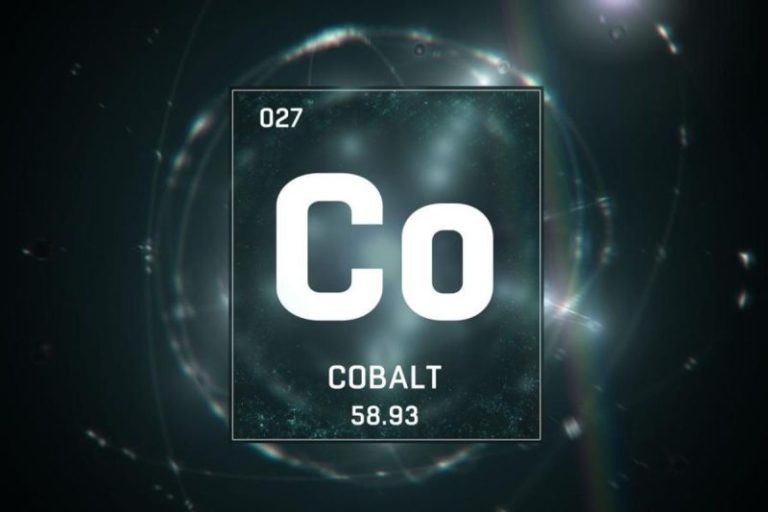
Cobalt prices regained momentum in the third quarter of 2025 as tighter export controls from the Democratic Republic of Congo (DRC) fueled expectations of a market rebound.

After languishing near multi-year lows early in the year, the metal surged to US$47,110 per metric ton in late October, its highest level since January 2023.

The DRC’s prolonged export suspension, followed by new quota limits, has begun to ease a years-long supply glut, with analysts now forecasting a shift from oversupply toward market balance.

All year-to-date and share price information was obtained on October 28, 2025, using TradingView’s stock screener. Companies with market caps above C$10 million at that time were considered.

1. Talon Metals (TSX:TLO)

Year-to-date gain: 358.82 percent
Market cap: C$440.55 million
Share price: C$0.39

Talon Metals is a base metals company advancing the Tamarack nickel-copper-cobalt project in Central Minnesota, US, through a joint venture with Rio Tinto (ASX:RIO,NYSE:RIO,LSE:RIO). Talon currently holds a 51 percent stake in the project and can earn up to 60 percent.

In late March, Talon Metals announced a massive sulfide discovery at its Tamarack project, with an intercept measuring 8.25 meters containing 95 percent sulfide content located deeper than the current Tamarack resource.

In May, a further massive sulfide discovery in the same zone, the thickest discovery yet at the site, drove the company’s share price up significantly, and another in early August did the same. In the August announcement, Talon shared that it named the discovery zone the Vault zone.

At the start of Q4, Talon announced an expanded winter drilling and exploration program at the Vault zone.

Shares of Talon rallied to a year-to-date high of C$0.54 on October 14, following the winter drill news and alongside rising cobalt prices.

On October 20, Talon received a 12 month extension from Rio Tinto subsidiary Kennecott Exploration to submit a feasibility study and US$10 million payment required to increase its ownership stake in the Tamarack project to 60 percent.

The extension will allow Talon to align the study’s release with the publication of the project’s scoping environmental assessment worksheet, expected in the first half of 2026, marking its entry into Minnesota’s formal environmental review process.

2. Leading Edge Materials (TSXV:LEM)

Year-to-date gain: 222.22 percent
Market cap: C$72.49 million
Share price: C$0.29

Leading Edge Materials is developing critical materials projects in the EU. The company’s projects include its wholly owned Woxna graphite mine and Norra Kärr heavy rare earth elements project, both in Sweden, as well as its 51 percent owned Bihor Sud nickel-cobalt exploration alliance in Romania.

According to its June 2025 presentation, exploration work planned for 2025 at Bihor Sud’s G2 gallery includes mapping and sampling of cobalt-nickel and zinc-lead-silver mineralized zones detected visually and by hand-held XRF. Drilling targeting polymetallic mineralization at the gallery is underway.

On the financial side, Leading Edge announced a C$400,000 non-brokered private placement in June.

According to a June 22 activities update, Leading Edge’s Romanian subsidiary was granted ownership and operational permits for the Avram Iancu mine at Bihor Sud, and the team had begun preliminary investigations of the site.

In its recent quarterly report, released September 19, Leading Edge Materials said it is reassessing its prospects after being granted those permits. at its project located within the Bihor Sud exploration area following the acquisition of additional ownership and operating permits.

The Avram Iancu site hosts extensive historic underground workings and data indicating copper-rich massive sulfide zones, the statement noted.

A competent person report is in progress to consolidate past exploration and outline next steps, while the company evaluates financing options to advance development.

Shares of Leading Edge also benefited from the mid-October cobalt price rally, registering a year-to-date high of C$0.44 on October 14.

3. Battery Mineral Resources (TSXV:BMR)

Year-to-date gain: 180 percent
Market cap: C$16.79 million
Share price: C$0.14

Battery Mineral Resources is focused on developing into a mid-tier copper producer and recently restarted mine and mill operations at the Punitaqui Mining Complex in Chile. In Canada, the company holds the largest land position in Ontario’s historic Cobalt district, where it is exploring high-grade primary cobalt deposits at McAra, Gowganda and Elk Lake.

The company’s portfolio also includes energy services and mineral exploration assets in North America, along with graphite projects in South Korea.

In late October, BMR said it was evaluating strategic options for its Gowganda silver tailings project, located northeast of Sudbury, Ontario.

The project lies in one of the country’s most productive past silver-cobalt districts, and the Gowganda mining camp produced 60 million ounces of silver and 1.3 million pounds of cobalt between 1910 and 1969. Gowganda hosts four former mines and associated tailings historically estimated to contain 2.96 million ounces of silver. BMR is assessing how best to advance or monetize the asset to enhance shareholder value.

On October 16, Battery Mineral Resources reported strong operational performance at its Punitaqui copper project in Chile, driven by improved underground production and plant optimization. Since September 1, 2025, underground operations have averaged 1,800 tonnes per day, up 80 percent from the first half of the year, and 2,000 tonnes per day over the recent two weeks period.

BMR is also advancing development of additional underground operations at Cinabrio Norte and Dalmacia to support further growth from Punitaqui.

The news pushed shares of BMR to a year-to-date high of C$0.17 on October 21.

4. FPX Nickel (TSXV:FPX)

Year-to-date gain: 95.74 percent
Market cap: C$144.81 million
Share price: C$0.46

FPX Nickel is currently advancing its Decar nickel district in BC, Canada.

The property comprises four key targets, with the Baptiste deposit being the primary focus, alongside the Van target. The company also has three other nickel projects in BC and one in the Yukon, Canada.

In February, FPX released a scoping study for the development of a refinery that would refine awaruite concentrate from Baptiste into battery-grade nickel sulfate and by-products of cobalt carbonate, copper and ammonium sulfate. Annual output is anticipated at 32,000 metric tons of contained nickel and 570 metric tons of contained cobalt.

The results show that the process would result in operating and all-in production costs near the bottom of nickel sulfate cost curve, in part due to by-product credits. Additionally, the carbon intensity of the awaruite refinery would be significantly lower than that of currently used production methods.

On September 4, FPX completed a large-scale mineral processing pilot campaign for its Baptiste nickel project, following three prior successful campaigns. The latest production run generated bulk samples of awaruite concentrate, which will be provided to prospective partners, including pre-cursor cathode active materials, battery producers and automakers, to assess its suitability as feedstock.

Later in the month, FPX signed an option agreement to acquire up to 100 percent of the Advocate nickel property in Newfoundland, Canada, following its review of over 50 targets. The property has also been accepted by the Japan Organization for Metals and Energy Security (JOGMEC) as the first designated property under the generative alliance between FPX and JOGMEC, with a significant work program planned to build on encouraging surface nickel recoveries.

FPX shares registered a year-to-date high of C$0.55 on October 17.

5. Wheaton Precious Metals (TSX:WPM)

Year-to-date gain: 61.23 percent
Market cap: C$60.38 billion
Share price: C$133.00

Wheaton Precious Metals is one of the largest gold and silver royalty and streaming companies.

It has investments in 18 operating mines and 28 development projects across four continents, including a cobalt streaming agreement for Vale’s (NYSE:VALE) Voisey’s Bay nickel mine in Newfoundland and Labrador, Canada.

According to Wheaton, Voisey’s Bay is currently in a transitional phase, shifting from the depleted Ovoid open pit to full underground production.

The company reported its Q1 financial results on May 8. The report highlighted a record US$470 million in revenue, US$254 million in net earnings and US$361 million in operating cash flow.

The cobalt segment registered year-on-year attributable production gains, rising to 540,000 pounds in the year’s first quarter, compared to 240,000 pounds during Q1 2024. Despite the output increase, sales fell to 265,000 pounds in Q1 versus 309,000 pounds in Q1 2024.

According to Wheaton’s Q2 2025 results, the Voisey’s Bay mine produced 647,000 pounds of attributable cobalt, a roughly 150 percent increase from the same period in 2024. Vale reported that the underground operations are steadily ramping up, with full production expected by the second half of 2026 as the transition from the depleted Ovoid open-pit continues.

Shares of Wheaton rose to a year-to-date high of C$159.41 on October 16 alongside rising prices for gold, silver and cobalt.

FAQs for cobalt

What is cobalt?

Cobalt is a silver-gray metal that is often produced as a by-product of nickel and copper mining. It does not occur as a separate metal anywhere in the world, and must be produced by reductive smelting, or from the metallic ore cobaltite, which is made of cobalt, sulfur and arsenic.

What is cobalt used for?

Historically, cobalt oxides were used to impart a blue pigment to glass, porcelain and paints, hence the still-used cobalt blue paint. The metal is also used to produce superalloys, as cobalt imparts qualities such as corrosion and wear resistance, which are useful in applications such as airplanes, orthopedics and prosthetics.

Today cobalt is most famously used in the rechargeable lithium-ion batteries that run everything from smartphones to EVs.

Where is cobalt mined?

The majority of cobalt production comes out of the DRC, which was responsible for producing 220,000 metric tons of the material in 2024. For perspective, the second largest cobalt-producing country, Indonesia, reported output of 28,000 MT the same year; third place Russia produced 8,700 MT of the material.

As the lithium-ion battery and EV supply chains garner global attention, companies are trying to limit their exposure to cobalt produced from the DRC, which is known for human rights abuses and sometimes child labor in its mining industry.

In response to this trend, many countries with cobalt are attempting to create domestic cobalt and EV supply chains in the hope of attracting companies looking to avoid DRC-sourced cobalt. This can be seen in the up-and-coming battery corridor in Ontario, Canada, as well as in the US-based Idaho cobalt belt.

Securities Disclosure: I, Georgia Williams, hold no direct investment interest in any company mentioned in this article.

This post appeared first on investingnews.com

A handful of judges, some of whom are Supreme Court contenders, will tackle antisemitism at an annual convention this week, joining a rare multi-judge panel in a forum typically reserved for one-person lectures, Fox News Digital has learned. 

U.S. District Judge Roy Altman, who will moderate the discussion among the judicial heavyweights, said the panel is ‘unprecedented’ and a needed change to address what he said was a rise in antisemitism in the aftermath of Hamas’ terrorist attack on Israel in 2023. The panel is part of the Federalist Society’s annual National Lawyers Convention.

‘This conversation on faith, understanding, and moral responsibility could not be more timely,’ Altman said. ‘It reflects the importance of the moment, the endurance of Western values, and Judge [Robert] Bork’s abiding belief in moral clarity and in the strength that comes from open dialogue.’

The judges who will participate in the discussion include seven Trump appointees, including Altman, one appointee of former President George Bush, and a justice of the Texas Supreme Court.

They include Judge Amul Thapar of the U.S. Court of Appeals for the 6th Circuit, who was floated in Bloomberg Law as a good successor to Justice Clarence Thomas, in part because he would be the first Asian American justice, a ‘positive’ when weighing replacing the second-ever Black justice.

Two others, Judge David Stras and Raymond Gruender, both of the U.S. Court of Appeals for the 8th Circuit, were on Trump’s Supreme Court shortlist during the president’s first term. Judge Martha Pacold of the Northern District of Illinois appeared on another one of Trump’s shortlists in 2020.

The Federalist Society event has for years been named after the late Bork, who, incidentally, once helped break a law firm’s avoidance of hiring Jewish lawyers, according to Senate testimony by his peers in 1987. 

In an interview with Fox News Digital, Altman, a vocal Jewish judge who is based in the Southern District of Florida, said he has also arranged numerous trips for federal judges of varying faiths to visit Israel after the Oct. 7 attack.

He said that although his personal conversations about Israel had largely been centered on campuses, ‘it became clear’ to him that the judiciary needed to chime in because heated discourse surrounding the topic involved legal questions.

The deadly attack in Israel reignited conflict in Gaza and led to nationwide anti-Israel protests, especially on U.S. college campuses. Protesters claimed Israel was killing thousands of innocent Palestinians in Gaza indiscriminately, while the Israeli government said it gave fair warning about its offensive and that its targets were Hamas terrorists.

‘Those claims, is Israel violating the laws of war? Is it an apartheid state? Does it occupy land that doesn’t belong to it?’ Altman said. ‘Those are just legal questions with legal answers, and I thought, who better than federal judges to understand what the applicable legal rule is, to adduce and find out what the relevant facts are, and then to apply the facts to the law and issue a judgment, than a federal judge.’

Some of the judges who will participate on the panel have been on Altman’s Israel trips.

The Federalist Society indicated that the judges plan to speak about their personal experiences talking with people of other faiths about anti-Jewish sentiments. They also plan to address First Amendment concerns surrounding antisemitism.

The discussion comes as the Trump administration has aggressively targeted noncitizens for speech that it has claimed in court is at odds with its national security posture because it is too critical of Israel and potentially supportive of Hamas.

Free speech proponents have warned that offensive and politically charged speech is protected under the Constitution. In the case of Mahmoud Khalil, which has become a flashpoint in these discussions, the courts have been examining the extent to which noncitizens enjoy First Amendment protections.

Altman said he has observed a one-sidedness in the opposite direction on campuses and that pro-Israel expression has been suppressed. Just this year, New York University canceled Jewish legal scholar Ilya Shaprio’s talk there because of what it said were security risks from protesters.

‘I was shocked, honestly, to discover that so many young people in our country, especially on our college campuses, had a totally incorrect view about the one Jewish state in the world and its role in the Middle East and its history and how it came to be, and it also became clear that the sort of debate that was taking place on campus wasn’t really a debate, because only one side of the story was being told,’ Altman said.

This post appeared first on FOX NEWS

Israel said the remains of three people returned by Hamas on Friday did not match any of the deceased hostages. 

Following forensic testing, Israeli officials said it was concluded that the remains do not belong to the 11 deceased hostages still being held in Gaza, Fox News has learned.

‘The remains we received are not our hostages,’ Israeli Prime Minister Benjamin Netanyahu’s office told The Associated Press following the examination of the remains. However, neither Netanyahu’s office nor any other Israeli authorities confirmed the identities of the remains to the AP. It is still unclear who these people were and why they were given to Israel.

Since the U.S.-brokered ceasefire, which began earlier this month, Hamas has returned the remains of 17 hostages. With those already handed over, there have been instances in which Israel has claimed that Hamas returned remains that did not match the remaining deceased hostages. Hamas previously returned additional remains belonging to Ofir Tzarfati, whose body was first recovered in 2023.

The International Committee of the Red Cross (ICRC) made clear its role in the transfer of hostages’ remains. In a statement, the ICRC said that it ‘does not take part in locating the remains.’

‘In accordance with international humanitarian law, it is the responsibility of the parties to search for, collect, and return the dead,’ the ICRC said.

On Thursday, Israel received the remains of Amiram Cooper and Sahar Baruch, leaving 11 deceased hostages in the Gaza Strip, including U.S. citizens Itay Chen and Omer Neutra.

Israeli intelligence suggests Cooper was alive when he was taken from his home in Kibbutz Nir Oz during the Oct. 7, 2023, attacks. The Israel Defense Forces (IDF) said that it estimates Cooper was killed in February 2024. He was 84 years old. Cooper leaves behind a wife, four children and 11 grandchildren.

Baruch was taken from his home in Kibbutz Be’eri during the massacre. The IDF said that it estimates he was murdered on Dec. 8, 2023, at the age of 25. Baruch leaves behind his parents and two siblings.

In addition to Neutra and Chen, the remaining deceased hostages include Meny Godard, Hadar Goldin, Ran Gvili, Asaf Hamami, Joshua Loitu Mollel, Dror Or, Oz Daniel, Lior Rudaeff and Sudthisak Rinthalak.

Fox News’ Yonat Friling and The Associated Press contributed to this report.

This post appeared first on FOX NEWS

The First Amendment won out this week in a court case over a man who repeatedly called for President Donald Trump’s assassination and openly fantasized about his violent demise. 

A jury acquitted the man, Peter Stinson, of one charge of soliciting a crime of violence, raising questions about when speech is protected by the Constitution and when it becomes incriminating.

A former longtime Coast Guard officer, Stinson called for someone to ‘take the shot’ in reference to Trump, according to court papers. ‘Realistically the only solution is violence,’ Stinson wrote.

Stinson said he ‘would twist the knife after sliding it into [Trump’s] fatty flesh’ and that he ‘would be willing to pitch in’ for a hitman contract.

‘He wants us dead. I can say the same thing about him,’ Stinson wrote in another post during the height of the COVID-19 pandemic.

A witness for the defense, Professor Jen Golbeck of the University of Maryland, said people ‘rooting for Trump to die online’ is common.

‘On one hand, I would not encourage anyone to post those thoughts on social media,’ Golbeck said, according to the Washington Post. ‘On the other hand, I can’t count the number of people who I saw post similar things. … It’s a very common sentiment. There’s social media accounts dedicated to tracking whether Trump has died.’

Brennen VanderVeen, program counsel with the Foundation for Individual Rights and Expression, said that one issue with the charges in Stinson’s case was that it was not clear whom Stinson was soliciting to carry out the crime.

‘Solicitation is when it’s directly tied to the crime. So, if he contacts an actual hit man and tries to arrange some sort of hit contract, that’s solicitation,’ VanderVeen told Fox News Digital. ‘Without more … that probably does not meet the elements of actual solicitation.’

Stinson’s attorneys argued in court documents that their client’s posts were not threats but rather ‘political advocacy that the First Amendment was squarely designed to protect.’

‘They lack the ‘specificity, imminence, and likelihood of producing lawless action’ required to fall outside constitutional protection,’ the attorneys said.

Threats to conservative SCOTUS justices and Obama

The jury acquittal, which was handed down quickly after a two-day trial, came at a time when political violence has taken the spotlight, particularly in the aftermath of conservative activist Charlie Kirk’s assassination, a string of recent violence toward immigration enforcement officers and Republican and Democratic political figures continuously facing threats.

A person convicted of attempting to assassinate Justice Brett Kavanaugh had taken concrete steps by searching the internet for mass shootings, discussing killing a Supreme Court justice in internet chats and showing up armed at Kavanaugh’s house in 2022.

A man who participated in the Jan. 6 riot was convicted by a judge in a separate case of firearms charges and making a hoax threat aimed at former President Barack Obama. He was sentenced this week to time served after he livestreamed himself driving around the former president’s neighborhood and saying he was ‘working on a detonator.’ He was found with a machete and illegal weapons.

In a looming constitutional test, another man is facing charges of threatening federal judges by sending hundreds of ominous messages through the Supreme Court website referencing several justices’ graphic murders. He tried to have his case tossed out over First Amendment concerns, but a judge denied the request, saying a jury would need to weigh that argument.

Presidents, senators, House members and other political figures routinely speak about facing a range of threats, whether in public forums or through direct messages.

High court greenlights ‘vituperative’ language

One legal test in these cases came in 1969, when the Supreme Court decided in favor of a protester who allegedly told a group of people while discussing getting drafted for the Vietnam War that if he is given a rifle, the first man he wants to kill is President Lyndon Johnson. His remark was political hyperbole rather than a ‘true threat,’ the high court found.

‘What is a threat must be distinguished from what is constitutionally protected speech,’ the majority wrote. ‘The language of the political arena … is often vituperative, abusive, and inexact.’

Stinson was initially charged with two counts of a threat against the president, but the DOJ shifted course and brought the one solicitation charge against him.

Department of Justice lawyers argued that Stinson’s incessant violent comments on X and Bluesky, coupled with self-identifying as an Antifa member, met the charging criteria, but prosecutors failed to convince a jury that the speech was more than bluster.

Kirk spurs examination of ‘hate speech’

In the case of Kirk’s murder, finger-pointing ensued. Republicans blamed inflammatory rhetoric from Kirk’s political opponents for inciting his death.

Attorney General Pam Bondi stirred the conversation by saying in an interview after Kirk’s death that the DOJ would ‘absolutely target you, go after you, if you are targeting anyone with hate speech.’ Bondi later walked back her comment, saying speech that ‘crosses the line into threats of violence’ is punishable by law.

In cases of inciting violence, according to VanderVeen, speech remains protected because of a lacking nexus between the words and the attack.

‘Incitement is more about the imminence. … How much time would have to pass between that person’s speech and the actual unlawful act of the violence?’ VanderVeen said, noting that inciting violence typically involves addressing a mob.

‘If someone’s saying, ‘Violence is good,’ but there’s no imminent lawless action there, someone else has to say, ‘That guy’s right, that violence is good. I’m going to start doing violence,” VanderVeen said. ‘At that point, that’s on the person doing the violence.’

This post appeared first on FOX NEWS

Republican senators issued a torrent of criticism against U.S. District Judge James Boasberg this week after it was revealed that he had signed off on subpoenas and gag orders issued as part of former Special Counsel Jack Smith’s investigation — though a cursory review of court rules suggests it is far less provocative than lawmakers have claimed.

Sens. Ted Cruz, R-Texas, and Marsha Blackburn, R-Tenn., were among the Republicans who blasted Boasberg as an ‘activist’ judge, and Cruz, for his part, suggested Boasberg should be impeached. 

‘My assumption,’ Cruz fumed, is ‘that Judge Boasberg printed these things out like the placemats at Denny’s — one after the other.’

At issue were subpoenas and gag orders issued by former special counsel Jack Smith’s team as part of its probe into President Donald Trump’s actions in the wake of the 2020 election. 

The redacted documents were made public this week by Sen. Chuck Grassley, R-Iowa.

They included subpoenas of phone records for 10 senators and one House lawmaker, and gag orders sent to Verizon and AT&T instructing them not to notify lawmakers of the subpoena. (Verizon complied, AT&T did not.) 

Both the subpoenas and gag orders were signed by U.S. District Judge James Boasberg, according to the newly released documents — a detail that prompted fresh criticism and indignation from some of the Republicans in question, including Cruz, who blasted the investigation in question as ‘worse than Watergate’ and a gross violation of prosecutorial powers.

Blackburn blasted Boasberg as an ‘activist’ judge. Some lawmakers further argued for his impeachment as a result of his involvement. 

In fact, his role in the process is far from surprising. 

Local rules for the federal court system in D.C. explicitly state the chief judge ‘must hear and determine all proceedings before the grand jury.’ The subpoenas and gag orders signed by Boasberg were signed in May 2023 — roughly two months into his tenure as the chief judge for the federal court.

It’s unclear whether Sens. Cruz or Blackburn were aware of this rule, and they did not immediately respond to Fox News Digital’s request for comment. 

But it’s also not the first time Judge Boasberg previously noted his oversight of these matters as the chief judge for D.C. — including in the special counsel probe in question. 

Boasberg explained the rule in question in June 2023, when he granted, in part, a request from media outlets to unseal a tranche of redacted documents related to the subpoena and testimony of former Vice President Mike Pence in the same probe. (He explained in a lengthy public memo that he did so because the press movant were seeking record that Pence himself had discussed publicly.) 

Still, the controversy comes as Boasberg has found himself squarely in Trump’s crosshairs, after he issued a temporary restraining order in March blocking Trump’s use of a 1798 wartime law to deport hundreds of Venezuelan nationals to a maximum security prison in El Salvador.

Until that point, however, Boasberg had largely avoided making headlines. 

A graduate of Yale, Oxford University and Yale Law School, Boasberg clerked for the U.S. Ninth Circuit Court of Appeals before joining the Justice Department as a federal prosecutor in Washington, D.C.

He was tapped in 2002 by then-President George W. Bush to serve on the D.C. Superior Court, where he served until 2011, when he was nominated by President Barack Obama to the federal bench in D.C. in 2011. 

His confirmation vote soared through the Senate with a 96-0 vote of approval, including with the support of Sen. Grassley and other Republicans named in the subpoena. 

Boasberg in 2014 was appointed by Supreme Court Chief Justice John Roberts to a seven-year term on the U.S. Foreign Intelligence Surveillance Court, or FISA Court, comprised of 11 federal judges hand-selected by the chief justice. 

Former special counsel Jack Smith, for his part, has since defended his decision to subpoena the Republican lawmakers’ phone records, which Fox News Digital reported includes phone records for a four-day period surrounding the Jan. 6 Capitol riot. 

They did not include the contents of phone calls or messages, which would require a warrant, but they did include ‘[call] detail records for inbound and outbound calls, text messages, direct connect, and voicemail messages’ and phone number, subscriber, and payment information.

 His lawyers told Senate lawmakers in a letter earlier this month that the decision to do so was ‘entirely proper’ and is consistent with Justice Department policy.

Fox News’s Ashley Oliver contributed to this report. 

This post appeared first on FOX NEWS

A bipartisan pair of senators are calling on Pentagon chief Pete Hegseth to hand over copies of the orders issued to strike boats in the Caribbean allegedly carrying narco-terrorists.

Sens. Jack Reed, D-R.I., and Roger Wicker, R-Miss., released two letters they sent to Hegseth in recent weeks in response to the repeated strikes on suspected drug boats.

The first letter, which was issued on Sept. 23, explained the legal requirements for congressional oversight over the military’s executed orders, including that congressional defense committees must be provided copies of the orders within 15 days of being issued.

‘Unfortunately, the Department has not complied with this requirement,’ the letter reads.

The second letter, issued on Oct. 6, seeks a written opinion from the Department of Justice’s Office of Legal Counsel (OLC) on the domestic or international legal basis for conducting the strikes and related operations.

Reports indicate that the OLC produced a legal opinion justifying the strikes, which numerous lawmakers have been demanding in recent weeks.

The senators’ letter also asked for a complete list ‘of all designated terrorist organizations and drug trafficking organizations with whom the President has determined the United States is in a non-international armed conflict and against whom lethal military force may be used.’

‘To date, these documents have not been submitted,’ Reed’s office said in a news release on Friday.

Lawmakers on both sides of the aisle have urged the Trump administration to release information related to the strikes.

Sen. Mark Warner, D-Va., the top Democrat on the Senate Intelligence Committee, criticized the administration on Thursday after it excluded Democrats from briefings on the strikes, a move he called ‘indefensible and dangerous.’

On Wednesday, Democrats on the Senate Judiciary Committee also penned a letter demanding to review the legal justification behind the series of boat strikes they say appear to violate several laws.

‘Drug trafficking is a terrible crime that has had devastating impacts on American families and communities and should be prosecuted. Nonetheless, the President’s actions to hold alleged drug traffickers accountable must still conform with the law,’ the letter states.

The strikes have also garnered scrutiny from Republicans, including Sen. Rand Paul, R-Ky., who raised concerns about killing people without due process and the possibility of killing innocent people.

Paul has cited Coast Guard statistics that show a significant percentage of boats boarded for suspicion of drug trafficking are innocent.

The senator has also argued that if the administration plans to engage in a war with Venezuela after it has targeted boats it claims are transporting drugs for the Venezuela-linked Tren de Aragua gang, it must seek a declaration of war from Congress.

In the House, Rep. Thomas Massie, R-Ky., has made similar statements.

A report published on Friday suggested the U.S. military was planning to strike military installations in Venezuela, but President Donald Trump and Secretary of State Marco Rubio said that the report was inaccurate.

This comes as Hegseth announced the U.S. military on Wednesday struck another boat carrying alleged narco-terrorists. The strikes were carried out in the Eastern Pacific region at the direction of Trump, killing four men on board.

That was the 14th strike on suspected drug boats since September. A total of 61 people have reportedly been killed while three survived, including at least two who were later repatriated to their home countries.

The Pentagon has refused to release the identities of those killed or evidence that drugs were on board.

This post appeared first on FOX NEWS