Raptor Resources (RAP:AU) has announced Raptor Completes Further Drilling at Chester Project
Download the PDF here.
This post appeared first on investingnews.com


Raptor Resources (RAP:AU) has announced Raptor Completes Further Drilling at Chester Project
Download the PDF here.

Red Mountain Mining Limited (ASX: RMX, US CODE: RMXFF, or “Company”), a Critical Minerals exploration and development company with an established portfolio in Tier-1 Mining Districts in the United States and Australia, is pleased to announce an update on the Company’s portfolio of high-quality Antimony projects in the United States.
Over the past six months, Red Mountain has moved decisively to acquire assets in Tier-1 regions in highly prospective antimony mineral districts in Montana, Utah and Idaho, USA, placing the Company in a strong strategic position as the US Government moves aggressively to secure domestic supply of Antimony which is classified as a Critical Metal by the United States and Australian Governments.
HIGHLIGHTS:
Thompson Falls Antimony Project, High-grade Antimony next to UAMY Antimony Smelter
Utah Antimony Project, Antimony Mining District
Exceptionally Strong Antimony results from Thompson Falls and further assays pending
Red Mountain acquired the Thompson Falls Antimony Project on 5 February1, next to the only operating antimony smelter in the USA, US Antimony Corporation’s (NYSE: UAMY; Market Cap ~AU$1.5 billion) Thompson Falls Smelter and UAMY’s Stibnite Hill Mine in Montana (Figure 1).
First-pass exploration of Red Mountain’s Thompson Falls Antimony Project, by the Company’s US field team, successfully located three historical underground mines and pit within the project area. Initial sampling of material from Eastern Star returned multiple samples with high antimony and gold results, with peak results of 36.5% Sb and 0.65g/t Au1 (Figure 1; Figure 2).
Samples collected from Eastern Star closely resemble the quartz-stibnite veins mined at UAMY’s Stibnite Hill deposit, ~7km east of Red Mountain’s Thompson Falls Project area, although these veins are not recorded as producing gold. Red Mountain’s field team also collected additional rock samples from the project area, with assay results expected this month.
Click here for the full ASX Release
Here’s a quick recap of the crypto landscape for Monday (February 23) as of 9:00 p.m. UTC.
Get the latest insights on Bitcoin, Ether and altcoins, along with a round-up of key cryptocurrency market news.
Bitcoin (BTC) was priced at US$64,409.84, down by 4.4 percent over the last 24 hours.
Bitcoin price performance, February 23, 2026.
Chart via TradingView.
XS.com senior market analyst Linh Tran suggested that the medium-term uptrend is limited without major catalysts. She predicts that Bitcoin will fluctuate between US$65,000 support and US$70,000 resistance; however, if current pressures persist, there is a risk of Bitcoin retesting the US$60,000 low, which could trigger a deeper decline.
Software stocks slipped alongside a further decline in crypto prices after Anthropic said its Claude platform can help ‘break the cost barrier to COBOL modernization,’ a high-level, compiled computer programming language that the firm says ‘runs in production every day, powering critical systems in finance, airlines, and government.’
Ether (ETH) was priced at US$1,860.34, down by 4.1 percent over the last 24 hours.
Some parts of the DeFi ecosystem have benefited from the chaos of Bitcoin’s sudden price drop in January, which liquidated billions of dollars’ worth of positions. A DeFi project called Yield Basis, which helps people trade Bitcoin and Ether through its liquidity pools, says it’s handled US$769 million in trades since the beginning of 2026, with more than half occurring after January 28, when crypto prices began swinging wildly.
According to a recent report, the protocol has collected US$12.15 million in fees since it launched its v2 pools in November 2025, compared to US$5.31 million worth of tokens it paid out as rewards, leaving about US$6.84 million in net profit for the users providing liquidity and holding the project’s tokens.
An open-source AI agent framework known as OpenClaw has inadvertently become the center of a crypto controversy. The project, built to power autonomous agents capable of browsing the web and executing complex tasks, was briefly rebranded amid a naming dispute before scammers launched a fake Solana-based token using its former branding.
The token’s market capitalization surged to roughly US$16 million within hours before collapsing more than 90 percent after developer Peter Steinberger disavowed any connection.
Steinberger publicly rejected the speculation, writing on X: “To all crypto folks: please stop pinging me, stop harassing me. I will never do a coin. Any project that lists me as coin owner is a SCAM.”
Tether’s USDT stablecoin is signaling liquidity strain reminiscent of the market turmoil following the FTX collapse.
According to CryptoQuant, the 60 day change in USDT supply has dropped to negative US$3 billion, which marks only the second time such a contraction has occurred. Bloomberg reported that USDT is on pace for its steepest monthly supply decline since December 2022, already shrinking by roughly US$1.5 billion in February alone.
Large-scale redemptions typically suggest institutions or major holders are pulling capital out of the crypto ecosystem rather than simply rotating between tokens. The last comparable contraction came as Bitcoin fell toward US$16,000 during the FTX crisis before stabilizing and beginning a multi-year recovery.
Securities Disclosure: I, Meagen Seatter, hold no direct investment interest in any company mentioned in this article.
Securities Disclosure: I, Giann Liguid, hold no direct investment interest in any company mentioned in this article.

The era of “smooth globalization” is over, and mining is entering a more fragmented, politically charged phase defined by strategic nationalism, according to speakers at S&P Global’s latest webinar.
Jason Holden, who opened the “State of the Market: Mining Q4 2025” session with a macro overview, said the industry is operating in a world increasingly shaped by supply chain security and state intervention.
“For decades we operated under a model of frictionless trade,” said Holden, a senior mining analyst at the firm. “That era is over. We’ve entered a world of strategic re-nationalization.”
While the base economic outlook remains resilient, with moderate growth and easing headline inflation, Holden warned that “sticky core inflation remains stubbornly high.”
For mining companies, that has two major implications: higher capital costs and less room for the easy-money valuation surges seen in past cycles. Central banks, led by the US Federal Reserve, are no longer aggressively tightening, but are also not on a clear-cut path to interest rate cuts.
“We’re no longer on a predictable path of easing,” Holden explained to listeners. “The market is now focused on if and when cuts might resume.” At the same time, geopolitical disputes are increasingly spilling into trade policy. The conversation around critical minerals, he noted, has shifted decisively.
“It’s no longer just about economics,’ said Holden. “It’s explicitly framed as national security.”
That shift is driving greater government intervention, subsidies, capital screening and “friend-shoring,” where materials are sourced from politically aligned nations.
Nowhere has geopolitical risk been more visible than in gold.
The metal surged to fresh highs in early 2026 after setting 40 new records in 2024 and 53 more in 2025, a pace not seen since 1979. The price briefly pushed beyond US$5,500 per ounce at the start of the year.
“The message from this price action is unmistakable,” Holden said. “In an uncertain world, the market is paying a premium for insurance, and gold is the ultimate safe asset.”
While short-term flashpoints helped fuel the rally, the structural driver has been central bank buying. Since sanctions in 2022 prompted reserve managers to rethink US dollar exposure, official sector purchases have accelerated.
“The sustained buying from central banks is the real engine behind the rally,” Holden said.
S&P’s base case sees gold averaging US$4,247 per ounce in 2026, with upside potential toward US$6,000 by 2027 in a more bullish scenario.
Luiz Amaral from S&P’s exploration team said copper ended 2025 on strong footing, with London Metal Exchange (LME) prices reaching US$12,500 per metric ton in December.
Supply-side tightness, a weaker US dollar and copper’s growing role in electrification supported prices. The US decision to formally list copper as a critical mineral reinforced its strategic importance.
S&P has lifted its 2026 copper price forecast to US$11,400 per metric ton, projecting a 543,000 metric ton concentrate deficit next year. However, the refined market is expected to move into surplus later in the decade as new smelter capacity ramps up. Longer term, the concentrate picture darkens again.
“Our base case shows a 3 million metric ton shortfall by 2036,” Amaral said.
Nickel’s recent rally, by contrast, has been driven more by policy than fundamentals. The price broke above US$18,000 per metric ton in January after Indonesia reduced its 2026 production quota.
“The market is responding emotionally to policy updates,” Amaral said, noting that despite the rally, the broader market remains in surplus and LME inventories are building.
Lithium prices have also staged a sharp rebound, rising 57 percent in China between mid-December and mid-January on renewed demand optimism and supply concerns. Yet S&P expects the market to remain oversupplied for most of the decade, with deficits not emerging until the early 2030s.
New supply from Australia, Latin America and China continues to outpace demand growth, even as electric vehicles account for roughly 75 percent of lithium consumption through 2035.
At the mine level, gold producers are enjoying some of the strongest margins in years, with prices rising faster than all-in sustaining costs. Silver has outperformed even more dramatically, climbing 154 percent in 2025 versus gold’s 71 percent gain, compressing the gold-silver ratio to below 70.
Battery metals face a tougher backdrop.
“Lithium and nickel continue to face margin pressure as prices lag elevated costs amid oversupply,” said Monica Ramirez from S&P’s mine economics and emissions team.
Across 12 metals analyzed, S&P sees a structurally higher cost environment emerging due to inflation, energy expenses and maturing ore bodies. Precious metals retain the strongest buffers, while copper remains positive but increasingly sensitive at the upper end of the cost curve.
Despite record prices in some commodities, exploration spending tells a more cautious story.
Global exploration budgets totaled US$12.4 billion in 2025, down 1 percent year-on-year. Adjusted for inflation, spending has slipped back to levels last seen nearly two decades ago.
“Gold continues to dominate,” Amaral said, accounting for roughly half of global exploration budgets. Lithium, once a standout, saw budgets fall nearly 50 percent amid weaker prices.
More concerning is the structural shift away from grassroots exploration.
In the mid-1990s, two-thirds of spending targeted generative programs. Today, that share has fallen to a record low as companies prioritize near-mine and late-stage work.
“We are underinvesting at the very front end of the supply chain,” Amaral warned. Without renewed grassroots spending, the long-term discovery pipeline could suffer.
Mining M&A remained active into late 2025, though deal value normalized after earlier mega-mergers. Transaction value fell 45 percent quarter-on-quarter to US$16.1 billion, but deal count rose to its highest level in more than five years.
Gold led activity, with buyers focusing on large-scale, long-life assets in low-risk jurisdictions.
“Gold M&A today is no longer about simple volume growth,” Ramirez emphasized to viewers. “It’s about asset quality, jurisdictional safety and durable cashflow.”
As the webinar made clear, mining is navigating a landscape defined by geopolitical risk, tighter capital and structural cost pressures. For companies able to secure high-quality assets and control costs, opportunities remain, but the margin for error is narrowing.
Securities Disclosure: I, Georgia Williams, hold no direct investment interest in any company mentioned in this article.

France has restricted U.S. Ambassador Charles Kushner’s access to senior government officials after he failed to attend a summons from the French Foreign Ministry over comments regarding the death of a French activist.
Speaking Tuesday in an interview with public broadcaster France Info, French Foreign Minister Jean-Noël Barrot said Kushner’s decision not to appear at the Quai d’Orsay ‘will naturally affect his ability to carry out his mission in our country,’ and demanded ‘explanations’ from the ambassador.
Barrot described the no-show as a ‘surprise,’ saying that when an ambassador has ‘the honor of representing your country in France,’ they are expected to ‘respect the most basic practices of diplomacy’ and respond to summons from the ministry.
The diplomatic dispute stems from social media posts by official U.S. government accounts following the death of Quentin Deranque, a 23-year-old activist who was killed in Lyon earlier this month.
The Associated Press reported that Deranque, described as a fervent nationalist, was beaten during clashes between far-left and far-right activists and later died of brain injuries sustained in the attack.
‘Reports, corroborated by the French Minister of the Interior, that Quentin Deranque was killed by left-wing militants, should concern us all. Violent radical leftism is on the rise and its role in Quentin Deranque’s death demonstrates the threat it poses to public safety,’ the U.S. State Department’s Bureau of Counterterrorism said in a Feb. 19 post on X. ‘We will continue to monitor the situation and expect to see the perpetrators of violence brought to justice.’
The U.S. Embassy in France later shared the statement on its official account.
Barrot said the remarks amounted to an ‘injunction’ toward France and rejected what he characterized as foreign interference in the country’s domestic political debate.
‘We have no lessons to learn in matters of maintaining order or public order in matters of violence and we have no lessons to learn at all from the reactionary international, simply,’ he told France Info.
The State Department did not immediately respond to Fox News Digital’s request for comment.
Barrot said Kushner could regain access to French officials if he provides clarification to the ministry, stressing that the dispute would not alter broader relations between France and the United States.
He noted the two countries are preparing to mark the 250th anniversary of their historic alliance this year and expressed hope that cooperation would continue ‘in this spirit.’
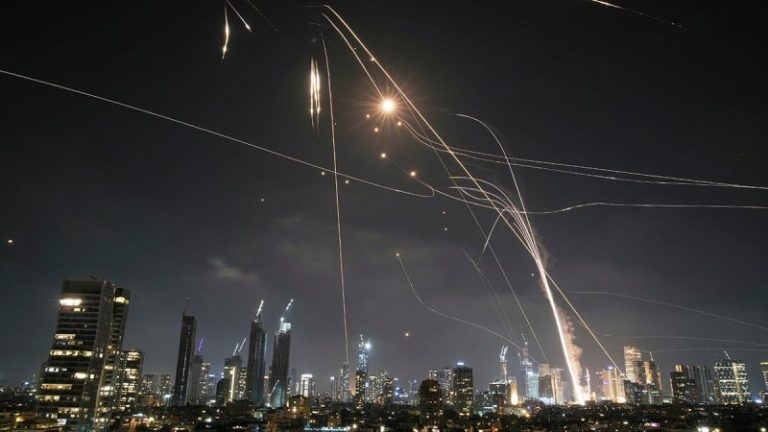
A new study aims to jolt Israel’s security and technology establishment into embracing a new post-Oct. 7, 2023 business model that will advance the U.S.-Israel strategic partnership in the heart of the Middle East and across the globe.
The Henry Jackson Society study titled ‘Israel 2048: A Blueprint for a Rising Asymmetric Geopolitical Power’ jumps into the future, with a view toward advancing American and Israeli security interests.
Co-author of the report, Barak M. Seener, told Fox News Digital that America requires Israel for ‘its security architecture in the region via the Abraham Accords and, more broadly, will be a force multiplier regarding the technological edge against China.’
During President Donald Trump’s first term, his administration sealed diplomatic normalization deals between Sunni Gulf and North African countries: Bahrain, United Arab Emirates, Morocco, Sudan and Israel.
Seener and co-author David Wurmser argue that there is a pressing need to reframe the U.S.–Israel strategic partnership ‘around technology,’ and ‘shift from military aid dependency towards joint R&D and investment in shared technological platforms in defence-tech, AI, quantum computing and next generational warfare capabilities.’
They wrote, ‘Israel must prioritize passing negotiated regulations for technology sharing to prevent AI/ quantum technology leakage to China.’
Seener noted that the U.S. Pentagon’s National Defense Strategy (released in January) describes Israel as a strategic military partner. That hat has never happened before.’
He continued that ‘Israel is not only achieving regional dominance but international power by connecting trade routes and digital connectivity. Israel simply cannot remain in a purely defensive posture and hunker down and react to threats on its borders.’
Seener said following Israel’s successful air war campaign against the Islamic Republic of Iran in June 2025, ‘America now wants to be part of this success story. ‘
He argues that President Donald Trump entered on the side of Israel with military attacks because ‘Israel demonstrated intelligence acumen and military prowess. For the first time, America joined Israel’ in the prosecution of a war.
Consequently, Seener said Israel’s ‘defense technology makes it indispensable for nations.’
Seener and Wurmser’s 51-page study contains granular information on how the U.S. can strengthen American security and recommend embedding ‘Israel as a defense-tech and deep-tech power that is indispensable to Western security and global technological competition in supply chains for AI, semiconductors, missile defense, cyber capabilities and critical materials. Israel’s technological dominance must be leveraged to anchor alliances and shape global supply chains.’
The wobbliness of America’s European partners is also highlighted to show the need for Israel to ‘Accelerate domestic lines of production of critical military systems, munitions and energy infrastructure to reduce vulnerability to foreign political pressure such as Europe’s growing ambivalence, coupled with episodic constraints on arms transfers,’ according to the authors.
Earlier this month, Britain’s left-leaning government reportedly denied the U.S. military’s use of British bases to strike the Islamic Republic.
Israel is uniquely positioned to help regenerate relations among Western powers, the study notes. According to the authors, there is an opportunity to ‘use Israel’s defense-tech, quantum computing, AI and cyber capabilities as a tool of statecraft to deepen alliances, deter political isolation and strengthen influence in Europe, the Gulf and Asia.’
Seener said that ‘Israel is not a superpower but a geopolitical power that gives nations a force multiplier, and they benefit from Israel as a tech defense nation.’
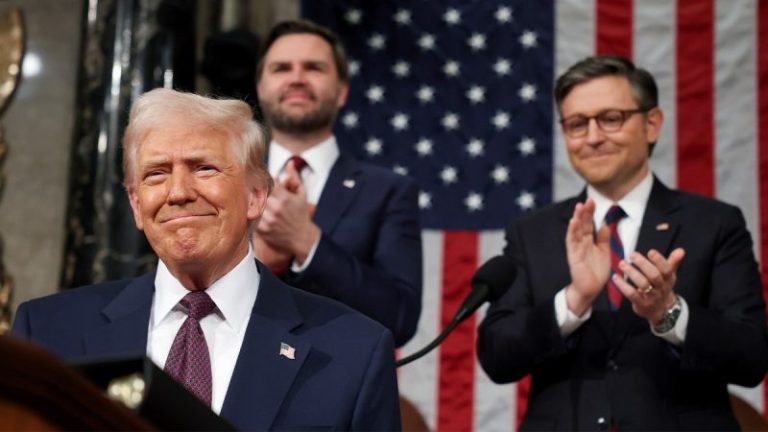
Former White House speechwriters from both parties say President Donald Trump must decide whether to double down on the rally-style politics that powered his campaign or broaden his message to unify a divided country around his governing agenda in his State of the Union address Tuesday night.
As Trump prepares to speak to the nation and the world, a majority of Americans think the country is worse off today than it was a year ago, according to a recent Fox News survey. The challenge he faces Tuesday night is to persuade skeptical voters that his economic policies are bringing costs down, that tougher immigration enforcement is making the country safer and that he has a disciplined, forward-looking plan for the years ahead — a message that could shape Republicans’ prospects as they head into the 2026 midterm elections with narrow majorities in Congress.
Clark Judge, a speechwriter for President Ronald Reagan and now chairman of the Pacific Research Institute, told Fox News Digital that Trump should address America’s position in the world.
‘Threats to the country and to the economy were growing,’ Judge said. ‘Now, in area after area, those threats have been confronted and defeated.’
Judge said Reagan’s strength was clarity. People ‘knew where he would come down. One advantage of working with him was that he had been so clear throughout his career on what he was for,’ he said.
There are lessons from Reagan that Judge suggested Trump should take to heart. ‘Know the president, know the administration, know the public — where is the public at any one moment?’
‘Where are the Democrats? What are they trying to do — and how do we disarm their arguments?’ he said.
The balance needed in a State of the Union is finding a ‘middle ground’ between the president’s Cabinet fighting for their mentions and ‘trying to create big, thematic connections,’ former Jimmy Carter presidential speechwriter James Fallows told Fox News Digital.
Fallows, the Georgia Democrat’s chief speechwriter during his first two years in office, has since been a book, magazine and Substack writer. He said Trump’s challenge, both now and in his previous addresses, is to unite the country around his agenda, not just please his supporters.
Trump’s preferred rhetorical style is a rally-style approach — ‘where he can digress and weave’ and create ‘us versus them’ scenarios to rile the audience,’ he said, adding that a State of the Union address requires the opposite.
Former Joe Biden speechwriter Dan Cluchey expressed skepticism that Trump would be able to rise to the occasion.
‘President Biden has a deep reverence for both the constitutional role of Congress and the dignity of the presidential office, so he approached the State of the Union as an opportunity to rise above the fray and bring Americans together,’ Cluchey said, pointing to what the Delawarean considered the ‘Unity Agenda’ laid out in his 2022 address.
When asked what could surprise him about Trump’s Tuesday address, Fallows said sticking to his script would be a novelty.
‘[Also,] given what the next day’s news will describe as a ‘big tent speech’’ à la Reagan, the Carter speechwriter said.
Former George W. Bush speechwriter and current Wall Street Journal editorial board member Bill McGurn said presidents do tend to differ, sometimes greatly, from each other in style, contrasting the president with his former boss.
‘George W. Bush was very driven by logic — the speech had a flow and had a logic that was coherent.’
‘He’d always say, ‘make it so Bubba would understand what that meant’ — don’t dumb it down; but make it so an intelligent person listening can get the idea of what you’re about.’
Trump, he said, will likely repeat what many presidents often say, that ‘the State of the Union is strong.’
‘Even if it is a laundry list, there’s ways to make it more compelling if you find a unifying thread to it.’
Fallows told Fox News Digital there are many ‘structural challenges’ for any president and his team crafting a State of the Union.
‘So much to cover and only so much time you can hold the attention of even a captive audience.’
Fallows, who now writes ‘Breaking the News’ on Substack, said the SOTU is a rare moment for a president to address the nation as a whole, not just partisan supporters.
McGurn agreed.
‘For all the grandiosity and the important things they cover, they’re usually not remembered,’ he said, noting how many more Americans remember Bush’s 9/11 speech or his brief address through a bullhorn atop the rubble of the Twin Towers.
‘A dirty little secret is most speech artists hate the State of the Union for the laundry list kind of thing,’ he added.
Sometimes, a State of the Union may not be remembered itself, but it may lead to something much more memorable.
Judge recalled drafting Reagan’s 1988 address, thinking ‘this is technical and dull — what I need is an image.’
Settling on the phrase, ‘1,000 sparks of genius in a 1,000 communities,’ the line went viral in then-fledgling ‘dial’ polling — to the extent that Reagan’s protégé, the future President George H.W. Bush, borrowed the line for his ‘Thousand Points of Light’ speech, Judge said.
While the public may not remember everything from every SOTU, the speechwriters collectively said there are parts they still recall today. Cluchey said his best memories are of Biden choosing to share stories of everyday Americans he helped, ‘in order to illustrate the impact of his policies.’
In other cases, there are times the world takes notice.
Working with Reagan near the end of his successful bid to stifle the Cold War, Judge said crafting the speech was important not just for Congress in front of him and the American people at home, but everyone at once.
‘Behind the cameras are the editors and producers — even if they’re hostile, how do I frame something so it gets through? Behind them is our world leaders — what will catch them and move them in the direction you want?’
With Reagan pushing hard to end the Soviet Union, he was also speaking to both the leaders and those to the East.
Reagan would later be greeted by Soviet dissidents in public who would tell him, ‘You don’t know how important that was – the speeches gave us courage.’
Fallows said that Trump may have to overcome some habits to give an effective address this year.
‘State of the Unions are best in areas that are not Donald Trump’s strengths. They’re meant to be embracing the country as a whole. They’re meant to be delivered from a prompter but without seeming too scripted.’
‘We’ll see how this goes.’

The State Department has received hundreds of calls on its 24/7 crisis hotline as Americans in Mexico scramble to find ways home amid escalating chaos following the killing of a top cartel leader.
The calls have been mostly pertaining to flight cancellations and concerns about travel back to the U.S., Fox News has learned.
Violence erupted in Mexico after a Feb. 22 government operation in which Jalisco New Generation cartel leader Nemesio ‘El Mencho’ Oseguera Cervantes was killed. The cartel leader was killed during a shootout inside his home as the Mexican military attempted to capture him. The operation was carried out by Mexican forces with U.S. intelligence support.
Mexico Security Secretary Omar García Harfuch said the 25 Mexican National Guard troops in Jalisco were killed in six separate attacks following the killing of El Mencho. He also said some 30 criminal suspects were killed in Jalisco and four others were killed in Michoacan. Additionally, García Harfuch said that a prison guard, an agent from the state prosecutor’s office and a woman whom he did not identify were also killed.
The State Department’s travel advisory for Mexico, which was issued in August 2025, has since been updated regarding areas of risk. The Mexican states of Colima, Guerrero, Michoacan, Sinaloa, Tamaulipas and Zacatecas are under a ‘Level 4: Do Not Travel’ advisory. Meanwhile, the states under a ‘Level 3: Reconsider Travel’ advisory are Baja California, Chiapas, Chihuahua, Guanajuato, Jalisco, Morelos and Sonora.
Americans in Mexico who need consular assistance are advised to call the State Department’s Bureau of Consular Affairs at +1-202-501-4444 from outside the U.S. or +1-888-407-4747 from within the U.S. or Canada.
Additionally, the department has recommended U.S. citizens enroll in the online Smart Traveler Enrollment Program or follow the ‘U.S. Department of State – Security Updates for U.S. Citizens’ WhatsApp channel for safety and security updates. The Smart Traveler Enrollment Program, also known as STEP, allows the U.S. embassy or consulate to contact travelers or their emergency contact if necessary.
On Tuesday, the U.S. Embassy and Consulates in Mexico issued an updated security alert for Jalisco State, including Puerto Vallarta, Chapala and Guadalajara, and Nayarit State, including the Nuevo Nayarit/Nuevo Vallarta area near Puerto Vallarta. The embassy and consulates said in the joint alert that due to road blockages and criminal activity, U.S. government staffers in several locations — including Guadalajara (Jalisco), Puerto Vallarta (Jalisco/Nayarit), and Ciudad Guzman (Jalisco) — are sheltering in place. The government entities said the workers would remain sheltered in place until blockades are cleared and called on U.S. citizens to follow suit.
While the State Department hotline has been flooded with calls regarding flight cancellations, the embassy and consulates noted that ‘all airports in Mexico are open, and most airports are operating normally.’ The entities noted that travelers whose flights to the U.S. had been canceled could be able to book a connecting flight through another Mexican city, as not all airports were impacted by the disruptions.
Fox News Digital’s Stephen Sorace contributed to this report.
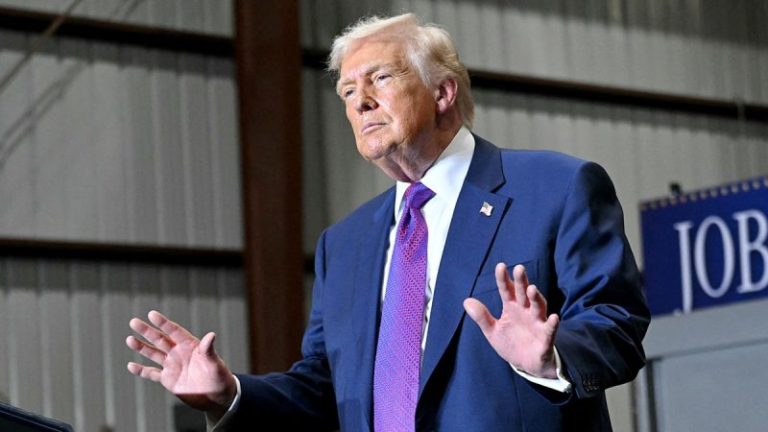
President Donald Trump, taking to social media earlier this month, touted, ‘The highest Poll Numbers I have ever received.’
‘Obviously, people like a strong and powerful Country, with the best economy, EVER!’ the president added in a post on his Truth Social platform.
But on the day of his annual State of the Union Address, Trump’s poll numbers remain in negative territory in the vast majority of national surveys.
The president’s approval rating stands at 44% in the latest Fox News national poll, which was conducted late last month, with 56% disapproving of the job he’s doing in the White House.
And he stood at 39% approval among all adults and 41% among registered voters in an ABC News/Washington Post/Ipsos survey conducted Feb 12-17 and released on Sunday.
An average of the most recent surveys conducted over the past four weeks puts Trump’s approval ratings in the low 40s, with disapproval in the mid-50s.
Trump started his second term in positive territory, but his approval ratings sank below water last March and have slowly edged down deeper into negative territory in the ensuing months.
The latest surveys point to a massive partisan divide, with continued strong support for the president among Republicans, a thumbs down among independents and near total disapproval among Democrats.
‘Support among Republicans has remained in place, but the opposition has become even more calcified,’ veteran Republican pollster Daron Shaw told Fox News Digital, as he pointed to Democrats.
Deep concerns over inflation boosted Trump and Republicans to sweeping victories at the ballot box in 2024, as they won back the White House and Senate and kept their House majority.
‘We had record inflation. We don’t have it anymore,’ Trump said at a campaign event last week in Rome, Georgia. ‘I’m going to make a State of the Union address on Tuesday. I hope you’re going to watch and we’re going to be talking about it.’
But the president’s approval ratings on the economy are, on average, slightly lower than his overall approval ratings.
And Democrats say their decisive victories in November’s 2025 elections, and their overperformances in special elections and other ballot box showdowns in the year since Trump returned to office, were fueled by their laser focus on affordability amid persistent inflation.
A slew of surveys, including the latest Fox News polling, indicate Americans are pessimistic about the economy and say things have not generally improved during the second Trump administration.
‘He can’t unstick the notion that inflation is too high and that the economy is not moving in the right direction,’ added Shaw, who helps run the Fox News Poll with Democrat Chris Anderson.
But Democrats don’t have much to brag about when it comes to the polls.
The party’s brand dropped to historic lows last year in a slew of polls, with the trend continuing into the new year.
The president’s primetime address in front of Congress comes with just over eight months to go until the midterm elections, when Republicans will be defending their razor-thin majority in the House and their narrow control of the Senate.
Last week, the president’s political team huddled in a closed-door strategy session with Trump administration Cabinet members and their top aides on how best to sell the president’s agenda to voters in this year’s midterm elections.
According to sources familiar with the meeting, the message during a slide presentation by chief pollster and strategist Tony Fabrizio was that the economy will be the top issue on the minds of voters, and that the White House needs to spotlight its efforts on easing affordability.
‘Team Trump will deploy every resource necessary to win the midterms, protect our majorities, and ensure President Trump keeps delivering results for America’s working families,’ a source in the president’s political orbit told Fox News Digital.
Regardless of Trump’s overall approval ratings, he remains very popular and influential with Republicans. And in what may be a base election, the GOP sees the president as their best tool to motivate low-propensity MAGA voters, who don’t always vote when Trump’s not on the ballot, to show up at the polls during the midterms.
Republican National Committee Chair Joe Gruters told Fox News Digital last month that Trump was the GOP’s ‘secret weapon’ that will help Republicans ‘defy history’ in the midterms.
‘We got to make sure we turn our voters out, and we got to make sure that we have people energized. And there’s nobody that can energize our base more than President Trump,’ Gruters said.