Archive

February 2026

Browsing

A leading domestic energy advocacy group praised EPA Administrator Lee Zeldin’s announcement that his agency would undo recent additions to the federal ‘mercury and air-toxics standards’ (MATS) for coal-fired power plants.

Zeldin said removing the restrictions allows the already ‘robust’ MATS standards to remain in effect, ensuring both public health and the health of America’s coal industry amid a push for U.S. energy dominance.

‘The Biden-Harris Administration’s anti-coal regulations sought to regulate out of existence this vital sector of our energy economy. If implemented, these actions would have destroyed reliable American energy,’ Zeldin said, adding that protecting the environment and supporting industry and baseload power is not a ‘binary choice.’

In response, Power the Future founder Daniel Turner told Fox News Digital the move is a significant step toward revitalizing the American coal industry and, in turn, fueling economies in economically depressed industrial communities throughout Appalachia and beyond.

‘Since the war on coal, we have weakened our grid, driven electricity prices through the roof, outsourced major industries to Mexico and China, but most of all driven tens of thousands of Americans into ruin because of a globalist agenda,’ Turner said Friday, adding that the costs of a crippled coal industry went far beyond shuttered infrastructure.

‘The cruel Obama-led war on coal ruined numerous towns across rural America, drove families into poverty, caused alcoholism, opioid addiction, domestic violence, and suicide to skyrocket.

‘Power The Future started because of coal miners, the acceptable casualties in the globalist climate change agenda,’ added Turner, whose group is based in coal-heavy Virginia.

‘Restoring America’s coal dominance is good for our national security and economy, and it restores the dignity of small-town coal workers whose labor is vital to America’s survival.’

Many of America’s poorest counties are in what were once very wealthy coal communities, including McDowell and Mingo counties in West Virginia and Bell, Letcher, McCreary and Breathitt counties in Kentucky, where Vice President JD Vance’s family is from.

During much of the 20th century, McDowell County — and its seat, Welch — was the No. 1 coal-producing county in the U.S. and home to 100,000 people — a population boom some credit with spurring construction of what became the nation’s first parking deck, which is still standing today in Welch.

Now, about one-quarter of McDowell residents live in poverty while the median income is around $30,000.

Turner alluded to those conditions in comments to Fox News Digital, saying people must ‘never forget or forgive the drivers of the war on coal for their cruel attacks on a vital industry found only in rural America.

‘[Anti-coal politicians] fly private jets to attend global climate summits while they orchestrated an evil attack on the coal miner making America weaker and China richer.’

Turner quipped that any ‘anti-coal activist’ is invited to join him in visiting coal-producing communities but may be unhappy to get dirt on their clothing and find lodging not up to ‘Four Seasons’ standards.

‘We need coal. There is not one product around you right now that was not touched by coal, and to lower prices, bring market stability and ensure economic growth, we need to dominate the coal industry,’ Turner said.

‘Sadly, the liberal elite who launched the war on coal are too ignorant or too indifferent to know this. The ignorant can be educated, and that’s what I try to do at Power The Future. But the indifferent must be defeated, as they are a threat to our liberty, property and prosperity. I will never stop until I defeat them all,’ he said, calling President Donald Trump the ‘greatest coal president in history.’

Former EPA Administrator Gina McCarthy fired back at the policy change, telling the AP that ‘by weakening pollution limits and monitoring for brain-damaging mercury and other pollutants, they are actively undermining any attempt to make America — and our children — healthy.’


This post appeared first on FOX NEWS

For more than a month, Michal Weits has kept suitcases packed by the front door of her house in Tel Aviv.

‘We have our bags ready for weeks,’ she said. ‘Three weeks ago, there were rumors that it was the night the U.S. would attack Iran. At midnight, we pulled the kids out of their beds and drove to the north, where it is supposed to be safer.’

Weits, the artistic director of the international documentary film festival Docaviv, is speaking from her own traumatic experience. During the 12-day war, an Iranian missile struck her Tel Aviv home. She, her husband, and their two young children were inside the safe room when it collapsed on her.

‘After an Iranian missile hit our home and we lost everything we had, we also lost the feeling of ‘it won’t happen to me,’’ she said. ‘We are prepared, as much as it’s really possible.’

Weits remembers the surreal contrast of those days. Four days after being injured in the missile strike, while still in the hospital, she was told she had won an Emmy Award for the documentary she produced about the Nova massacre on Oct. 7.

‘Four days earlier an 800-kilogram explosive missile fell on our home and I was injured, and four days later I woke up on my birthday to news that I had won an Emmy,’ she said. ‘It can’t be more surreal than this. That is the experience of being Israeli, from zero to one hundred.’

She says Israelis have learned to live inside that swing. ‘Inside all of this, life continues,’ she said. ‘Kids go to school, you go to the supermarket, Purim arrives and you prepare, and you don’t know if any of it will actually happen. We didn’t make plans for this weekend because we don’t know what will happen.’

That gap — between visible routine and private fear — defines this moment. The fear she describes is now part of the national atmosphere.

On the surface, Israel looks normal. The beaches are crowded in the warm weather. Cafés are full. The Tel Aviv Stock Exchange has risen in recent days. Children go to school as Israelis prepare for the Jewish holiday of Purim and costumes are being prepared.

But inside homes and across local news broadcasts, one question dominates: when will it happen? When will President Donald Trump decide whether to strike Iran — and what will that mean for Israel?

Prime Minister Benjamin Netanyahu has instructed the Home Front Command and emergency services to prepare for possible escalation, with Israeli media reporting a state of ‘maximum alert’ across security bodies.

Speaking at an officer graduation ceremony this week, Netanyahu warned Tehran: ‘If the ayatollahs make a mistake and attack us, they will face a response they cannot even imagine.’ He added that Israel is ‘prepared for any scenario.’

The military message was echoed by the IDF. ‘We are monitoring regional developments and are aware of the public discourse regarding Iran,’ IDF Spokesperson Brig. Gen. Effie Defrin said. ‘The IDF remains vigilant in defense, our eyes are open in every direction and our readiness in response to any change in the operational reality is greater than ever.’

Yet the psychological shift inside Israel goes deeper than official statements.

For years, Israelis lived with rockets from Hamas. The Iranian strikes felt different.

‘The level of destruction from Iran was something Israelis had not experienced before,’ said Israeli Iran expert Benny Sabti. ‘People are used to rockets from Gaza. This was a different scale of damage. It created real anxiety.’

Iron Dome, long seen as nearly impenetrable, was less effective against heavier Iranian missiles. Buildings collapsed. Entire neighborhoods were damaged.

‘People are still traumatized,’ Sabti said. ‘They are living on the edge for a long time now.’

At the same time, he stressed that the country is better prepared today.

‘There are feelings, and there are facts,’ Sabti said. ‘The facts are that Israel is better prepared now. The military level is doing serious preparation. They learned from the last round.’

The earlier wave of protests inside Iran had sparked hope in Israel that internal pressure might weaken or topple the regime. Weits told Fox News Digital, ‘I am angry at the Iranian government, not the Iranian people. I will be the first to travel there when it’s possible. I hope they will be able to be free — that all of us will be able to be free.’

Despite losing her home and suffering hearing damage from the blast, she says the greater loss was psychological. ‘There is no more complacency,’ she said. ‘The ‘it won’t happen to me’ feeling is gone.’

Across Israel, that sentiment resonates.

This post appeared first on FOX NEWS

VANCOUVER, BRITISH COLUMBIA / ACCESS Newswire / February 19, 2026 / CoTec Holdings Corp. (TSXV:CTH,OTC:CTHCF)(OTCQB:CTHCF) (‘CoTec’ or the ‘Company’) is pleased to announce the publication of its updated February 2026 corporate presentation, available on the Company’s website at www.cotec.ca.

The updated presentation reflects the continued progress of the Company’s growth strategy with recent project-level advancements across its asset portfolio, including previously announced feasibility studies, expansion concept studies and key development milestones at HyProMag USA, MagIron and Lac Jeannine.

The presentation also includes an updated consolidated summary of attributable project interests and economics, reflecting the Company’s updated sum-of-the-parts valuation based on previously announced technical studies and press releases. No new technical material or economic information is being announced.

Julian Treger, Chief Executive Officer of CoTec, commented: ‘As our portfolio advances across multiple execution-stage assets, this updated presentation brings together our recently announced project milestones and updated project economics into a single, integrated view. In partnership with our stakeholders, we are reducing traditional mining development timelines to within five years. CoTec’s core strategy is to unlock value from resources and waste using disruptive technologies with a focus on critical minerals.

Based on the sum of the parts of our attributable interests, we believe the Company continues to trade at a significant undervaluation relative to the underlying value of our assets, with material upside as we execute on our stated milestones.’

The February 2026 corporate presentation is available on the homepage of the Company’s website.

About CoTec

CoTec Holdings Corp. (TSXV:CTH,OTC:CTHCF)(OTCQB:CTHCF) is redefining the future of resource extraction and recycling. Focused on rare earth magnets and strategic materials, CoTec integrates breakthrough technologies with strategic assets to unlock secure, sustainable, and low-cost supply chains.

CoTec’s mission is clear: accelerate the energy transition while strengthening strategic mineral supply chains for the countries we operate in. By investing in and deploying disruptive technologies, the Company delivers capital-efficient, scalable solutions that transform marginal assets, tailings, waste streams, and recycled products into high-value critical minerals.

From its HyProMag USA magnet recycling joint venture in Texas, to iron tailings reprocessing in Québec, to next-generation copper and iron solutions backed by global majors, CoTec is building a diversified portfolio with long-term growth, rapid cash flow potential, and high barriers to entry. The result is a differentiated platform at the intersection of technology, sustainability, and strategic materials.

For more information, please visit www.cotec.ca

For further information, please contact:

Eugene Hercun, VP Finance, +1 604 537 2413

Forward-Looking Information Cautionary Statement

Statements in this press release regarding the Company and its investments which are not historical facts are ‘forward-looking statements’ that involve risks and uncertainties. Forward-looking statements in this release include, without limitation, statements relating to the advancement, development, financing and potential construction of the Company’s projects and investments; anticipated economic metrics; expected production, permitting, engineering and execution milestones; potential strategic transactions or listings; future investment opportunities; and management’s expectations regarding the Company’s strategy and growth plans. Such forward-looking statements are based on a number of assumptions, including assumptions regarding the continued advancement of the Company’s projects, availability of financing, receipt of required permits and approvals, commodity price assumptions, and general economic and market conditions. Since forward-looking statements address future events and conditions, by their nature they involve inherent risks and uncertainties. Actual results could differ materially from those currently anticipated due to a number of factors and risks, including, without limitation: risks relating to project development and execution; the ability to obtain financing on acceptable terms or at all; changes in commodity prices; changes in government regulation or policy; permitting and environmental risks; joint venture and counterparty risks; and general economic, market and industry conditions. For further details regarding risks and uncertainties facing the Company, readers are encouraged to review the Company’s public disclosure documents, which are available under the Company’s SEDAR+ profile at www.sedarplus.ca.

Neither TSX Venture Exchange nor its Regulation Services Provider (as that term is defined in the policies of the TSX Venture Exchange) accepts responsibility for the adequacy or accuracy of this news release.

SOURCE: CoTec Holdings Corp.

View the original press release on ACCESS Newswire

News Provided by ACCESS Newswire via QuoteMedia

This post appeared first on investingnews.com

Northern Dynasty Minerals (TSX:NDM,NYSEAMERICAN:NAK) shares plunged on Wednesday (February 18) after the US Department of Justice (DOJ) filed a court brief backing the Environmental Protection Agency’s (EPA) January 2023 veto of the company’s long-contested Pebble project in Alaska.

The brief supports the EPA’s prior determination to restrict development of the proposed copper, gold and molybdenum project in the Bristol Bay watershed. Northern Dynasty and its wholly owned US subsidiary, Pebble Limited Partnership, are seeking summary judgment in their legal challenge to overturn the EPA’s veto.

The veto, issued under Section 404(c) of the Clean Water Act, blocks the disposal of mine waste in certain waters within the Bristol Bay area, effectively preventing the project from advancing through the federal permitting process.

In its determination, the EPA said the proposed mine would destroy more than 2,000 acres of wetlands.

The Pebble project has faced more than two decades of regulatory scrutiny and opposition, largely due to its location in the Bristol Bay watershed, home to some of the world’s largest sockeye salmon fisheries.

Supporters argue the project represents a strategic domestic source of copper and other critical minerals, while opponents contend it poses unacceptable environmental risks.

Northern Dynasty Minerals’ TSX performance, February 12 to 19, 2026.

Chart via Google Finance.

In a Wednesday statement, Northern Dynasty President and CEO Ron Thiessen criticized the government’s position:

“We find it surprising that despite the executive orders and the many statements made by the administration related to Alaskan development, pro-energy, pro-critical metals, pro-defense and military support, removing roadblocks to permitting, on the need for copper, etc., this EPA would choose to defend the unlawful Obama-Biden veto.’

Thiessen pushed back strongly against the DOJ’s filing in a follow-up comment on Thursday (February 19), claiming that the “veto was illegal, and a high level of confidence that the court will agree with us.”

The CEO added, “This DOJ brief makes many arguments that we have seen before and that directly contradict the findings of the Final Environmental Impact Statement. The flaws in this brief only increase that confidence.’

After Northern Dynasty filed its legal challenge in Alaska’s federal district court in 2024 and settlement discussions with the EPA failed, the parties agreed to seek resolution through summary judgment. Under the court’s timeline, the DOJ filing was due by Tuesday (February 17), with final reply briefs from the plaintiffs to follow.

If built, Pebble would be the largest copper, gold and molybdenum extraction site in North America. A 2023 economic study estimates the project could produce 6.4 billion pounds of copper, 7.4 million ounces of gold and 300 million pounds of molybdenum over 20 years, along with 37 million ounces of silver and 200,000 kilograms of rhenium.

Despite those projections, the project’s path forward remains tied to the outcome of the legal battle. Northern Dynasty said it is reviewing the DOJ’s filing with its legal advisors.

Securities Disclosure: I, Giann Liguid, hold no direct investment interest in any company mentioned in this article.

This post appeared first on investingnews.com

Visit Rapid Critical Metals (ASX: RCM) at Booth #3142 at the Prospectors & Developers Association of Canada’s (PDAC) Convention at the Metro Toronto Convention Centre (MTCC) from Sunday, March 1 to Wednesday, March 4, 2026.

About Rapid Critical Metals

Rapid Critical Metals (ASX: RCM) (ASX: RCMO) is an exploration company driving the discovery and development of high-grade silver and critical mineral assets. Following a transformational pivot in mid-2025, Rapid has assembled a high-impact portfolio anchored by the Webbs and Conrads Silver Projects in New South Wales and the Prophet River Gallium–Germanium Project in British Columbia, Canada. Both projects sit within geologically rich, infrastructure-ready regions and present strong potential for near-term exploration success.Headquartered in Sydney, Rapid is fully funded and strategically positioned to deliver growth through aggressive exploration and value-accretive development. Led by an experienced team, including Chairman John Poynton AO and Managing Director Byron Miles, the Company is advancing a catalyst-rich program — with resource upgrades, step-out drilling, and new target testing set to drive a steady flow of news and shareholder value in the months ahead.

About PDAC

The World’s Premier Mineral Exploration & Mining Convention is the leading convention for people, governments, companies and organizations connected to mineral exploration. In addition to meeting more than 1,100 exhibitors, 2,500 investors and 26,000 attendees in person in 2024, participants could also attend programming, courses and networking events.

The annual convention is held in Toronto, Canada. It has grown in size, stature and influence since it began in 1932 and today is the event of choice for the world’s mineral industry.

For more information and/or to register for the conference please visit: https://www.pdac.ca/convention.

We look forward to seeing you there.

For further information:

Rapid Critical Metals
Byron Miles
+61 2 9290 9600
info@investability.com.au
https://rapidmetals.com.au/

News Provided by TMX Newsfile via QuoteMedia

This post appeared first on investingnews.com

Investor Insight

LaFleur Minerals is advancing a district-scale gold platform anchored by a defined resource base and a fully permitted processing facility in Québec’s Abitibi region. With ongoing mill restart activities and a targeted gold pour on the horizon, the company offers investors exposure to both near-term production potential and meaningful exploration upside.

Overview

LaFleur Minerals (CSE:LFLR,OTCQB:LFLRF) is a growth-oriented gold exploration and development company focused on building a scalable mining platform within Québec’s Abitibi region, a belt that has produced more than 190 million ounces of gold historically. The company’s strategy is centered on advancing its flagship Swanson deposit while leveraging existing infrastructure to accelerate timelines to production.

A key differentiator is LaFleur’s vertically integrated model: combining resource expansion with ownership of a permitted processing facility. This approach reduces development risk, lowers capital intensity, and positions the company to monetize discoveries faster than traditional single-asset explorers.

With a market valuation that management believes does not yet reflect the combined value of its resource base, infrastructure and exploration pipeline, LaFleur offers exposure to both near-term catalysts and long-term district-scale discovery potential.

Company Highlights

  • District-Scale Land Position: Controls ~183 sq km of claims near Val‑d’Or in Québec, one of the world’s most prolific gold jurisdictions.
  • Flagship Resource Asset: Swanson Gold Project hosts NI 43-101 resources of 123,400 oz indicated and 64,500 oz inferred with expansion potential.
  • Strategic Infrastructure Ownership: Owns the fully permitted Beacon Gold Mill with 750 tpd capacity and low restart cost.
  • Growth-Focused Exploration: 5,000 m drill program underway targeting resource growth to >1 Moz.
  • Proven Asset Consolidation: Claims assembled from prior operators including Monarch Mining, Abcourt Mines and Globex.
  • Tier-1 Jurisdiction: Québec ranks among the world’s top mining investment regions according to the Fraser Institute.
  • Experienced Leadership: Led by CEO Paul Ténière, a geologist with extensive development and technical reporting expertise.

Key Projects

Swanson Gold Project – Flagship Asset

The Swanson project forms the cornerstone of LaFleur’s growth strategy. Spanning more than 18,300 hectares, the property hosts multiple deposits and mineralized trends along favorable regional structures and deformation corridors. Historic drilling exceeding 36,000 meters demonstrates strong geological continuity and supports expansion potential across the broader land package.

Located approximately 66 km north of Val-d’Or with road and rail access, Swanson sits in close proximity to established operators such as Agnico Eagle and Eldorado, as well as developers including Probe Gold and O3 Mining. Ongoing geophysics, soil geochemistry and drilling continue to identify new targets, reinforcing the project’s potential to evolve into a large-scale gold system.

Project Highlights:

  • Spans +18,300 hectares (183 sq km) and rich in gold and critical metals, hosts the Swanson, Bartec and Jolin gold deposits
  • Previously held by Monarch Mining, Abcourt Mines and Globex
  • Accessible by road/rail, 66 km north of Val-d’Or on the Southend Abitibi gold belt, close proximity to established producers such as Agnico Eagle and Eldorado, as well as developers like Probe Gold and O3 Mining, with direct access to several nearby gold mills
  • Mineral resource estimate reinforces status as flagship project:
    • Indicated mineral resource estimate of 2,113,000 t with average grade of 1.8 g/t gold, containing 123,400 oz of gold.
    • Inferred mineral resource estimate of 872,000 t with average grade of 2.3 g/t gold, containing 64,500 oz of gold
    • The project’s current MRE was optimized with a price of gold at US$1,850/oz, current gold market price has hit above US$3,000/oz
  • $3 million in flow-through to deploy with immediate plans to increase gold resources through diamond drilling at Swanson, Bartec, Jolin, and other gold deposits
  • Other key developments include a decline portal and ramp extending to a depth of 80 metres; well positioned for advanced exploration with over $5 million invested by the previous owner between 2021 and 2023
  • Since acquiring the Swanson deposit and consolidating the large claims package, the company has deployed in excess of $1 million in flow-through funds, completed detailed soil geochemistry and prospecting across several gold targets, completed a very-high resolution airborne magnetic and VLF-EM geophysical survey, and is currently in the process of completing a ground IP survey over the Swanson, Jolin, and Bartec gold deposits
  • Several new promising gold targets have been identified from the recent surface exploration and geophysics programs, highlighting the potential for mineral resource growth and new discoveries at Swanson

With advanced assets and infrastructure in place, LaFleur Minerals is well-positioned as a leading gold development company in Québec.

Beacon Gold Mill – Near-term Production

The Beacon Gold Mill is a strategically located processing facility less than 50 km from Swanson and represents a rare asset for a junior developer: a fully permitted plant capable of near-term restart. The 750-tpd mill underwent approximately $20 million in upgrades and refurbishment, placing it in excellent operational condition and substantially reducing restart timelines.

An independent valuation by Bumigeme estimated rehabilitation costs at about C$4.1 million and a replacement value exceeding C$71.5 million, underscoring its strategic importance. Beyond processing Swanson material, the mill also offers potential toll-milling revenue from regional deposits, providing LaFleur with multiple pathways to cash flow as it transitions toward producer status.

Project Highlights:

  • Capable of custom milling operations for other nearby gold projects
  • Currently being evaluated for processing mineralized material from Swanson as part of a high-level preliminary mining and economic study
  • Past-producing Beacon Mine is located on the site of the Beacon Mill: the property consists of a mining lease, a mining concession, and 11 mining claims
  • Beacon I and II mines include mineralized zones where limited historical gold production was achieved during the period of 1984 to 1988 and again in 2005
  • The advancement of operations at the Beacon Mill has transformational qualities for the company, evolving it from explorer to a near-term gold producer in a Tier 1 jurisdiction with significant upside potential

Management Team

Kal Malhi – Chairman

A successful entrepreneur and the founder of Bullrun Capital, Kal Malhi has raised over $300 million for various public and private companies across multiple industries, including mining, biotechnology and technology.

Paul Ténière – CEO

Paul Ténière has more than 20 years of experience in mine development, geology and project management. He has held senior leadership roles across multiple mining companies and is a recognized expert in NI 43-101 compliance and technical reporting.

Harry Nijjar – CFO and Corporate Secretary

Harry Nijjar is currently a managing director with Malaspina Consultants and provides CFO and strategic financial advisory services to his clients across many industries. This experience has allowed him to help his clients successfully navigate regulatory and financial environments within which they operate. Harry holds a CPA CMA designation from the Chartered Professional Accountants of British Columbia and a BComm from the University of British Columbia

Louis Martin – Technical Advisor and Exploration Manager

Louis Martin is a professional geoscientist. and has been a major contributor to the discovery of several gold and base metal deposits during his more than 40-year career. Martin has been fortunate to be part of the exploration teams that were awarded the Discovery of the Year by the AEMQ for the West Ansil Deposit (2005) and the Louvicourt Deposit (1989). He has worked on several advanced exploration projects that included bringing four of these projects into production. For the last eight years, Martin has worked as a technical advisor and geological consultant for numerous junior and major mining companies.

Preet Gill – Director

Preet Gill is a business professional offering leading development and implementation of superior business strategy. Gill has a proven track record of identifying and creating profitable business opportunities, qualifying authentic prospects, and cultivating strong partnerships. She has over 28 years of experience in leadership roles within Home Depot Canada and has an MBA from Royal Roads University and certificates in business leadership from Queen’s University.

Harveer Sidhu – Director

Harveer Sidhu is the founder of BuildSmartr.com and has served as a director, officer and audit committee member for publicly listed companies. Sidhu is experienced in manufacturing, import and exporting, information technology systems, e-commerce and construction project management. He is also the president and director of Beyond Medical Technologies. He holds a bachelor’s degree from Simon Fraser University and has been a licensed builder with BC Housing since 2014.

Michael Kelly – Director

Michael Kelly is a former member of the Canadian Armed Forces Military Police and a retired member of the Royal Canadian Mounted Police. Kelly currently serves as a Partner at BullRun Capital Inc. and is a respected businessman based in Kelowna, British Columbia. He is also a director and member of the audit committee of Beyond Medical Technologies, an industrial/technology company with a manufacturing facility located in Delta, British Columbia.

Jean Lafleur – Senior Advisor

A highly respected geologist with over 40 years of experience in the mining sector, Jean Lafleur has led multiple exploration programs and mining projects, contributing to major gold discoveries worldwide.

This post appeared first on investingnews.com

Steadright Critical Minerals (CSE:SCM) is a Canadian-listed exploration and development company focused on unlocking value from Morocco’s mineral-rich terrain. It prioritizes assets with past production, strong geological datasets, and defined development pathways, aiming to shorten timelines, lower risk, and balance near-term cash flow with longer-term discovery upside.

Its core assets include the fully permitted, past-producing Goundafa polymetallic mine, the Copper Valley copper-lead-silver project in a proven mining district, and the TitanBeach heavy mineral sands project along Morocco’s Atlantic coast. A recent letter of intent with SilverLine Mining SARL could further strengthen the portfolio by adding a licensed, silver-focused asset, reinforcing Steadright’s strategy of acquiring high-quality, permitted projects.

Operating in Morocco—a jurisdiction known for modern mining legislation, strong infrastructure, and competitive fiscal incentives—Steadright benefits from a supportive mining environment. The company is led by an experienced management team with decades of global mining, exploration, and capital markets expertise, positioning it to advance its projects efficiently.

Company Highlights

  • Near-Term Production: The historic Goundafa Polymetallic mine is fully permitted with a legacy of high-grade zinc, lead, copper, silver, and gold production, Goundafa offers near-term, non-dilutive cash flow from historic stockpile sales under a binding processing agreement.
  • Diversified Portfolio: Fully permitted Goundafa Polymetallic mine (PbZn-Cu-Ag-Au), the Copper Valley CopperLead-Silver Project, SilverLine Mining Sarl (LOI) and the TitanBeach Heavy Mineral Sands
  • Strategic Moroccan Operations: Operating in a mining-friendly jurisdiction with modern legislation, strong infrastructure, and significant fiscal incentives including corporate tax exemptions.
  • Experienced Leadership: Management and technical teams bring decades of international mining, exploration, and capital markets experience.

This Steadright Critical Minerals profile is part of a paid investor education campaign.*

Click here to connect with Steadright Critical Minerals (CSE:SCM) to receive an Investor Presentation

This post appeared first on investingnews.com

A repeat offender once described by federal prosecutors as a ‘danger to the community’ was set to be released Thursday after receiving a sentence commutation signed with an autopen in the final days of former President Joe Biden’s administration.

Oscar Freemond Fowler III had been serving a 12-year, six-month federal sentence after pleading guilty in 2024 to being a felon in possession of a gun and possession with intent to distribute cocaine. Federal prosecutors urged the court to impose at least 150 months in prison, citing his lengthy criminal history and arguing he posed an ongoing threat to the public.

Fowler was included in a Jan. 17, 2025, executive grant of clemency commuting the sentences of more than 2,500 inmates under the Biden administration. The warrant, issued in Washington and bearing Biden’s signature, was one of three clemency documents critics say were executed using an autopen.

While the Biden administration said the commutations were relief for non-violent drug offenders, the Oversight Project, a conservative investigative group for the Heritage Foundation, argues that Fowler’s history of violence makes him a clear danger to the public.

The Oversight Project issued a warning to Florida officials this week about Fowler’s release.

‘He is a dangerous criminal who’s supposed to be in jail for a very long time,’ Oversight Project President Mike Howell told Fox News Digital. ‘This is the exact person that should be in federal custody.’

The most serious allegations in Fowler’s past involve the death of Naykee Bostic in St. Petersburg. Bostic was found with 25 gunshot wounds shortly after Fowler had been released from a previous federal stint in 2013. While Fowler was acquitted of the murder in 2017 after two prior mistrials, the Oversight Project points to a 2024 sentencing memorandum stating that Fowler made a video-recorded admission to the killing and expressed a willingness to use violence again.

Howell said the case contradicts prior characterizations of the clemency actions as focusing on nonviolent offenders.

‘We agree with the Biden administration’s own Justice Department officials who flagged that these people were violent,’ Howell said. ‘Stop saying they’re nonviolent. The documents speak for themselves.’

Howell also questioned the legality of the autopen process.

‘The president has said these autopen commutations are null and void,’ Howell said. ‘DOJ had a choice to make — keep him in custody or release him — and they chose not to follow that direction.’

The Florida attorney general’s office did not immediately respond to Fox News Digital’s request for comment.

The release of Fowler comes after the House Oversight Committee’s GOP majority released a 100-page report in October 2025 detailing findings from its monthslong probe into Biden’s White House, specifically whether his inner circle covered up signs of mental decline and if that alleged cover-up extended to executive actions signed via autopen without Biden’s full awareness.

‘The Department of Justice should immediately conduct a review of all executive actions taken by President Biden between January 20, 2021, and January 19, 2025. Given the patterns and findings detailed herein, this review should focus particularly on all acts of clemency. However, it should also include all other types of executive actions.’

In an interview with The New York Times in July, Biden affirmed he ‘made every decision’ on his own.

This post appeared first on FOX NEWS

Iran is rebuilding nuclear sites damaged in previous U.S. strikes and ‘preparing for war,’ despite engaging in talks with the Trump administration, according to a prominent Iranian opposition figure.

Alireza Jafarzadeh, deputy director of the Washington office of the National Council of Resistance of Iran (NCRI), said newly released satellite images also prove the regime has accelerated its efforts to restore its ‘$2 trillion’ uranium enrichment capabilities.

‘The regime has clearly stepped up efforts to rebuild its uranium enrichment capabilities,’ Jafarzadeh told Fox News Digital. ‘It is preparing itself for a possible war by trying to preserve its nuclear weapons program and ensure its protection.’

‘That said, the ongoing rebuilding of Iran’s uranium enrichment capabilities is particularly alarming as the regime is now engaged in nuclear talks with the United States,’ he added.

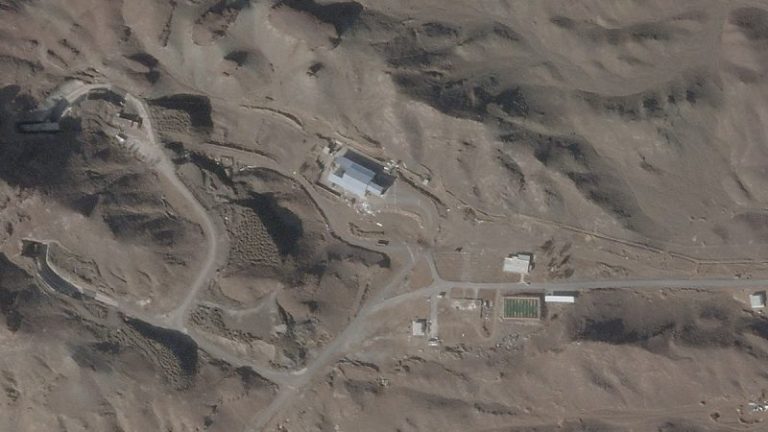
New satellite images released by Earth intelligence monitor, Planet Labs, show reconstruction activity appears to be underway at the Isfahan complex.

Isfahan is one of three Iranian uranium enrichment plants targeted in the U.S. military operation known as ‘Midnight Hammer.’

The June 22 operation involved coordinated Air Force and Navy strikes on the Fordow, Natanz and Isfahan facilities.

Despite the damage, the satellite images show Iran has buried entrances to a tunnel complex at the site, according to Reuters.

Similar steps were reportedly taken at the Natanz facility, which houses two additional enrichment plants.

‘These efforts in Isfahan involve rebuilding its centrifuge program and other activities related to uranium enrichment,’ Jafarzadeh said.

The renewed movements come as Iran participated in talks with the U.S. in Geneva.

On Thursday, President Donald Trump warned that ‘bad things’ would happen if Iran did not make a deal.

While the talks were aimed at curbing Iran’s nuclear program in exchange for sanctions relief, Jafarzadeh argues that for the regime, talks would be nothing more than a tactical delay.

‘Supreme Leader Ali Khamenei agreed to the nuclear talks as it would give the regime crucial time to avoid or limit the consequences of confrontation with the West,’ he said.

Jafarzadeh also described the regime spending at least ‘$2 trillion’ on nuclear capabilities, which he said ‘is higher than the entire oil revenue generated since the regime came to power in Iran in 1979.’ 

‘Tehran is trying to salvage whatever has remained of its nuclear weapons program and quickly rebuild it,’ he said. ‘It has heavily invested in the nuclear weapons program as a key tool for the survival of the regime.’

Jafarzadeh is best known for publicly revealing the existence of Iran’s Natanz nuclear site in 2002, which led to inspections by the International Atomic Energy Agency and intensified global scrutiny of Tehran’s nuclear ambitions.

‘The insistence of the Iranian regime during the nuclear talks on maintaining its uranium enrichment capabilities, while rebuilding its damaged sites, is a clear indication that Supreme Leader Ali Khamenei has no plans to abandon its nuclear weapons program,’ he said.

The National Council of Resistance of Iran, led by Maryam Rajavi, exposed for the first time the nuclear sites in Natanz, Arak, Fordow and more than 100 other sites and projects, Jafarzadeh said, ‘despite a massive crackdown by the regime on this movement.’

This post appeared first on FOX NEWS

The Pentagon is deploying the USS Gerald R. Ford to the Middle East, creating a rare two-carrier presence in the region as tensions with Iran rise and questions swirl about possible U.S. military action.

The Ford will reinforce the USS Abraham Lincoln already operating in theater, significantly expanding American airpower at a moment of heightened regional uncertainty.

While officials have not announced imminent action, the dual-carrier presence increases the Pentagon’s flexibility — from deterrence patrols to sustained strike operations — should diplomacy falter.

The largest aircraft carrier in the world

The Gerald R. Ford is the largest and most advanced aircraft carrier ever built.

Commissioned in 2017, the nuclear-powered warship stretches more than 1,100 feet and displaces more than 100,000 tons of water. It serves as a floating air base that can operate in international waters without relying on host-nation approval — a key advantage in politically sensitive theaters.

Powered by two nuclear reactors, the ship has virtually unlimited range and endurance and is designed to serve for decades as the backbone of U.S. naval power projection.

How much airpower does it carry?

A typical air wing aboard the Ford includes roughly 75 aircraft, though the exact mix depends on mission requirements.

Those aircraft can include F/A-18 Super Hornets, stealth F-35C Joint Strike Fighters, EA-18G Growler electronic warfare jets, E-2D Hawkeye early warning aircraft and MH-60 helicopters.

In a potential conflict with Iran, several of those platforms would be central. 

The F-35C is designed to penetrate contested airspace and carry out precision strikes against heavily defended targets. The Growler specializes in jamming enemy radar and communications — a critical capability against Iran’s layered air defense systems. 

The E-2D extends surveillance hundreds of miles, helping coordinate air and missile defense.

Together, they give commanders options ranging from deterrence patrols to sustained strike operations.

Built for higher combat tempo

What separates the Ford from earlier carriers is its ability to generate more sorties over time.

Instead of traditional steam catapults, it uses an electromagnetic aircraft launch system, or EMALS, allowing aircraft to launch more smoothly and at a faster pace. The system is designed to reduce stress on jets and increase operational tempo.

The ship also features advanced arresting gear and a redesigned flight deck that allows more aircraft to be staged and cycled efficiently.

In a high-intensity scenario — particularly one involving missile launches or rapid escalation — the ability to launch and recover aircraft quickly can be decisive.

How it compares to the Lincoln

While both the Ford and the Abraham Lincoln are 100,000-ton, nuclear-powered supercarriers capable of carrying roughly 60 aircraft to 75 aircraft, they represent different generations of naval design.

The Lincoln is a Nimitz-class carrier commissioned in 1989 and part of a fleet that has supported decades of operations in the Middle East. The Ford is the Navy’s next-generation carrier and the lead ship of its class.

The key difference is efficiency and output. 

The Ford was built to generate a higher sustained sortie rate using its electromagnetic launch system, along with a redesigned flight deck and upgraded power systems. In practical terms, both ships bring substantial strike capability — but the Ford is designed to launch and recover aircraft faster over extended operations, giving commanders greater flexibility if tensions escalate.

How it defends itself

The Ford does not sail alone. It operates as the centerpiece of a carrier strike group that typically includes guided-missile destroyers, cruisers and attack submarines.

Those escort ships provide layered air and missile defense, anti-submarine protection and additional strike capability.

The carrier itself carries defensive systems including Evolved Sea Sparrow Missiles, Rolling Airframe Missiles and the Phalanx Close-In Weapon System — designed to intercept incoming threats at close range.

That defensive posture is especially relevant in the Middle East.

Iran has invested heavily in anti-ship ballistic missiles, cruise missiles, armed drones, naval mines and fast-attack craft operated by the Islamic Revolutionary Guard Corps. The Gulf region presents a dense and complex threat environment, even for advanced U.S. warships.

Why two carriers matter

With both the Ford and the Lincoln in theater, commanders gain more than just added firepower. Two carriers allow the U.S. to sustain a higher tempo of operations, distribute aircraft across multiple areas, or maintain continuous presence if one ship needs to reposition or resupply.

Dual-carrier deployments are relatively uncommon and typically coincide with periods of heightened regional tension.

The timing — as negotiations with Tehran continue — underscores the strategic message. Carriers are often deployed not only to fight wars, but to prevent them.

By positioning both ships in the region, Washington is signaling that if diplomacy falters, military options will already be in place.

This post appeared first on FOX NEWS