

Archive

February 2026

Browsing

Ex-Victoria’s Secret mogul Les Wexner’s lawyer was caught on a hot mic jokingly threatening to ‘kill’ him if he continued giving long answers to questions during his deposition on Jeffrey Epstein by the House Oversight Committee.

The moment was caught after the committee released its full, nearly five-hour deposition of 88-year-old Wexner as part of its ongoing probe into Jeffrey Epstein’s network.

Several hours into the deposition, while Wexner was giving a particularly long-winded answer, Wexner’s attorney leaned over to him and whispered in his ear, ‘I’m going to f—ing kill you if you answer another question with more than five words, okay?’

Both Wexner and his attorney laughed after this statement, indicating Wexner understood it as a joke. The lawyer proceeded to instruct Wexner to ‘answer the question,’ laughing more.

Shortly before this exchange, the attorney had urged Wexner to ‘answer the question,’ saying, ‘I’m sure we all appreciate the stories, we’re just trying to answer questions that they actually want answered,’ referring to the House committee.

The Oversight Committee heard from Wexner, a billionaire fashion mogul best known for his work in revolutionizing the Victoria’s Secret store chain, about his involvement with Epstein, whom Wexner characterized as strictly a business associate rather than a close friend.

Despite being named a co-conspirator in a recently uncovered FBI document from 2019, Wexner said that he has never been directly contacted by either the FBI or the Department of Justice. He maintained his total innocence during the deposition, saying, ‘I was naïve, foolish, and gullible to put any trust in Jeffrey Epstein. He was a con man. And while I was conned, I have done nothing wrong and have nothing to hide. I completely and irrevocably cut ties with Epstein nearly twenty years ago when I learned that he was an abuser, a crook, and a liar.’

The committee stated it was releasing the full deposition with ‘no spin,’ saying, ‘The American people deserve to see the testimony for themselves—transparency matters.’

Wexner is the founder of L Brands, formerly called The Limited, through which he acquired well-known companies Victoria’s Secret, Bath & Body Works, Express, and Abercrombie & Fitch, among others. He is no longer associated with Victoria’s Secret. He was one of Epstein’s first major clients as a financial advisor, with Epstein being granted power of attorney over Wexner’s vast wealth. Wexner also sold his Manhattan townhouse to Epstein, which was later discovered to be one of the locations where federal authorities accused Epstein of abusing young women and girls under 18.

Despite this, Wexner stated that he always kept his relationship with Epstein as strictly professional, saying, ‘I don’t think I ever went to lunch, or dinner, a movie or had a cup of coffee with Jeffrey,’ adding, ‘My focus was on my business and on community.’

Wexner said he severed ties with Epstein in 2007 after learning of an investigation and discovering that Epstein had misappropriated funds from him and his family. He said a substantial amount of the money was returned. 

Wexner also testified that he was not aware of Epstein ever staying at a guesthouse on his New Albany, Ohio, estate, where Maria Farmer is said to have been abused by Epstein and associate Ghislaine Maxwell. He maintained that he only had knowledge of Epstein staying at a nearby neighbor’s residence. Pressed on whether he denies Farmer’s testimony that she was abused on his property, he stated, ‘I never met her, didn’t know she was here, didn’t know she was abused.’

He categorically denied any knowledge of either Epstein or Maxwell arranging women for prominent individuals. He also categorically denied ever having a sexual encounter with anyone introduced by Maxwell and Epstein or having any sexual relationship with Epstein himself.

He further denied any sexual contact or knowledge of another prominent Epstein victim, Virginia Giuffre.

Wexner was also asked about his knowledge of Epstein and President Donald Trump’s relationship. He said that he does not think they were friends, but said Epstein ‘held him out as a friend.’

Committee members also questioned Wexner on a note he wrote in a birthday book to Epstein in which he drew breasts with the caption, ‘Dear Jeffrey, I wanted to get you what you want, so here it is … Your friend, Leslie.’

Wexner confirmed that he wrote the note but dismissed it, saying, ‘He was a bachelor, so I drew a pair of boobs as kind of a joke, offhandedly, I would say.’

Wexner is the fourth person appearing before the House Oversight Committee in its Epstein probe.

Fox News Digital’s Liz Elkind contributed to this report.
This post appeared first on FOX NEWS

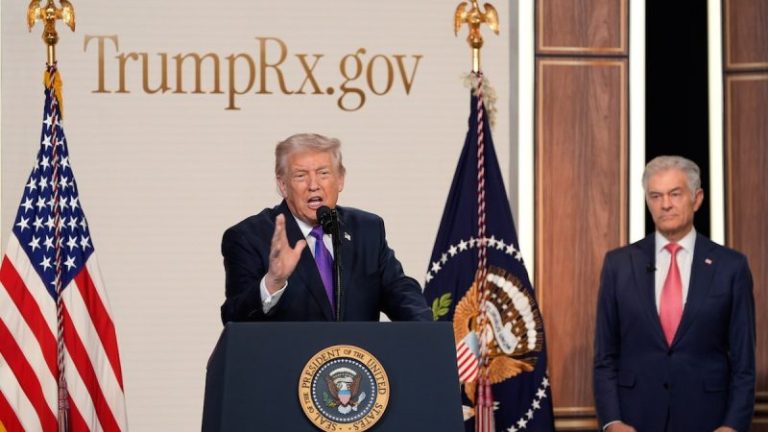
When President Donald Trump announced ‘TrumpRx’ in early February, a weight I’ve carried my entire adult life suddenly lifted from my shoulders. The website offers life-saving medications at much lower prices than normal, based on the president’s promise to give Americans the same prescription drug costs as patients in other developed countries. I can personally attest that such equal treatment — a policy known as ‘most favored nation’ pricing — is urgently needed for people who struggle with chronic disease.

I’ve had debilitating asthma since I was a child. I’ve been able to manage it thanks to a prescription drug which blocks lung inflammation and keeps my airways open. The few times I’ve gone off the medication, I’ve ended up in the emergency room, unable to breathe. That nearly happened four years ago in what I thought was the worst possible place — on the other side of the world, unable to contact my doctors or go to my pharmacy.

My family and I were in Italy, on a trip to honor my mother. She had recently been diagnosed with cancer and my brother and I scheduled the trip in between her chemo treatments, when she would be well enough to travel. She had always wanted to go there with us. But in our rush to get two families and three little kids packed, I accidentally grabbed a nearly empty inhaler.

I realized my mistake a few days into the trip, when I looked at the inhaler and saw that I only had two doses left. I wasn’t just worried about my health, though, of course, that was paramount. I worried how I’d afford the drug if I even found it in Italy.

I’ve organized my professional life around access to insurance that covers my medication, given its longstanding retail price $600 for a month’s supply. For 25 years, I’ve grappled with denied coverage letters, premium tier prescription charts and the constant worry that we would have to cut back on necessities to get my medication. At the time, in Italy, I was already paying a few hundred dollars a month for the drug — a lot, but a bargain compared to its normal price.

But I had no choice. I had to get my medication. After a few minutes of searching, I found an Italian pharmacy across town. I walked there immediately, trying to control my racing thoughts of what might happen. I knew that if I couldn’t get the drug, I couldn’t get safely back to the U.S.

Fifteen minutes later, in tears I walked out, drug in hand. It cost me only 30 euros or about $35.

At first, I was both relieved and grateful. But by the end of the day, I was scratching my head. Why was it $600 in the U.S. while Italians could get it for next to nothing? In the days that followed, I discovered that the answer is beyond complicated.

It’s affected by everything from a lack of price transparency to the meddling of middlemen who jack up costs. It’s also true that foreign countries have been negotiating the prices of prescription drugs for decades, forcing Americans to cover the enormous cost of pharmaceutical development while they pay far below market prices.

Whatever the reason, the system doesn’t work for Americans. Brand name prescription prices in the U.S. are more than four times higher than prices in other wealthy countries. As many as 18 million Americans have struggled to buy the prescriptions they need in recent years.

I’m now using a generic version of the drug that costs significantly less. But that doesn’t change the fact that I, like many other Americans with chronic disease, have paid through the nose for decades on end, only to find the medication I needed in Italy for what seemed like pennies.

I wasn’t just worried about my health, though, of course, that was paramount. I worried how I’d afford the drug if I even found it in Italy.

Trump is fighting to fix this broken system. Before launching TrumpRx, he reached 16 deals with pharmaceutical companies to charge most-favored-nation prices. As a lifelong conservative, I’m typically uncomfortable with this kind of government intervention in the market. But other countries have already intervened and people like me have paid the price.

If pharmaceutical companies need the extra money, they should take it up with other countries that negotiated them down first. Then they could recoup their costs on the backs of others, not simply by charging more in the U.S. Bottom line, there’s no good reason why 340 million Americans should pay so much more than hundreds of millions of people who live in Europe and Asia.

I will always be grateful that my medication was so affordable in Italy back in 2022. It may very well have saved my life. But I’m even more grateful that President Trump is finally lowering prices for every American here at home.

This post appeared first on FOX NEWS

Precious metals prices continued to face downward pressure this week as investors took strong US economic data and a changing geopolitical landscape into consideration.

After climbing to fresh all-time highs at the start of 2026, a myriad of factors in February have seemingly taken the sails out gold, silver and platinum prices. However, the underlying fundamentals for the precious metals remain strong, resulting in a resiliency that lends optimism to higher price points to come in 2026.

Let’s take a look at what got spot prices moving over the past week.

Gold price

Gold hit a record high of close to US$5,600 per ounce at the end of January before sliding into one of the largest price drops in decades, dipping as low as US$4,400 as February kicked off.

Over the past week, the metal has oscillated between slumps and cautious recovery. The spot price lost the battle to remain above the key US$5,000 mark in morning trading on February 12, falling to an intraday low of US$4,907.41. February 13 saw gold rebound slightly and trade in a tight range between US$5,000 and US$5,040.

Gold couldn’t hold that level on Monday (February 16), and the next day it began sliding below the US$4,900 support level. Wednesday (February 18) brought some relief, with gold once again fighting to stay above US$5,000.

Gold price chart, February 12, 2026 to February 18, 2026.

The primary drivers for gold this past week are:

      • Seasonal liquidity is also at play this week as the Lunar New Year holiday, which runs from February 16 to 23, typically results in lower trading volumes.

      In other gold news, the 2026 TSX Venture 50 list was released on Wednesday, with several gold companies named as top performers. The top five gold stocks on the list are: 1911 Gold (TSXV:AUMB,OTCQB:AUMBF), TDG Gold (TSXV:TDG,OTCQX:TDGGF), Omai Gold Mines (TSXV:OMG,OTCQB:OMGGF), Prospector Metals (TSXV:PPP,OTCQB:PMCOF) and Goldgroup Mining (TSXV:GGA,OTCQX:GGAZF).

      Silver price

      Silver has broadly tracked gold’s price movements over the past week.

      However, the white metal has exhibited significantly higher volatility, and the silver spot price is far outside of striking range of its all-time high of more than US$121 per ounce, which it reached on January 29.

      Silver fell by more than 9 percent on February 12 as it followed gold on the downtrend, falling from around US$83 to US$75. On Friday the 13th, silver managed not to scare investors as it traded mostly sideways at the US$77 level.

      For most of Monday and Tuesday (February 17), silver continued to limp along this trend line, but has managed to gain ground, rising from the US$75 level to an intraday high of US$78.24 as of 11:00 a.m. PST on Wednesday.

      Silver price chart, February 12, 2026 to February 18, 2026.

      In addition to the macro factors influencing gold, volatility in the silver market has also come from the ups and downs in the artificial intelligence (AI) sector. Silver, the most electrically and thermally conductive metal on the planet, is considered a key material for AI tech, particularly in data centers and high-performance computing.

      Over the past week, the Global X Artificial Intelligence & Technology ETF (NASDAQ:AIQ) has slid from approximately US$50.55 to US$49.94 as of midday on Wednesday, reflecting broader weakness in the sector.

      In other silver news, in its latest annual outlook, published on February 10, the Silver Institute reported that it expects macroeconomic and geopolitical conditions to remain broadly supportive for silver in 2026.

      Platinum price

      On February 12, platinum was trading as high as US$2,136 per ounce in early morning trading, but soon followed its precious metals sisters on a downward slide to an intraday low of US$1,982.50. The metal was back above US$2,070 the next day, and for the first part of this week it’s managed to trade above the US$2,000 level.

      Wednesday was a recovery day for platinum as it reached an intraday high of US$2,122.90 as of 11:00 a.m. PST.

      Platinum price chart, February 12, 2026 to February 18, 2026.

      Platinum is one of the top-performing metals over the past year, reaching 12 year highs in recent weeks. Demand is being driven by the metal’s essential role in the emerging hydrogen economy. It’s also still seeing robust demand from the auto sector despite the emergence of electric vehicles and uneasy consumer confidence in the economy.

      On the supply side, global platinum reserves remain critically low, especially as the world’s biggest producer, South Africa, continues to be plagued by power shortages and operational disruptions.

      This week, Johnson Matthey (LSE:JMAT,OTCPL:JMPLF), Sibanye-Stillwater (NYSE:SBSW) and Valterra Platinum (LSE:VALT,JSE:VAL,OTCPL:AGPPF) launched a multimillion-dollar partnership to develop new platinum-group metals clean energy and industrial technologies outside of the auto sector.

      Palladium price

      Palladium has been the black sheep of the precious metals family for the past few years, remaining well below its March 2022 all-time record of US$3,440.76 per ounce.

      On February 12 it followed the precious metals pack down from US$1,741 to as low as US$1,664.

      After a rebounding above to US$1,783 level on Monday, the following trading today brought much volatility to the metal, which traded in the US$1,670 to US$1,720 range. Platinum managed to to make gains to the upside on Wednesday with an intraday high of US$1,774 as of 11:00 a.m. PST.

      Palladium price chart, February 12, 2026 to February 18, 2026.

      The palladium price is being held down by a slump in demand for electric vehicles and a looming oversupply situation. Analysts at Heraeus Precious Metals predict that the palladium market may move into a surplus in 2026 as secondary supply from recycling increases by 10 percent.

      On that note, an announcement shaping the outlook for palladium on the supply side this past week came from the US Department of Commerce, which issued a preliminary statement of support for anti-dumping duties of approximately 133 percent on unwrought Russian palladium imports.

      This follows a petition from Sibanye-Stillwater over allegations that Russian metal is being sold in the US at less than fair value. A final decision is expected in the case by June of this year.

      Securities Disclosure: I, Melissa Pistilli, hold no direct investment interest in any company mentioned in this article.

      This post appeared first on investingnews.com

      Christopher Aaron, founder of iGoldAdvisor and Elite Private Placements, explains where gold and silver are in the current cycle and what his strategy looks like now.

      ‘This cycle is going to end in a mania,’ he said. ‘You want to position not when the mania is unfolding, but when it gets quiet, and I think we’re in one of those windows now to be positioning.’

      Securities Disclosure: I, Charlotte McLeod, hold no direct investment interest in any company mentioned in this article.

      This post appeared first on investingnews.com

      Sranan Gold Corp. (CSE: SRAN,OTC:SRANF) (OTCQB: SRANF) (‘Sranan’ or the ‘Company’) continues to work towards the filing of its annual audited financial statements, management’s discussion and analysis, and CEO and CFO certifications for the fiscal year ended September 30, 2025 (the ‘Required Filings’).

      The previously identified transactional complexities have been addressed, and the review of the transactions is ongoing. The principal remaining items relate to transaction accounting testing and clarification of VAT treatment in Suriname, with other minor items including tax provision calculations, confirmations, and procedural documentation. As the audit has progressed, the volume of supporting documentation has increased and is being provided to the auditor, resulting in outstanding audit items representing approximately 18%. Sranan remains in ongoing communication with its auditor to confirm any remaining documentation requirements and has committed to providing any outstanding materials promptly upon request. Sranan anticipates that the audited financial statements will be completed and filed on or before February 27, 2026.

      The Required Filings were due to be filed by January 28, 2026. In connection with the anticipated delays in making the Required Filings, the Company made an application for a Management Cease Trade Order (‘MCTO‘) under National Policy 12-203 Management Cease Trade Orders (‘NP 12-203‘) to the Alberta Securities Commission, as principal regulator for the Company, and the MCTO was issued on January 29, 2026. The MCTO restricts all trading by the Company’s CEO and CFO in securities of the Company, whether direct or indirect. The issuance of the MCTO does not affect the ability of persons who are not directors, officers or insiders of the Company to trade their securities. The MCTO will remain in effect until the Required Filings are filed or until it is revoked or varied.

      The Company currently expects to file its interim first-quarter financial statements on or before the applicable filing due date.

      Both the Company and its auditors are working diligently towards the completion and filing of the Required Filings, and the Company will provide additional updates.

      The Company confirms that it intends to satisfy the provisions of the alternative information guidelines described in NP 12-203 by issuing bi-weekly default status reports in the form of a news release until it meets the Required Filings requirement. The Company has not taken any steps towards any insolvency proceeding and the Company has no material information relating to its affairs that has not been generally disclosed.

      For further information with respect to the MCTO, please refer to the Company’s news releases dated January 21, 2026, and February 4, 2026, available for viewing on the Company’s SEDAR+ profile at www.sedarplus.ca.

      About Sranan Gold

      Sranan Gold Corp. is engaged in the business of mineral exploration and the acquisition of mineral property assets in Suriname and Canada. The Company’s flagship Tapanahony Project covers 29,000 hectares in one of Suriname’s most prolific artisanal gold mining districts.

      For more information, please visit http://www.sranangold.com.

      For further information, please contact:
      Oscar Louzada, CEO
      +31 6 25438975

      THE CANADIAN SECURITIES EXCHANGE HAS NOT APPROVED NOR DISAPPROVED THE CONTENT OF THIS PRESS RELEASE.

      Forward-looking statements

      Certain statements made and information contained herein may constitute ‘forward-looking information’ and ‘forward-looking statements’ within the meaning of applicable Canadian and United States securities legislation. These statements and information are based on facts currently available to Sranan and there is no assurance that the actual results will meet management’s expectations. Forward-looking statements and information may be identified by such terms as ‘anticipates,’ ‘believes,’ ‘targets,’ ‘estimates,’ ‘plans,’ ‘expects,’ ‘may,’ ‘will,’ ‘could’ or ‘would.’

      This news release contains forward-looking statements, including, but not limited to, statements regarding management’s expectations about obtaining the MCTO and completing the Required Filings within the anticipated timeline. Forward-looking statements are subject to various risks, uncertainties, and other factors that could cause actual results or events to differ materially from those expressed or implied by such statements. Sranan does not undertake any obligation to update forward-looking statements or information, except as required by applicable securities laws. For more information on the Company, investors should review the Company’s continuous disclosure filings that are available at www.sedarplus.ca.

      To view the source version of this press release, please visit https://www.newsfilecorp.com/release/284465

      News Provided by TMX Newsfile via QuoteMedia

      This post appeared first on investingnews.com

      Genesis Minerals (ASX:GMD,OTCPL:GSISF) has struck a recommended deal to acquire Magnetic Resources (ASX:MAU) in a transaction that would add more than 2 million ounces of high-grade gold to its Laverton inventory and reshape its production growth outlook in Western Australia.

      Under a binding Scheme Implementation Deed announced Tuesday (February 17), Genesis will acquire 100 percent of Magnetic via a court-approved scheme of arrangement. The offer values Magnetic at approximately US$450 million on a fully diluted basis.

      At the centre of the deal is Magnetic’s flagship Lady Julie gold project in the Laverton region, which hosts a mineral resource of approximately 2.2 million ounces grading 1.8 grams per tonne (g/t) gold, and ore reserves of around 1 million ounces at 1.7 g/t. The project sits roughly 20 kilometres from Genesis’ operating 3 million tonne per annum Laverton mill.

      “This transaction creates substantial value for both groups of shareholders, delivering genuine synergies while combining the right assets with the right people,” Genesis Executive Chair Raleigh Finlayson said.

      “Magnetic’s Lady Julie Gold Project will add more than 2Moz at an attractive high grade to Genesis’ Laverton inventory, further bolstering the mine life and production outlook.”

      Lady Julie’s northern boundary adjoins ground recently acquired by Genesis through its purchase of Focus Minerals’ (ASX:FML,OTCPL:FCSUF) Laverton gold project, creating the potential to integrate what would otherwise be neighbouring standalone developments into a larger open pit operation.

      Genesis said removing tenement boundaries between the assets presents tangible cost and operational synergies. The acquisition would expand its Laverton mineral resources to approximately 8.4 million ounces, representing a 40 percent increase, and lift its pro forma total mineral resources to 21 million ounces.

      The company signaled that the deal could support an uplift to its “ASPIRE 500” growth strategy, with an updated multi-year plan expected following completion.

      Magnetic Managing Director George Sakalidis said the deal follows a strategic review exploring development pathways for Lady Julie: “Genesis’ offer follows a strategic review which the Board and its advisers have been working on for several years to explore potential options to collaborate with other operators which have the existing skill set or combination synergies to develop Magnetic’s discoveries and unlock value for our shareholders.’

      If implemented, Magnetic shareholders would own approximately 2.4 percent of the enlarged Genesis. Major shareholders representing about 19.6 percent of Magnetic’s issued shares have already committed to vote in favour of the scheme, subject to customary conditions.

      Securities Disclosure: I, Giann Liguid, hold no direct investment interest in any company mentioned in this article.

      This post appeared first on investingnews.com

      The president of a Florida insurance brokerage firm and the CEO of a marketing company were sentenced Wednesday to 20 years each in prison for leading a sprawling, $233 million Affordable Care Act fraud scheme that preyed on Florida’s most vulnerable residents — including homeless and jobless individuals and newly displaced hurricane victims — to pocket millions in unearned commissions.

      Cory Lloyd, 46, of Stuart, Florida, and Steven Strong, 42, of Mansfield, Texas, were convicted of conspiracy and fraud for their roles in the scheme, which involved lying and falsifying government forms to obtain coverage for individuals and lying to or bribing would-be enrollees to sign up for plans even when they knew doing so would cost them their existing insurance coverage. In addition to their prison time, the pair were ordered to pay $180.6 million in restitution to their victims. 

      Lloyd and Strong profited handsomely for years from the scheme, Justice Department officials said, using the proceeds to purchase luxury vehicles, an 80-foot yacht and an oceanfront home in the Florida Keys.

      ‘Preying upon medically compromised consumers to rob hundreds of millions of taxpayer-funded programs is evil and unforgivable,’ Attorney General Pam Bondi told Fox News Digital in a statement. 

      ‘Fraud schemes like this rob citizens and shake faith in our institutions. Today’s sentencing is the latest example of this DOJ’s commitment to fighting fraud nationwide,’ Bondi said.

      An estimated 35,000 individuals were fraudulently enrolled in Affordable Care Act plans during the years-long scheme led by Lloyd and Strong, Justice Department officials with knowledge of the case told Fox News Digital. The two sought more than $233 million in fraudulent payments, including about $180 million in federal Affordable Care Act funding.

      ‘These defendants were sophisticated, licensed insurance brokers,’ Assistant Attorney General A. Tysen Duva of the Justice Department’s Criminal Division said in a statement. 

      ‘They had everything and intentionally took advantage of people who had nothing. The message from these sentences is simple: Those who seek to line their own pockets with taxpayer dollars, victimize our most vulnerable and deplete federal programs will be held accountable.’

      The two intentionally targeted people in the state who were experiencing homelessness and people experiencing mental health disorders, including addiction to opioids or other drugs, according to materials reviewed by Fox News Digital. 

      Prosecutors said at trial that Lloyd and Strong conspired to circumvent federal income and eligibility verification safeguards. They also intentionally submitted Medicaid applications designed to trigger denials, allowing them to steer those same individuals into fully subsidized Affordable Care Act plans outside the open enrollment period, maximizing commissions year-round.

      Their lavish lifestyle contrasted starkly with that of the individuals they lied to and scammed. 

      ‘One of the really awful things about the case is that it’s not only a scheme that’s taking money from the elderly and the disabled and defrauding the taxpayers, but that it actually resulted in real harm to the patients as well,’ one Justice Department official said in an interview.

      That harm included individuals losing access to life-saving treatments for opioid use disorders, mental health disorders and serious infectious diseases.

      Text messages introduced at trial showed Strong and Lloyd discussing sending ‘street marketers’ into Florida hurricane shelters to recruit enrollees.

      In one text exchange, Strong suggested sending their team of ‘street marketers’ into Florida hurricane shelters to recruit enrollees. Lloyd responded enthusiastically, stating, ‘It’s a killer idea, if we could pull it off!’

      Prosecutors said the efforts were particularly harmful because they disrupted existing coverage plans and jeopardized access to treatment for serious conditions.

      Many of the victims were experiencing homelessness or unemployment or qualified for Medicaid coverage — an insurance option for low-income or vulnerable populations that, in many cases, best suited their needs.

      Jurors heard from a Jacksonville-based psychiatrist who treats homeless individuals and testified about the harm some of his patients suffered as a result of the fraud, which caused them to lose their Medicaid coverage.

      This included an individual ‘living in the woods behind Walmart’ who was suffering from schizoaffective disorder, a person familiar with the case told Fox News Digital.

      Like others, this individual had previously been enrolled in Medicaid, which covered the entirety of a $2,000 shot used to treat the schizoaffective disorder. Enrollment in an Affordable Care Act plan caused the individual to lose that coverage.

      The sentencing comes as the Justice Department has moved aggressively to crack down on healthcare fraud, including through its ongoing ‘strike force’ program that operates across 25 federal districts and has resulted in criminal charges against about 5,000 individuals, according to information shared with Fox News Digital.

      It also comes as the DOJ’s Health Care Fraud Unit secured the largest national healthcare fraud takedown in its history in 2025, officials said, charging more than $15 billion in alleged losses and forfeitures and returning more than $560 million to the public.

      Justice Department officials noted the amount is ‘many, many, many times our annual budget.’

      This post appeared first on FOX NEWS

      The debate over U.S. missile defense is increasingly focused on space, and defense experts argue that stopping threats in the earliest moments after launch could determine whether the homeland remains protected against Russia and China’s expanding arsenals.

      At a policy discussion marking roughly a year since the rollout of the ‘Golden Dome’ homeland defense initiative, former senior defense officials said the United States can no longer rely primarily on deterrence and retaliation to shield the country from missile attacks.

      ‘I think geography is no longer’ a shield, former Air Force Undersecretary Kari Bingen said during a C-SPAN panel Friday. ‘There are different types of threats that can reach the homeland.’

      The Golden Dome initiative stems from a January 2025 executive order signed by President Donald Trump directing the Pentagon to accelerate development of a next-generation homeland missile defense architecture. The order calls for integrating existing ground-based interceptors with advanced tracking networks, new space-based sensors and potentially space-based interceptors capable of detecting and defeating ballistic, cruise and hypersonic missile threats earlier in flight.

      Administration officials have framed the effort as a response to rapid modernization by Russia and China. 

      Russia has fielded new intercontinental ballistic missiles and hypersonic glide vehicles designed to penetrate missile defenses, while China has expanded its nuclear arsenal and constructed hundreds of new missile silos in recent years. 

      Both countries have invested heavily in maneuverable reentry vehicles and countermeasures intended to complicate U.S. interception efforts.

      Stopping missiles early

      Supporters of a stronger space layer argue that intercepting a missile early in flight — before it can deploy warheads or countermeasures — simplifies the defensive challenge and reduces the strain on systems closer to U.S. territory.

      ‘It gives the ability to neutralize before they manifest here at home,’ missile defense expert Thomas Karako said, referring to space-enabled capabilities that could track and potentially intercept threats sooner in their trajectory.

      Karako said there is ‘a compelling case’ for space-based interceptors ‘not just against nonnuclear attack but even limited nuclear attacks,’ arguing that raising the threshold for adversaries contemplating a strike strengthens deterrence overall.

      ‘If you raise the threshold for having enough capability to meaningfully invest in enemies … there’s goodness in there,’ he said.

      Panelists emphasized that the objective is not absolute protection against thousands of intercontinental ballistic missiles, but improving the odds of defeating smaller or more limited attacks, including those that could involve large salvos or advanced countermeasures.

      Threats are evolving

      Melissa Dalton, a former senior Pentagon official, said missile and drone use has become increasingly normalized in recent conflicts, lowering the perceived threshold for employment.

      ‘They don’t respect the boundaries,’ Dalton said, noting the growing frequency of missile and drone attacks.

      Bingen argued that the U.S. historically leaned heavily on the threat of retaliation to deter attacks but that changing technologies and adversary capabilities require a broader approach.

      ‘Americans would be surprised how reliant we have been on vulnerability and retaliation,’ she said.

      Space and integration challenges

      While space-based missile defense once drew skepticism due to cost and technical hurdles, Karako said advances in commercial launch and satellite technology have changed the feasibility calculus.

      ‘This is not the Soviet Union in the ’80s or the ’90s,’ he said. ‘The technology has evolved quite a bit.’

      Still, experts acknowledged that integration — linking sensors, interceptors and command-and-control systems at machine speed — may be the most difficult challenge.

      ‘We have to remember this is a layered defense system,’ Bingen said. ‘We’re not asking the space layer to do it all.’

      Participants also stressed that any major expansion of homeland missile defense will require bipartisan political support to endure through election cycles and shifting budget priorities.

      ‘If you don’t persuade people what it’s about, it will never be built,’ Karako said.

      Officials have floated an aggressive timeline — including a three-year push to stand up initial capabilities — but the Golden Dome is still in early development, with much of the work focused on planning, prototypes and initial contracts. Significant technical and acquisition hurdles remain, particularly for any space-based interceptor layer, which defense officials acknowledge would take years to fully field.

      The effort marks a broader shift in how the U.S. approaches homeland defense. Rather than relying mainly on midcourse interceptors and the threat of retaliation, Golden Dome is designed to push defenses earlier in a missile’s flight — and further into space — with the goal of stopping threats before they can deploy countermeasures or overwhelm existing systems.

      This post appeared first on FOX NEWS

      : This was the kind of prison break officials say could have changed the region, and perhaps even the world, overnight.

      Nearly 6,000 ISIS detainees, described by a senior U.S. intelligence official as ‘the worst of the worst,’ were being held in northern Syria as clashes and instability threatened the Kurdish-led Syrian Democratic Forces, the guards responsible for keeping the militants locked away and preventing a feared ISIS resurgence. U.S. officials believed that if the prisons collapsed in the chaos, the consequences would be immediate.

      ‘If these 6,000 or so got out and returned to the battlefield, that would basically be the instant reconstitution of ISIS,’ the senior intelligence official told Fox News Digital.

      In an exclusive interview, the official walked Fox News Digital step by step through the behind-the-scenes operation that moved thousands of ISIS detainees out of Syria and into Iraqi custody, describing a multi-agency scramble that unfolded over weeks, with intelligence warnings, rapid diplomacy and a swift military lift.

      The risk, the official explained, had been building for months. In late October, Director of National Intelligence Tulsi Gabbard began to assess that Syria’s transition could tip into disorder and create the conditions for a catastrophic jailbreak.

      The ODNI sent the official to Syria and Iraq at that time to begin early discussions with both the SDF and the Iraqi government about how to remove what the official repeatedly described as the most dangerous detainees before events overtook them.

      Those fears sharpened in early January as fighting erupted in Aleppo and began spreading eastward. Time was running out to prevent catastrophe. ‘We saw this severe crisis situation,’ the official said.

      According to the source, the ODNI oversaw daily coordination calls across agencies as the situation escalated. The official said Secretary of State Marco Rubio was ‘managing the day to day’ on policy considerations, while the ODNI drove a working group that kept CENTCOM, diplomats and intelligence officials aligned on the urgent question: how to keep nearly 6,000 ISIS fighters from slipping into the fog of war.

      The Iraqi government, the official said, understood the stakes. Baghdad had its own reasons to move quickly, fearing that if thousands of detainees escaped, they would spill across the border and revive a threat Iraq still remembers in visceral terms.

      The official described Iraq’s motivation bluntly: leaders recognized that a massive breakout could force Iraq back into a ‘2014 ISIS is on our border situation once more.’

      The U.S. Embassy in Baghdad, the official said, played a pivotal role in smoothing the diplomatic runway for what would become a major logistical undertaking.

      Then came the physical lift. The official credited CENTCOM’s surge of resources to make the plan real on the ground, saying that ‘moving in helicopters’ and other assets enabled detainees to be removed in a compressed timeframe.

      ‘Thanks to the efforts… moving in helicopters, moving in more resources, and then just logistically making this happen, we were able to get these nearly 6000 out in the course of just a few weeks,’ the official said.

      The SDF, he said, had been securing the prisons, but its attention was strained by fighting elsewhere, fueling U.S. fears that a single breach could spiral into a mass escape. Ultimately, detainees were transported into Iraq, where they are now held at a facility near Baghdad International Airport under Iraqi authority.

      The next phase, the official said, is focused on identification and accountability. FBI teams are in Iraq enrolling detainees biometrically, the official said, while U.S. and Iraqi officials examine what intelligence can be declassified and used in prosecutions.

      ‘What they were asking us for, basically, is giving them as much intelligence and information that we have on these individuals,’ the official said. ‘So right now, the priority is on biometrically identifying these individuals.’

      The official said the State Department is also pushing countries of origin to take responsibility for their citizens held among the detainees.

      ‘State Department is doing outreach right now and encouraging all these different countries to come and pick up their fighters,’ he said.

      While the transfer focused strictly on ISIS fighters, the senior intelligence official said families held in camps such as al-Hol were not part of the operation, leaving a major unresolved security and humanitarian challenge.

      The camps themselves were under separate arrangements, the official said, and responsibility shifted as control on the ground evolved. 

      According to the official, the Syrian Democratic Forces and the Syrian government reached an understanding that Damascus would take over the al-Hol camp, which holds thousands of ISIS-affiliated women and children.

      ‘As you can see from social media, the al-Hol camp is pretty much being emptied out,’ the official said, adding that it ‘appears the Syrian government has decided to let them go free,’ a scenario the official described as deeply troubling for regional security. ‘That is very concerning.’

      The fate of the families has long been viewed by counterterrorism officials as one of the most complicated, unresolved elements of the ISIS detention system. Many of the children have grown up in camps after ISIS lost territorial control, and some are now approaching fighting age, raising fears about future radicalization and recruitment.

      For now, the official said, intelligence agencies are closely tracking developments after a rapid operation that, in their view, prevented thousands of experienced ISIS militants from reentering the battlefield at once and potentially reigniting the group’s fighting force. 

      ‘This is a rare good news story coming out of Syria,’ the official concluded.

      This post appeared first on FOX NEWS