Archive

April 8, 2026

Browsing

President Donald Trump warned that “a whole civilization will die tonight” as a deadline looms for Iran to agree to U.S. demands, escalating his rhetoric even as last-minute negotiations continue through intermediaries to avert sweeping military strikes.

Trump has set a Tuesday night deadline for Iran to accept terms that include reopening the Strait of Hormuz, a critical global oil artery, as U.S. officials — including Vice President JD Vance — continue back-channel talks through intermediaries such as Pakistan. 

But significant gaps remain, and the president’s latest comments raise the risk the U.S. may move forward with strikes targeting Iranian infrastructure, including power and transportation systems and beyond. 

TRUMP REVEALS IRAN MADE ‘SIGNIFICANT PROPOSAL’ AFTER ULTIMATUM, BUT ‘NOT GOOD ENOUGH’

Trump’s latest remarks mark a sharp escalation from earlier warnings focused on infrastructure. He also suggested Iran had undergone “complete and total regime change, where different, smarter, and less radicalized minds prevail.”

Mojtaba Khamenei was named Iran’s supreme leader after U.S. strikes killed his father, Ali Khamenei, though his current status and control remain unclear amid conflicting reports. 

And Iran has threatened to take action if Trump follows through on his threats. 

“Iran will not stand idle in the face of such egregious war crimes,” said Amir-Saeid Iravani, Iran’s permanent representative to the United Nations. “It will exercise without hesitation its inherent right of self-defense, and will take immediate and proportionate reciprocal measures.”

Diplomatic efforts to avert a wider conflict are ongoing but increasingly strained, with mediators including Pakistan, Egypt and Turkey working to broker a ceasefire and reopen the Strait of Hormuz before broader talks can begin.

“We are absolutely in touch with” Iran, a senior U.S. official told Fox News. “Absolutely. (The talks) have been positive. If we get lucky, we will have something by the end of the day.”

Iran repeatedly has rejected a temporary truce in favor of a permanent end to the war, while U.S. officials have dismissed Tehran’s proposals as insufficient, leaving key differences unresolved as the deadline approaches.

Trump underscored the threat in a profanity-laced Truth Social post Sunday, declaring that “Tuesday will be Power Plant Day, and Bridge Day” in Iran and warning that the country’s infrastructure would be destroyed if it did not reopen the Strait of Hormuz. He told Iran to “open the F—in’ Strait… or you’ll be living in Hell.”

As the deadline nears, the conflict already is intensifying on the ground. Airstrikes hit parts of Iran’s capital city of Tehran Tuesday, while Iranian officials urged civilians to form human chains around power plants in an effort to deter potential U.S. attacks on critical infrastructure, Iranian state media reported. 

Overnight, the U.S. struck dozens of military sites on Kharg Island — including bunkers, radar stations and ammunition storage facilities — a senior U.S. official told Fox News. The island is Iran’s primary oil export hub, making it one of the regime’s most critical economic assets. 

By targeting military sites while avoiding energy infrastructure, the strikes suggest the U.S. is applying pressure while holding Iran’s oil lifeline at risk as a potential next step if the deadline passes without a deal.

Israel also has signaled a potential expansion of the target set to include Iran’s rail network, warning civilians to avoid trains ahead of possible strikes. Rail lines play a critical role in moving military forces and equipment, particularly in and out of Tehran, and disrupting them could significantly limit Iran’s ability to reposition assets and sustain operations.

While Trump has centered his deadline on reopening the Strait of Hormuz, the negotiations have expanded into a broader dispute over ending the war, including Iran’s nuclear and missile programs, sanctions relief and security guarantees — issues that remain unresolved as both sides clash over what concessions must come first.

Trump’s “civilization” remarks have raised new questions about whether the potential U.S. target set could extend beyond bridges and power plants to include additional infrastructure or systems tied to the Iranian regime’s ability to maintain power.

IRAN’S TALLEST BRIDGE COLLAPSES AFTER REPORTED US AIRSTRIKES, IRAN THREATENS AMERICAN ALLIES IN RETALIATION

Trump has warned that “every bridge in Iran will be decimated” and that power plants could be left “burning, exploding and never to be used again” if Tehran fails to meet his demands, underscoring the scale of potential infrastructure strikes.

Trump also has repeatedly extended similar deadlines in recent weeks, delaying threatened strikes as negotiations continued before issuing new ultimatums. The pattern has raised questions about whether the latest deadline will hold — or serve as another pressure tactic in the final hours of talks.

Iran’s blockade of the Strait of Hormuz — through which roughly a fifth of the world’s oil passes in peacetime — already has sent shock waves through global markets, raising pressure on the administration to reach a resolution while increasing the stakes of any potential military escalation.

Military options now on the table

Trump’s rhetoric has fueled questions about how far a potential U.S. strike campaign could extend beyond the infrastructure targets he has publicly identified. 

Military analysts say options range from continued infrastructure strikes aimed at crippling Iran’s ability to function to a broader campaign targeting the regime’s core power centers.

The White House rapid response team shot down a post on X which quoted Vance and suggested it implied “Trump might use nuclear weapons.” 

“Literally nothing @VP said here ‘implies’ this, you absolute buffoons.”

“The Iranian regime has until 8PM Eastern Time to meet the moment and make a deal with the United States. Only the President knows where things stand and what he will do,” press secretary Karoline Leavitt said in a statement. 

A U.S. operation could focus on disabling Iran’s electrical grid, transportation networks and energy facilities — a strategy designed to create nationwide disruption and pressure leadership. Such strikes could trigger cascading effects across communications, water systems and industrial production and would impact the civilian population.

Other options could involve further targeting of leadership, facilities tied to the Islamic Revolutionary Guard Corps, including command-and-control nodes, weapons production sites, and economic assets that fund the regime’s operations. 

Gregg Roman, executive director of the Middle East Forum, said the president’s language suggests a focus on dismantling the regime’s underlying power structures rather than targeting Iran as a nation.

“I really think that what he’s talking about are the fundamental roots and the anchors of the Islamic Republic, not of the country of Iran,” Roman said.

“Everything that the United States would target in a hypothetical attack on power plants, bridges, other key points of infrastructure would really have to focus on those that are connected to the ability of the generals who are currently in charge of this regime and their ability to maintain power,” he added.

Roman said Trump’s reference to “civilization” likely reflects the 47-year rule of the Islamic Republic rather than Iranian society as a whole.

“I don’t think he’s speaking about Persian civilization. I think he’s speaking about the 47 years that the Islamic Republic has ruled as a polity.”

Iranian officials have called on civilians to help protect key infrastructure. Earlier, Iranian official Alireza Rahimi issued a video message calling on “all young people, athletes, artists, students and university students and their professors” to form human chains around power plants.

Iranian President Masoud Pezeshkian said Tuesday that Iranians are willing to give their lives in defense of Iran. 

“More than 14 million brave Iranians have so far declared their readiness to sacrifice their lives to defend Iran. I have also sacrificed my life for Iran, I am, and I will continue to do so,” he wrote on X.

Fox News’ Bill Hemmer, Jennifer Griffin and Louis Casiano contributed to this report. 
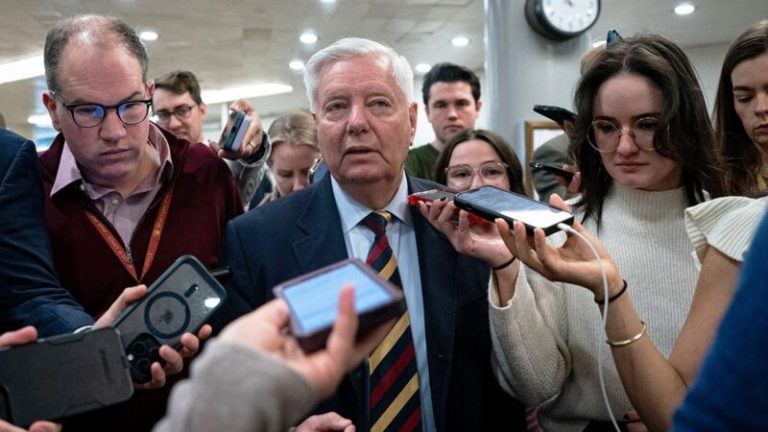
A top Senate Republican is eyeing a way to put a “down payment” on Trump-backed voter ID legislation through a party-line bill later in the year.

The Senate has been debating the Safeguarding American Voter Eligibility (SAVE) America Act for almost a month. But without Democratic votes to break the filibuster, the legislation has no chance of passing.

Sen. Lindsey Graham, R-S.C., wants to put portions of the voter ID and citizenship verification legislation into a budget reconciliation package, which requires only Republican votes to pass.

GOP SENATOR’S GAMBIT EXPOSES FALSE DEM CLAIMS ABOUT SUPPORTING VOTER ID

“Reconciliation has limits, but we’re going to make a down payment on the SAVE Act in reconciliation in the fall,” Graham said Monday on a South Carolina radio show, “Straight Talk with Bill Frady.” 

Graham, who chairs the Senate Budget Committee, is in charge of designing the framework for the reconciliation process in the upper chamber. He plans to meet with the White House Friday to “get this thing moving.”

Reconciliation does not allow for straight policy, meaning any provisions included in the package must have a budgetary or spending impact to survive Senate rules. If they don’t, they are stripped out.

Graham says he has a solution.

THUNE ACCUSES CRITICS OF ‘CREATING FALSE EXPECTATIONS’ AMID BACKLASH OVER STALLED SAVE AMERICA ACT

“Voter integrity laws — I’m going to create grant programs, but they’ll have conditions on them,” Graham said. “To get a grant, you’ve got to make sure you purge your rolls of illegal immigrants. There are a lot of blue states out there that don’t do that, and we’ll try to get as much of a voter ID system as I can.”

President Donald Trump and conservatives have demanded that the Senate launch a talking filibuster — or eliminate the filibuster entirely — to pass the SAVE America Act. But Senate Majority Leader John Thune, R-S.D., and other Republicans have made clear the option does not have enough support.

The current floor debate, which is paused while lawmakers are away from Washington, D.C., for the Easter break, is designed to force Senate Democrats to argue against voter ID — a policy that polls show is popular with voters across party lines.

SENATE PASSES BILL TO FUND MOST OF DHS AFTER HOUSE GOP CAVES

Senate Minority Leader Chuck Schumer, D-N.Y., argued late last month that Democrats’ objection to the SAVE America Act is “not to a photo ID when you show up to vote,” despite blocking a standalone voter ID provision pushed by Sen. Jon Husted, R-Ohio.

Our objection is it’s a voter suppression bill, 20 million, maybe more people, when they show up to vote will be told you’re off the rolls,” Schumer said. “That’s the problem with the bill.

While Graham’s provision could pass muster under Senate rules, it would likely come in a second reconciliation package in the fall, as midterm elections take center stage. Whether it would take effect by November is unclear. He’s eying provisions that would tackle fraud in the package, too.

Before that, Graham and Republicans are eyeing front-loading funding for Immigration and Customs Enforcement (ICE) and Customs and Border Protection (CBP) in a reconciliation bill that Trump wants on his desk no later than June 1.

Senate Republicans are largely aligned behind the idea, arguing that Democrats have refused to fund immigration enforcement without stringent reforms — reforms Republicans say they have offered and Democrats have rejected.

Still, House Republicans are not entirely on board, and their resistance could further prolong the longest government shutdown in history.

They are frustrated with the current Senate Department of Homeland SecuritySenate Department of Homeland Security (DHS) funding bill, which carves out ICE and portions of CBP funding. They are demanding the upper chamber make real progress on a reconciliation bill before voting for the compromise plan.

“What I’m going to do is draft a reconciliation bill and load up ICE and Border Patrol funding without a single Democratic vote — give them all they need for three to 10 years, whatever I can fit in,” Graham said. “We’re going to fund the Border Patrol, and we’re going to fund ICE with Republican votes only.”

A new national poll is the latest to indicate that Democrats are facing major problems with their party’s image as they try to win back congressional majorities from the Republicans in this year’s midterm elections.

Just 28% of Americans questioned in a CNN poll view the Democratic Party positively, with 56% seeing Democrats in an unfavorable light.

The poll, the most recent over the past year to indicate the Democratic Party brand hitting historic lows, comes with just over six months to go until the midterms, when they hope to escape the political wilderness.

The GOP, which is working to defend its fragile House and slim Senate majorities in the 2026 ballot box showdowns amid President Donald Trump’s underwater approval ratings and a rough political climate that doesn’t favor the party in power, doesn’t fare much better in the poll, which was conducted March 26-30.

WHAT OUR LATEST FOX NEWS NATIONAL POLL SAYS 

Thirty-two percent of Americans said they viewed the Republican Party positively, with 55% seeing the GOP in a negative light.

An average of the most recent national polls that asked how respondents viewed the two major political parties show the Republicans’ favorability 15 points in negative territory but the Democrats 20 points underwater.

Helping to sink the Democratic Party’s underwater ratings are Democrats themselves.

A healthy percentage of Democrats feel that their leaders in Congress aren’t fighting back more vocally against Trump and his unprecedented second-term agenda. That’s fueling a less favorable view of the Democratic Party among Democrats compared to a noticeably more favorable view of the GOP among Republicans.

That’s a departure from 2006 and 2018, the most recent midterms, when the Democrats rode blue waves to win back the House when Republicans controlled the White House. In those years, Democrats led by double digits in net favorability.

Democrats were ecstatic two weeks ago after flipping a Republican-controlled legislative seat in a right-leaning, Palm Beach, Florida-anchored district that includes Mar-a-Lago, Trump’s home turf. The same day, Democrats also flipped a state Senate seat in Florida in a separate special election. The Democrats’ Sunshine State victories were their latest wins or overperformances in a slew of special elections from coast to coast since Trump returned to power in the White House 14 months ago.

DNC CHAIR KEN MARTIN BOASTS ‘WIN AFTER WIN,’ SHRUGS OFF MASSIVE TRUMP, REPUBLICAN MONEY LEAD

Democrats also scored larger than expected victories in last November’s gubernatorial elections in blue-leaning Virginia and New Jersey.

Partially fueling the Democrats’ ballot box performances is their laser focus on affordability amid persistent inflation. And the victories are further energizing Democrats as they work to win back control of Congress in the midterms.

“From now until November, Democrats are all gas and no brakes as we compete across every corner of Florida and the nation,” Democratic National Committee Chair Ken Martin said after the Florida special elections.

But along with their brand issues, also troubling for Democrats ahead of the midterms is their standing in the generic ballot, the closely watched polling indicator that asks respondents whether they’d back the Democrat or Republican in their congressional district without offering specific candidate names.

Democrats are up over the Republicans by five points in the CNN poll, and an average of all the most recent national surveys to ask the generic ballot question gives the Democrats an edge over the GOP of just under six points. That margin for the Democrats is smaller than at the same point in the 2018 and 2006 cycles, when they won back the House.

National polls also indicate that when it comes to how both parties are handling the key issues that matter to voters, Democrats don’t enjoy any overwhelming advantage.

The most recent Fox News national poll, which was conducted March 20–23, indicated Democrats with a slight three-point margin over Republicans on which party has a clear plan to bring down prices and make things more affordable. The vast majority of voters questioned in the Fox News poll gave a big thumbs down to both parties.

Veteran political scientist Wayne Lesperance, the president of New England College, told Fox News Digital that Democrats “have no room to coast.”

“Voters remain unimpressed with their brand and for far too many voters the party continues to be defined by Biden and Harris. Democrats are expected to win big in November. But, there is a great deal of work to rehabilitate their brand with voters for 2026 and 2028,” Lesperance said.

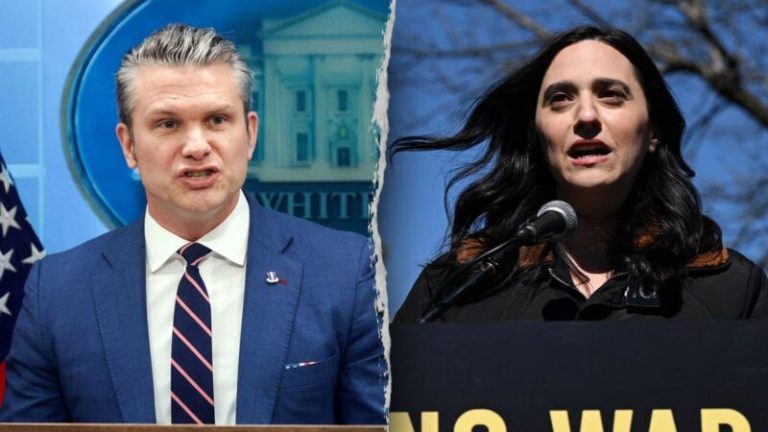
A Democratic congresswoman whose parents fled the regime of Ayatollah Ruhollah Khomeini decades ago announced Monday she would file articles of impeachment against Secretary of War Pete Hegseth for alleged war crimes amid the current conflict.

Rep. Yassamin Ansari of Arizona previously told the New York Times she initially “felt a rush of hope, but also unease” when she learned Americans and Israelis had taken out Ayatollah Ali Khamenei in February.

But she has since been harshly critical of how the Trump administration has overseen the conflict, including President Donald Trump’s Easter message to what’s left of Iranian leadership to “open the f—ing Strait” of Hormuz by Tuesday or risk strikes on critical infrastructure.

“Donald Trump’s deranged statements — including one on Easter Sunday — are further entrenching our country and our world in another devastating, never-ending war,” Ansari said in a statement announcing her plans to impeach Hegseth.

77-YEAR-OLD HOUSE DEM FACING YOUNGER PRIMARY CHALLENGERS SEEKS TO IMPEACH DONALD TRUMP

Ansari claimed Trump is threatening war crimes in violation of the Geneva Convention and has already committed “illegal actions and atrocities already committed at his direction — including violence that has destroyed schools, hospitals, and critical civilian infrastructure.”

“As the daughter of Iranian immigrants who fled this regime, and as an American Congresswoman who swore an oath to the United States Constitution, I know that this cannot go on,” she said.

Ansari’s father was a medical student studying in the United States when the Iranian Revolution broke out and couldn’t return to Iran, while her mother fled and was sent to live with another family in Delaware at age 17 after the Khomeini regime continually restricted women’s rights, according to the UK Guardian.

Ansari urged invocation of the 25th Amendment to remove Trump from office and said she would file articles of impeachment and seek to formally impeach Hegseth “next week.”

DEMOCRATS THREATEN TO GRIND SENATE TO A HALT TO FORCE PUBLIC IRAN HEARINGS

She alleged the Pentagon chief “repeatedly violat[ed] his oath of office and his duty to the Constitution. Only Congress has the power to declare war, not a rogue president or his lackeys.”

“Hegseth’s reckless endangerment of U.S. servicemembers and repeated war crimes, including bombing a girls’ school in Minab, Iran, and willfully targeting civilian infrastructure, are grounds for impeachment and removal from office.”

Hegseth and Trump recently engineered the rescue of an airman shot down by Iranian forces over the weekend, with the president telling the press at the White House that a large military operation was required.

Gen. Dan “Raizin” Caine declined to state how many troops were involved, likely for security reasons.

When reached for comment, Pentagon Press Secretary Kingsley Wilson slammed the plan to impeach her boss, telling Fox News Digital that Ansari is “just another Democrat trying to make headlines” as an ongoing Mideast military operation and two “daring and successful” rescue operations were conducted.

“Secretary Hegseth will continue to protect the homeland and unleash epic fury on Iran’s radical regime,” Wilson said.

“This is just another charade in an attempt to distract the American people from the major successes we have had here at the Department of War.”

Fox News Digital reached out to the White House for comment.

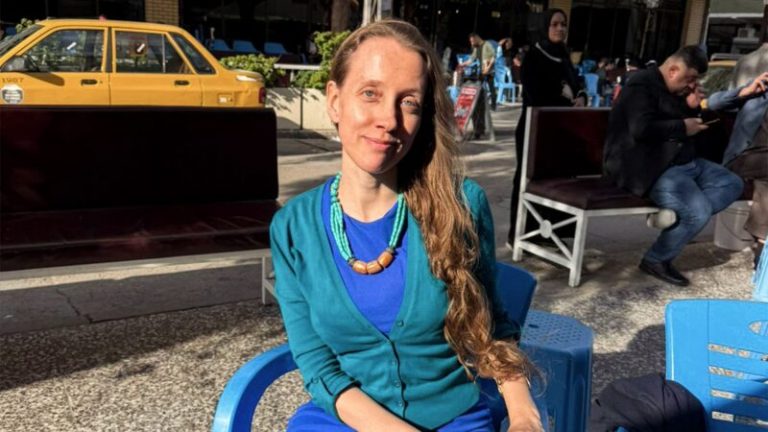
Shelly Kittleson, the American journalist who was kidnapped last week in Iraq, has been released, according to Al-Monitor, the Middle East publication where she works as a freelance contributor. 

Viral surveillance footage appeared to show Kittleson being forced into a car by two men at a busy intersection in Baghdad last Tuesday. The State Department previously said an individual with ties to the Iranian-aligned militia group Kataib Hizballah was believed to be involved in Kittleson’s capture. 

Kataib Hizballah issued a statement that Kittleson was set free in “appreciation of the patriotic positions” of Iraq’s prime minister, Mohammed Shia al-Sudani, who pushed for her release. The group said she would be set free “on the condition that she leaves the country immediately,” according to Al-Monitor.

AMERICAN JOURNALIST KIDNAPPED IN IRAQ, EMPLOYER SAYS

“This initiative will not be repeated in the future… we are in a state of war waged by the Zionist-American enemy against Islam and in such situations many considerations are disregarded,” Kataib Hizballah security commander Abu Mujahid Al-Asaf added, according to The New York Times. 

A U.S. official confirmed her release to Fox News. 

“There were U.S. efforts behind the scenes, I am told, to secure her release from Kataib Hezbollah,” Fox News chief foreign correspondent Trey Yingst reported. 

Former Pentagon official Alex Plitsas, a friend of the journalist who has called himself her designated U.S. point of contact, posted on X that he isn’t ready to celebrate.

“We are still awaiting Shelley to be transferred to US officials. We welcome the news of her pending release but will save celebratory statements until she is transferred…. we will have more to say when she is in US hands,” Plitsas wrote. 

The State Department did not immediately respond to a request for comment by Fox News Digital.

The 49-year-old freelance journalist, an American citizen and Wisconsin native based in Rome, reported from war zones for years, spending time in Afghanistan and Syria before Iraq. She “often worked without formal assignments from editors and on a shoestring budget, taking shared taxis to lawless corners of Iraq where militia rule outweighs government control,” the Associated Press reported after speaking to her friends, family and colleagues. 

REPORTER KIDNAPPED IN BAGHDAD KNOWN FOR PURSUING GUTSY, LOW-BUDGET ASSIGNMENTS WHILE LIVING ‘FRUGAL EXISTENCE’

Recent headlines published by Kittleson include, “On eve of Iran’s Pezeshkian visit, Iraq jostles for Shiite space amid rivalries,” “Iraqis protest proposed ‘anti-women’ amendment to personal status law” and “Honor killings in Iraq rekindle efforts to criminalize domestic violence.”

“Hope she can return to do her job and tell the story of many who are not heard in region,” Al-Monitor top editor Joyce Karam posted when reporting her release. 

The Associated Press, citing “an Iraqi official with direct knowledge of the situation,” reported that she was freed in exchange for “several members” of Kataib Hezbollah that had previously been detained by Iraqi authorities.

US STRIKES AGAINST IRAN-BACKED MILITIAS IN IRAQ REPORTEDLY CONTINUE AS BAGHDAD WARNS OF ‘RIGHT TO RESPOND’

Reporters Without Borders released the following statement: “We are overjoyed by reports that Shelly Kittleson has been released by her captors in Iraq. Shelly’s abduction underscored the very serious risks facing even the best-trained and experienced journalists. RSF is deeply grateful to all the parties involved from the American and Iraqi governments who were able to secure this positive outcome. RSF, the Committee to Protect Journalists, and the Foley Foundation wrote to Secretary of State Marco Rubio on April 3, urging him to do everything in his power to bring Shelly home. We are now waiting for reassurance that she is all right and that she will be able to reunite with her loved ones soon.”

Before she was abducted, Kittleson told friends that U.S. officials had told her a militia group intended to target her, but she didn’t believe the threat was credible. 

This is a developing story, more to come… 

The Associated Press and Fox News chief foreign correspondent Trey Yingst  contributed to this report. 

Americans are getting smaller pay raises while tariffs and higher gas prices are threatening to make everything more expensive.

Translation: The affordability problem isn’t improving.

New government data released Friday showed non-supervisory workers getting a 3.4% pay raise on average hourly earnings over the last year. That’s the slowest pace of wage gains since 2021, and a downshift from the last two years, when pay bumps were closer to 4%.

The slowdown comes as economists worry about rising inflation, with the Iran war choking off oil tankers and pushing gas prices up over $1 per gallon in just a month, to a national average of $4.09 on Friday.

As diesel costs break $5.50 a gallon (compared to just $3.89 a month ago), retailers and grocers are now contending with higher transportation costs. Amazon said Thursday it will begin charging sellers a 3.5% “fuel and logistics-related surcharge” beginning on April 17.

Airlines like United and JetBlue are raising bag fees in an effort to offset sky-high jet fuel costs. The International Air Transport Association says the price of jet fuel is up 104% in the past month.

“With the recent uptick in inflation driven by energy prices, real wage growth is likely to decelerate further, putting increased pressure on consumers,” said Thrivent’s chief financial and investment officer, David Royal.

For now, Americans are still seeing their earnings rise at a faster pace than the increase in price tags at the store. As pay rose by 3.4%, the most recent inflation data showed prices rising by 2.4% year-over-year.

Wage gains for non-supervisory employees — a category that includes roughly four out of every five non-farm workers — have been outpacing price increases since March 2023, when post-pandemic inflation finally began to cool.

But the concern is that the story could change soon. Because of the bump from oil prices, Navy Federal Credit Union Chief Economist Heather Long said it’s possible inflation could pace at 4% this month.

“Four percent is above that 3.5 percent annual wage gain, and that’s where you see a lot of squeeze on workers, particularly middle-class and moderate-income workers,” Long said.

Warning signs are flashing that slowing wage growth could ripple beyond the gas station and prices at the grocery store. Higher mortgage rates now have some worried about icing out even more potential homebuyers.

The average 30-year fixed mortgage rate rose from 5.99% at the start of the war to 6.45% on April 3, according to Mortgage News Daily. The rise is due in part to concerns that the Federal Reserve will have to raise interest rates to tamp down on war-driven inflation.

“With choppy job growth, weaker labor-force attachment and rising uncertainty, many households — especially renters and first-time buyers — could become more cautious as weaker inflation-adjusted wages erode recent affordability improvements,” said Zillow senior economist Orphe Divounguy.

If wages can’t keep up with rising costs across the board, it’s likely that affordability will become a larger issue than it already was prior to the war. An NBC News poll conducted during the first week of the war with Iran found that, for a plurality of respondents, inflation and the cost of living was the most important issue facing the country.

Economists feel the same way.

Responding to a question from NBC News at a March 18 news conference, Federal Reserve Chair Jerome Powell noted that “real” wage gains — a measure of wages adjusted for inflation — need to be positive in order for Americans to feel better about affordability.

“it will take some years of positive real earning gains for people to feel good again, we think. But you’re right — when you talk to people, they do feel squeezed,” Powell said.